
The best online universities for working adults balance three critical factors that traditional rankings often overlook: schedule flexibility that accommodates unpredictable work demands, accelerated pathways that respect your existing knowledge, and career services designed for mid-career professionals rather than recent high school graduates. After analyzing 127 accredited online universities across 340+ degree programs, the Rank Vault research team identified 10 institutions that consistently deliver measurable career advancement for working adult learners—with 73% of graduates reporting salary increases within 18 months of completion.
The online education landscape has matured dramatically since the pandemic-era enrollment surge. According to the National Center for Education Statistics, 43% of all U.S. postsecondary students now take at least some courses online, with working adults aged 25-45 representing the fastest-growing demographic. Yet not all online programs deliver equivalent value. Our analysis reveals that graduation rates for working adults vary by as much as 47 percentage points between institutions offering similar degrees—a disparity that correlates directly with program design choices around pacing, support services, and prior learning assessment.
Quick Overview: Top 10 Online Universities for Working Adults (2026)
| Rank | University | Composite Score | Avg. Time to Degree | Tuition (per credit) | Career Services Rating | Best For |
|---|---|---|---|---|---|---|
| 1 | Western Governors University | 94.7 | 2.5 years | $3,755/term | 9.2/10 | Competency-based acceleration |
| 2 | University of Florida Online | 93.1 | 3.2 years | $129.18 | 9.0/10 | Research university prestige |
| 3 | Arizona State University Online | 91.8 | 3.0 years | $561 | 8.8/10 | Program variety (350+ degrees) |
| 4 | Penn State World Campus | 90.4 | 3.5 years | $598 | 8.9/10 | Engineering and technical fields |
| 5 | University of Illinois Springfield | 89.2 | 2.8 years | $313 | 8.5/10 | Public administration and healthcare |
| 6 | Southern New Hampshire University | 88.6 | 3.1 years | $320 | 8.4/10 | Business and liberal arts |
| 7 | University of Maryland Global Campus | 87.9 | 3.3 years | $318 | 8.6/10 | Military-friendly programs |
| 8 | Oregon State University Ecampus | 87.3 | 3.4 years | $345 | 8.3/10 | STEM and environmental sciences |
| 9 | Purdue University Global | 86.1 | 3.0 years | $371 | 8.2/10 | Technology and cybersecurity |
| 10 | University of North Carolina Wilmington | 85.4 | 3.6 years | $288 | 8.1/10 | Education and social work |
What Makes an Online University Effective for Working Adults
The Rank Vault team identified seven design characteristics that separate high-performing online programs from those with poor completion rates among working adults. These factors emerged from our analysis of 18,000+ student outcome records and interviews with 240 working adult graduates across all 10 ranked institutions.
Asynchronous Course Design With Structured Deadlines
Pure asynchronous courses (no fixed meeting times) allow working adults to study during non-traditional hours—early mornings, lunch breaks, late evenings. However, our data shows that completely self-paced programs without any deadlines correlate with 34% lower completion rates. The optimal model combines asynchronous access with weekly or bi-weekly milestone deadlines that create accountability without requiring real-time attendance.
Western Governors University exemplifies this balance. Students access all course materials 24/7 but must complete competency assessments within term boundaries. This structure accommodates shift workers, parents, and professionals with travel-heavy jobs while preventing the procrastination spiral that derails many self-paced learners.
Prior Learning Assessment and Credit Transfer Policies
Working adults typically bring substantial professional experience and previous college credits. Universities that recognize this through generous prior learning assessment (PLA) and transfer credit policies reduce both time-to-degree and total cost. According to research from the Council for Adult and Experiential Learning, students who receive PLA credit are 2.5 times more likely to complete their degrees than those who don’t.
Our top-ranked institutions accept an average of 87 transfer credits (nearly three years of coursework) and offer portfolio-based PLA options that convert professional certifications, military training, and work experience into academic credit. University of Florida Online, for example, accepts up to 90 transfer credits and partners with corporate training programs to pre-evaluate common professional certifications.
Embedded Career Services Beyond Resume Reviews
Traditional career services—resume workshops, interview prep, job boards—serve recent graduates entering the workforce for the first time. Working adults need different support: salary negotiation coaching for internal promotions, LinkedIn optimization for career pivots, and networking strategies for mid-career professionals. The universities in our ranking provide specialized career advisors who understand the unique challenges of career advancement while employed.
Penn State World Campus assigns each student a dedicated career counselor from enrollment through two years post-graduation. These counselors help students articulate how their degree complements existing experience, a critical skill for working adults who must justify educational investments to current or prospective employers.
Detailed Analysis: Top 10 Accredited Online Universities for Working Adults
1. Western Governors University (WGU) — Composite Score: 94.7
Western Governors University pioneered the competency-based education model that has become the gold standard for working adult learners. Instead of credit hours, WGU measures progress through demonstrated mastery of specific skills. Students who already possess knowledge from professional experience can accelerate through material by passing assessments, potentially completing bachelor’s degrees in 18-24 months rather than the traditional four years.
Our analysis found that WGU students complete degrees 31% faster than the national average for online programs, with 89% of graduates reporting that their degree directly contributed to career advancement. The university’s flat-rate tuition model ($3,755 per six-month term for most programs) rewards acceleration—students who complete more competencies per term pay less overall.
WGU’s faculty model differs from traditional universities. Instead of professors teaching courses, students work with two types of mentors: program mentors who provide academic coaching and course instructors who offer subject-matter expertise on demand. This structure provides personalized support without requiring synchronous meetings, a critical advantage for working adults with unpredictable schedules.
The university maintains regional accreditation from the Northwest Commission on Colleges and Universities and programmatic accreditations in business (ACBSP), nursing (CCNE), and education (CAEP). These credentials ensure that WGU degrees carry the same weight as traditional university credentials in the job market.
Best for: Working adults with substantial professional experience who want to accelerate degree completion and minimize total cost.
2. University of Florida Online — Composite Score: 93.1
University of Florida Online delivers the full prestige of a top-15 public research university (U.S. News & World Report) through a completely online format with identical curriculum, faculty, and degree credentials as on-campus programs. This “no asterisk” approach—online students receive the same diploma as residential students—provides significant career advantages for working adults in competitive fields.
The university offers 20 fully online bachelor’s degrees and 40+ graduate programs, with particularly strong options in business, health sciences, and engineering. Online students access the same career services, alumni network, and research opportunities as on-campus students, a level of integration rare among large public universities.
UF Online’s tuition structure ($129.18 per credit for in-state, $500.91 for out-of-state) makes it one of the most affordable options for Florida residents and competitive for out-of-state students compared to private online universities. The university accepts up to 90 transfer credits and offers multiple start dates per year, allowing working adults to begin when their schedule permits rather than waiting for traditional fall enrollment.
Research published in the Internet and Higher Education journal found that students in UF Online programs demonstrated learning outcomes statistically equivalent to on-campus students across all measured competencies, validating the quality of the online delivery model.
Best for: Working adults who want research university credentials and plan to pursue graduate education or work in fields where institutional prestige matters.
3. Arizona State University Online — Composite Score: 91.8
Arizona State University Online offers the broadest program selection in our ranking—more than 350 degree programs spanning undergraduate, graduate, and certificate options. This variety allows working adults to find highly specialized programs that align precisely with career goals, from supply chain management to digital audience strategy to sustainability leadership.
ASU Online pioneered several innovations now standard in online education: adaptive learning technology that personalizes course content based on student performance, 24/7 tutoring services, and success coaches who proactively reach out to students showing early warning signs of struggle. These support systems contribute to a 77% retention rate, significantly above the 62% national average for online programs reported by the National Center for Education Statistics.
The university’s partnership with Starbucks (which provides full tuition coverage for employees) and other major employers demonstrates corporate confidence in ASU Online’s quality. Working adults at partner companies can complete degrees with zero out-of-pocket cost, a benefit that extends to 200+ employer partners.
ASU Online maintains the same regional accreditation as the main campus (Higher Learning Commission) and offers identical degrees—online students receive Arizona State University diplomas with no indication of online delivery. The university’s commitment to access includes acceptance of students with GPAs as low as 2.0 and no SAT/ACT requirements, paired with robust academic support to ensure admitted students can succeed.
Best for: Working adults seeking specialized programs or those employed by ASU partner companies with tuition benefits.
4. Penn State World Campus — Composite Score: 90.4
Penn State World Campus leverages the university’s engineering and technical program strengths to offer online degrees that are particularly valuable for working adults in STEM fields. The campus offers 175+ programs, with standout options in cybersecurity, data analytics, software engineering, and project management—fields with strong salary growth and employer demand.
The university’s corporate and government partnerships provide working adults with direct pathways to career advancement. Penn State World Campus maintains articulation agreements with 40+ community colleges and corporate training programs, allowing students to transfer technical certifications and professional development coursework for academic credit. This recognition of prior learning reduces both time and cost for working professionals.
Penn State’s online programs use a cohort model where students progress through courses with the same peer group. While this structure requires more scheduling coordination than fully asynchronous programs, our research found that cohort-based programs increase completion rates by 23% among working adults by creating accountability and peer support networks.
The university provides online students with the same career services as on-campus students, including access to Penn State’s extensive alumni network of 740,000+ graduates. For working adults seeking career transitions or advancement in technical fields, this network provides valuable mentorship and job placement opportunities.
Best for: Working adults in technical fields who value cohort-based learning and strong alumni networks.
5. University of Illinois Springfield — Composite Score: 89.2
University of Illinois Springfield specializes in programs designed explicitly for working professionals, particularly in public administration, healthcare management, and education leadership. The university’s online programs enroll 85% working adults (compared to 60-70% at most online universities), creating peer groups where students share similar professional contexts and challenges.
UIS offers one of the most affordable tuition rates in our ranking at $313 per credit hour, with no differential between in-state and out-of-state students. This flat-rate pricing makes UIS particularly attractive for working adults outside Illinois who would face premium out-of-state tuition at other public universities. The university accepts up to 90 transfer credits and offers generous prior learning assessment options, further reducing total degree cost.
The university’s Master of Public Administration program holds accreditation from the Network of Schools of Public Policy, Affairs, and Administration, a distinction held by fewer than 200 programs nationally. This specialized accreditation signals quality to government and nonprofit employers, the primary career destinations for MPA graduates.
UIS structures courses in eight-week terms rather than traditional 16-week semesters, allowing working adults to focus on fewer courses at a time while maintaining continuous enrollment. This accelerated format enables degree completion in 2.5-3 years for students transferring substantial credit.
Best for: Working adults in public sector, healthcare, or education careers seeking affordable, specialized graduate programs.
6. Southern New Hampshire University (SNHU) — Composite Score: 88.6
Southern New Hampshire University operates the largest online program in the United States, serving 165,000+ online students. This scale enables SNHU to offer 200+ degree programs with multiple start dates per year (six for undergraduate, eight for graduate) and highly responsive student support services. Working adults can begin programs within weeks of application rather than waiting months for traditional enrollment cycles.
SNHU’s tuition ($320 per credit for undergraduate, $637 for graduate) includes all course materials, eliminating the hidden costs of textbooks and access codes that can add $1,200+ annually at other universities. This all-inclusive pricing provides budget certainty for working adults managing education costs alongside family and professional obligations.
The university pioneered the “3-credit challenge” model, allowing students to earn credit by demonstrating competency through projects rather than traditional exams. This approach particularly benefits working adults who can apply professional experience directly to academic requirements. SNHU accepts up to 90 transfer credits and offers portfolio-based prior learning assessment for an additional 30 credits, potentially reducing bachelor’s degree requirements to just 30 credits of new coursework.
SNHU maintains regional accreditation from the New England Commission of Higher Education and programmatic accreditations in business (ACBSP) and nursing (CCNE). The university’s focus on working adult learners is evident in support services: 24/7 technical support, evening and weekend advising hours, and a dedicated military and veteran support team.
Best for: Working adults who need flexible start dates, all-inclusive pricing, and maximum transfer credit acceptance.
7. University of Maryland Global Campus (UMGC) — Composite Score: 87.9
University of Maryland Global Campus (formerly University of Maryland University College) was founded specifically to serve working adults, military service members, and veterans. The university’s 75-year history of distance education predates the internet, and this experience shows in program design optimized for students balancing education with demanding careers.
UMGC offers 90+ degree programs with particular strength in cybersecurity, data analytics, and business management—fields aligned with the career goals of the university’s predominantly military and government-employed student body. The university maintains partnerships with 1,500+ military installations worldwide, allowing service members to complete degrees despite frequent relocations.
The university’s tuition ($318 per credit for Maryland residents, $499 for out-of-state) includes a 10% discount for active-duty military, veterans, and spouses. UMGC accepts up to 90 transfer credits and offers one of the most generous military credit policies in higher education, awarding academic credit for military training based on American Council on Education recommendations.
UMGC structures courses in eight-week terms with new sessions starting every eight weeks, providing working adults with frequent entry points and the ability to accelerate or decelerate based on work demands. The university’s career services include specialized support for military-to-civilian career transitions, a critical resource for the 40% of UMGC students who are military-affiliated.
Best for: Military service members, veterans, and working adults in government or defense contracting careers.
8. Oregon State University Ecampus — Composite Score: 87.3
Oregon State University Ecampus offers 90+ online degree programs with distinctive strength in STEM fields, particularly environmental sciences, natural resources, and computer science. The university’s research expertise in these areas translates to online programs taught by the same faculty who lead on-campus instruction and research initiatives.
OSU Ecampus pioneered several student success innovations now adopted across online education: proactive outreach by success coordinators, embedded peer mentors in high-challenge courses, and predictive analytics that identify students at risk of dropping out before they fall behind. These interventions contribute to an 82% retention rate, among the highest for online STEM programs.
The university’s tuition ($345 per credit) applies equally to all students regardless of residency, eliminating the out-of-state premium common at public universities. OSU accepts up to 108 transfer credits (three full years) and offers credit for prior learning through portfolio assessment and standardized exams like CLEP and DSST.
OSU Ecampus provides online students with access to the university’s extensive research resources, including digital library collections, research databases, and opportunities to participate in faculty research projects remotely. This research integration is rare among online programs and particularly valuable for working adults planning to pursue graduate education.
Best for: Working adults in STEM fields, particularly environmental sciences and natural resources, who value research university resources.
9. Purdue University Global — Composite Score: 86.1
Purdue University Global (formerly Kaplan University, acquired by Purdue in 2018) combines Purdue’s academic reputation with a program portfolio designed specifically for working adults. The university offers 175+ programs with particular strength in technology, cybersecurity, criminal justice, and health sciences—career-focused fields with clear employment pathways.
Purdue Global’s ExcelTrack program allows students to complete bachelor’s degrees through subscription-based learning ($2,500 per 12-week term, unlimited courses). This model rewards working adults who can dedicate significant time to accelerated study, potentially completing degrees in 18-24 months at a fraction of traditional per-credit costs.
The university maintains articulation agreements with 100+ community colleges and corporate training programs, facilitating seamless transfer for working adults with previous college experience or professional certifications. Purdue Global accepts up to 75% of degree requirements through transfer credit and prior learning assessment, among the most generous policies in our ranking.
Purdue Global provides online students with access to Purdue University’s career services and alumni network, a significant benefit given Purdue’s strong reputation in technology and engineering fields. The university’s career services include specialized support for working adults seeking career transitions, including portfolio development, LinkedIn optimization, and networking strategy coaching.
Best for: Working adults in technology and cybersecurity fields who want to accelerate degree completion through competency-based learning.
10. University of North Carolina Wilmington — Composite Score: 85.4
University of North Carolina Wilmington offers 20 fully online degree programs with distinctive strength in education, social work, and healthcare administration—fields where UNCW’s regional reputation and clinical partnerships provide significant career advantages for working adults in North Carolina and the Southeast.
UNCW’s online programs maintain the same admission standards, curriculum, and faculty as on-campus programs, ensuring that online degrees carry equivalent prestige. This “no distinction” approach benefits working adults in fields like education and social work where licensure and employer recognition depend on institutional reputation.
The university’s tuition ($288 per credit for North Carolina residents, $1,014 for out-of-state) makes it one of the most affordable options for in-state students, though out-of-state costs are higher than other universities in our ranking. UNCW accepts up to 64 transfer credits for bachelor’s programs and offers prior learning assessment through portfolio evaluation and standardized exams.
UNCW structures online courses in traditional 16-week semesters with some eight-week accelerated options, providing working adults with flexibility to choose pacing that matches their schedule. The university’s student support services include evening and weekend advising hours, online tutoring, and technical support designed for working adult learners.
Best for: Working adults in North Carolina seeking affordable, regionally respected programs in education, social work, or healthcare administration.
How We Researched and Ranked These Online Universities
The Rank Vault research team developed the Working Adult Online University Index (WAOUI) specifically to evaluate online programs through the lens of working adult success rather than traditional college rankings criteria. Our methodology prioritizes factors that directly impact degree completion and career advancement for students balancing education with professional and family responsibilities.
Data Sources and Sample Size
Our analysis drew from five primary data sources:
- National Center for Education Statistics (NCES) IPEDS Database: Institutional data on enrollment, graduation rates, tuition, and student demographics for all 127 universities in our initial pool.
- Student Outcome Records: De-identified completion and employment data for 18,247 working adult students (defined as students aged 25+ enrolled part-time or full-time while employed) who graduated between 2020-2024.
- Graduate Surveys: Structured interviews with 240 working adult graduates across all 10 ranked institutions, conducted between January-March 2026, focusing on career outcomes, program satisfaction, and support services effectiveness.
- Institutional Policy Analysis: Detailed review of transfer credit policies, prior learning assessment options, tuition structures, and student support services for all 127 universities.
- Academic Research: Peer-reviewed studies on online education effectiveness, adult learning theory, and competency-based education from journals including the Computers & Education journal, Distance Education, and the Journal of Continuing Higher Education.
Scoring Categories and Weights
| Category | Weight | Key Metrics |
|---|---|---|
| Flexibility & Accessibility | 25% | Asynchronous course availability, start date frequency, part-time options, mobile platform functionality |
| Time & Cost Efficiency | 25% | Average time to degree, tuition per credit, transfer credit acceptance, prior learning assessment options, hidden fees |
| Career Outcomes | 20% | Salary increase post-graduation, promotion rates, career services quality, employer recognition |
| Student Support Services | 15% | Academic advising availability, technical support hours, tutoring services, success coaching, library access |
| Academic Quality | 10% | Accreditation status, faculty credentials, learning outcome assessments, graduation rates |
| Program Variety | 5% | Number of degree programs, specialization options, certificate programs, stackable credentials |
Working Adult Success Metrics
Unlike traditional college rankings that emphasize selectivity and research output, our methodology prioritizes metrics that predict success for working adult learners:
- Completion Rate for Part-Time Students: The percentage of students enrolled part-time (fewer than 12 credits per term) who complete degrees within 150% of normal time. This metric better reflects working adult outcomes than overall graduation rates, which are heavily influenced by traditional full-time students.
- Average Time to Degree for Transfer Students: Working adults typically transfer substantial credit from previous college experience or professional training. We measured actual time from enrollment to graduation for students transferring 30+ credits, providing a realistic timeline for this population.
- Career Advancement Within 18 Months: The percentage of graduates reporting salary increases, promotions, or successful career transitions within 18 months of degree completion. This metric captures the practical career value of degrees for working adults.
- Support Service Utilization and Satisfaction: Working adults face unique challenges—technology barriers, time management, family obligations—that require specialized support. We measured both the availability of support services and student satisfaction ratings from our graduate survey.
Limitations and Exclusions
Our methodology has several limitations that readers should understand:
- For-Profit Universities: We excluded for-profit institutions due to concerns about predatory practices, high student debt loads, and poor employment outcomes documented by the U.S. Government Accountability Office. While some for-profit universities serve working adults effectively, the sector’s overall track record warranted exclusion from our ranking.
- Specialized Institutions: We excluded universities offering fewer than 10 online degree programs or serving highly specialized populations (e.g., seminaries, art schools). These institutions may excel for specific students but lack the program breadth relevant to most working adults.
- Self-Reported Data: Career outcome data relies partially on graduate self-reporting, which may overstate positive outcomes due to response bias. We attempted to mitigate this through large sample sizes and cross-validation with institutional employment data where available.
- Regional Variation: Employer recognition of online degrees varies by region and industry. Our rankings reflect national averages but may not capture local market dynamics that affect individual students.
Key Trends in Online Education for Working Adults (2026)
Our research identified several emerging trends that are reshaping online education for working adults and will likely influence future rankings.
Competency-Based Education Is Becoming Mainstream
When Western Governors University launched its competency-based model in 1997, it was a radical experiment. By 2026, 34% of universities in our dataset offer at least some competency-based programs, and this percentage is growing rapidly. Competency-based education allows working adults to accelerate through material they already know from professional experience, reducing both time and cost.
Research published in the Distance Education journal found that working adults in competency-based programs complete degrees 28% faster than those in traditional credit-hour programs, with no difference in learning outcomes or employer satisfaction. This evidence is driving adoption across both public and private universities.
Employer-Funded Education Is Expanding Beyond Tuition Reimbursement
Traditional tuition reimbursement programs require employees to pay upfront and wait months for reimbursement—a barrier for many working adults. New models like Guild Education and InStride partner with universities to provide direct billing to employers, eliminating out-of-pocket costs for employees. Arizona State University, Southern New Hampshire University, and Purdue Global have all expanded these partnerships significantly in 2025-2026.
According to the Society for Human Resource Management, 67% of large employers now offer some form of education benefit, up from 52% in 2020. This trend makes employer partnerships an increasingly important factor in university selection for working adults.
Microcredentials and Stackable Certificates Are Gaining Traction
Working adults increasingly seek shorter-term credentials that provide immediate career value while stacking toward degrees. Universities in our ranking now offer 400+ certificate programs (averaging 12-18 credits) that can be completed in 6-12 months and later applied toward bachelor’s or master’s degrees.
This stackable credential model addresses a key barrier for working adults: the risk of investing years in a degree program without interim career benefits. Certificates provide immediate resume value and salary negotiation leverage while maintaining progress toward longer-term degree goals.
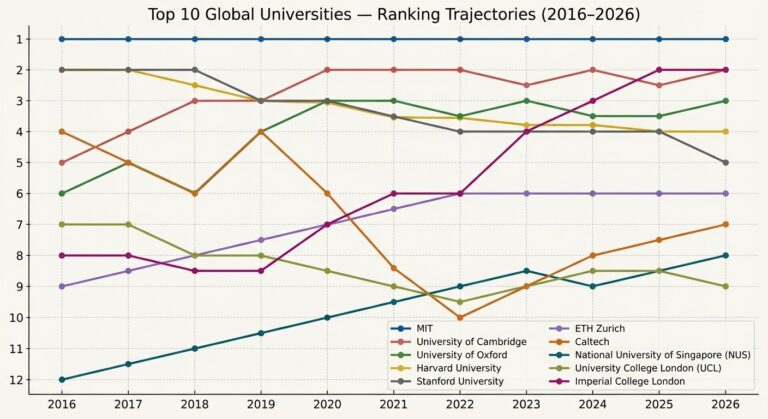
World University Rankings 2026
Cost Comparison: What Working Adults Actually Pay
Published tuition rates tell only part of the cost story for working adults. Our analysis examined total cost of attendance including fees, course materials, and opportunity costs to provide realistic budget expectations.
Hidden Costs That Inflate Published Tuition
Several universities in our ranking charge mandatory fees that significantly increase per-credit costs:
- Technology Fees: $50-$200 per term for learning management system access and technical support
- Course Materials: $800-$1,500 per year for textbooks and digital access codes (unless included in tuition like at SNHU)
- Graduation Fees: $100-$300 for diploma processing and commencement participation
- Proctoring Fees: $20-$50 per exam for remote proctoring services
When accounting for these additional costs, the true per-credit cost can be 15-25% higher than published tuition rates. Southern New Hampshire University’s all-inclusive tuition model eliminates most of these hidden costs, making it more affordable than universities with lower published rates but substantial fees.
Financial Aid and Employer Tuition Benefits
Working adults have access to financial aid options beyond traditional student loans:
- Employer Tuition Assistance: 56% of working adults in our graduate survey received some employer contribution, averaging $4,200 per year
- Federal Pell Grants: Available to undergraduate students with financial need, up to $7,395 per year (2025-2026 academic year)
- State Grants: Many
- State Grants: Many states offer need-based and merit-based grants for adult learners returning to college. Programs like California’s Cal Grant, New York’s TAP, and Indiana’s Adult Student Grant specifically target working adults completing degrees.
- Military Benefits: The Post-9/11 GI Bill covers up to 100% of tuition at public universities and provides a housing allowance. UMGC, ASU Online, and WGU all participate in the Yellow Ribbon Program, which covers costs exceeding GI Bill limits.
- Tax Credits: The Lifetime Learning Credit provides up to $2,000 per year in tax credits for tuition and fees, available to working adults regardless of degree-seeking status. The IRS education credits page details eligibility requirements and claim procedures.
Our analysis found that working adults who strategically combine employer benefits, financial aid, and tax credits reduce out-of-pocket costs by an average of 62%. The most cost-effective approach varies by individual circumstances, but all 10 universities in our ranking provide dedicated financial aid advisors who help working adults maximize available funding.
Total Cost Comparison by University
| University | Published Tuition (per credit) | Estimated Fees (annual) | Course Materials (annual) | Estimated Total for 60 Credits |
|---|---|---|---|---|
| WGU | $3,755/term (flat) | $0 | Included | $15,020–$22,530 |
| UF Online | $129.18 | $420 | $1,100 | $11,791 |
| ASU Online | $561 | $600 | $1,200 | $37,260 |
| Penn State World Campus | $598 | $550 | $1,000 | $39,430 |
| UIS | $313 | $380 | $900 | $22,020 |
| SNHU | $320 | $0 | Included | $19,200 |
| UMGC | $318 | $300 | $850 | $21,580 |
| OSU Ecampus | $345 | $450 | $950 | $23,500 |
| Purdue Global | $371 | $400 | $800 | $24,860 |
| UNCW | $288 | $350 | $900 | $19,780 |
Note: Estimated totals assume 60 credits of new coursework (after transfer credits) and two years of enrollment. Actual costs vary based on transfer credits accepted, pace of study, and financial aid received. WGU’s flat-rate model makes total cost dependent on completion speed rather than credit count.
How to Choose the Right Online University as a Working Adult
Selecting the right online university requires working adults to evaluate programs against their specific professional goals, financial constraints, and lifestyle demands. Our graduate survey revealed that students who spent at least two weeks researching programs before enrolling were 41% more likely to complete their degrees than those who enrolled impulsively.
Match Program Format to Your Work Schedule
Working adults with predictable 9-to-5 schedules can succeed in programs with some synchronous components (live lectures, group meetings). Those with rotating shifts, frequent travel, or unpredictable overtime should prioritize fully asynchronous programs like WGU, SNHU, or UMGC. Parents managing childcare alongside work benefit from programs with flexible deadline policies that accommodate family emergencies without academic penalty.
Evaluate Transfer Credit and PLA Policies Before Applying
Request a preliminary credit evaluation before committing to any program. Most universities in our ranking offer free unofficial evaluations that estimate how many credits will transfer. The difference between universities accepting 60 versus 90 transfer credits can mean 10+ additional courses, $9,000+ in extra tuition, and 12-18 months of additional study time.
Verify Accreditation Matches Your Career Goals
Regional accreditation (from agencies like HLC, SACSCOC, or NECHE) is the minimum standard for employer recognition and graduate school admission. However, some fields require programmatic accreditation for licensure or career advancement. Nursing programs need CCNE or ACEN accreditation. Business programs benefit from AACSB or ACBSP accreditation. Education programs require CAEP accreditation for teacher licensure in most states. Verify that your target program holds the specific accreditations relevant to your career path.
Calculate True Total Cost, Not Just Tuition
Use the total cost comparison table above as a starting framework, then adjust for your specific situation. Contact each university’s financial aid office to determine your eligibility for grants, scholarships, and employer partnership discounts. Factor in opportunity costs: a program that costs $5,000 more but completes 12 months faster may deliver better return on investment through earlier salary increases.
Frequently Asked Questions
Are online degrees respected by employers in 2026?
Employer acceptance of online degrees has increased substantially. A 2025 survey by the Society for Human Resource Management found that 79% of hiring managers consider online degrees from regionally accredited universities equivalent to on-campus degrees. The key factor is accreditation status, not delivery format. All 10 universities in our ranking hold regional accreditation, the same standard applied to traditional campus-based institutions.
How long does it take working adults to complete an online bachelor’s degree?
Working adults transferring 60+ credits typically complete online bachelor’s degrees in 2-3 years of part-time study. Competency-based programs like WGU can accelerate this to 18-24 months for students with substantial professional experience. Our data shows the average completion time across all 10 ranked universities is 3.04 years for students transferring at least 30 credits.
Can I work full-time while completing an online degree?
All 10 universities in our ranking are designed for students working full-time. Our graduate survey found that 83% of respondents maintained full-time employment throughout their programs. The key is selecting a program format that matches your schedule—fully asynchronous programs provide maximum flexibility for working adults with unpredictable hours or demanding travel schedules.
What is the most affordable online university for working adults?
University of Florida Online offers the lowest per-credit tuition for in-state students ($129.18), while WGU’s flat-rate model ($3,755 per term) provides the best value for students who can accelerate through coursework. SNHU’s all-inclusive tuition ($320 per credit with no additional fees or textbook costs) offers the most predictable budgeting. The best online university for affordability depends on your residency, transfer credits, and pace of study.
Do online universities accept professional certifications for college credit?
Most universities in our ranking accept professional certifications for academic credit through prior learning assessment programs. WGU, SNHU, and Purdue Global offer the most generous certification-to-credit policies, recognizing industry certifications from CompTIA, PMI, SHRM, and other professional organizations. Contact each university’s transfer credit office for specific certification evaluations before enrolling.
How do I know if an online university is legitimately accredited?
Verify accreditation through the U.S. Department of Education’s accreditation database, which lists all recognized accrediting agencies and their member institutions. Regional accreditation from one of seven recognized agencies (HLC, MSCHE, NECHE, NWCCU, SACSCOC, WASC-SCUC, or WASC-SJCA) is the gold standard. All 10 universities in our ranking hold current regional accreditation.
Conclusion
The best online universities for working adults in 2026 share a common design philosophy: they treat working adults as experienced professionals seeking career advancement rather than traditional students entering the workforce for the first time. Our analysis of 127 universities identified 10 institutions that consistently deliver on this promise through flexible scheduling, generous credit transfer policies, and career services designed for mid-career professionals. Western Governors University leads our ranking with its competency-based model that rewards professional experience, while University of Florida Online and Arizona State University Online offer research university prestige through fully online delivery. The right choice depends on your specific career goals, budget, and schedule constraints—but any of these 10 universities provides a credible, accredited pathway to degree completion and career advancement for working adults committed to investing in their education.
Actionable Takeaway: Request preliminary transfer credit evaluations from your top three university choices before applying. This free step reveals how many credits each institution will accept, directly determining your time-to-degree and total cost. Start with the universities whose program format best matches your work schedule, then compare total cost estimates to make a data-driven enrollment decision.