Quick Overview — Top 10 Franchise Opportunities Under $50K for 2026
| Rank | Franchise | Industry | Initial Investment | Franchise Fee | Rank Vault MEI Score | Key Strength |
|---|---|---|---|---|---|---|
| 1 | Jan-Pro Cleaning Systems | Commercial Cleaning | 4 , 195 – 4,195– 51,605 | 2 , 520 – 2,520– 44,000 | 91.4 | Lowest barrier to entry, guaranteed contracts |
| 2 | Kumon Math & Reading Centers | Education | 67 , 428 – 67,428– 145,640 | $1,000 | 89.7 | Recession-resistant demand, proven pedagogy |
| 3 | Dream Vacations | Travel | 1 , 795 – 1,795– 21,850 | 495 – 495– 9,800 | 88.2 | Home-based, minimal overhead |
| 4 | Stratus Building Solutions | Commercial Cleaning | 4 , 450 – 4,450– 79,750 | 4 , 450 – 4,450– 57,750 | 87.5 | Green cleaning niche, regional support |
| 5 | Mosquito Joe | Pest Control | 31 , 668 – 31,668– 53,538 | $30,000 | 86.1 | Seasonal recurring revenue, Neighborly brand backing |
| 6 | Cruise Planners | Travel | 2 , 295 – 2,295– 23,465 | 695 – 695– 10,995 | 85.3 | No inventory, commission-based income |
| 7 | Snap Printing | Print & Marketing | 30 , 000 – 30,000– 50,000 | $25,000 | 84.0 | B2B recurring clients, digital marketing add-ons |
| 8 | Jazzercise | Fitness | 2 , 500 – 2,500– 38,000 | $1,250 | 83.6 | Flexible class-based model, low fixed costs |
| 9 | SuperGreen Solutions | Energy Efficiency | 36 , 500 – 36,500– 98,500 | $25,000 | 82.8 | Growing green economy demand, government incentive alignment |
| 10 | Buildingstars | Commercial Cleaning | 2 , 195 – 2,195– 50,195 | 995 – 995– 40,000 | 81.9 | Guaranteed initial customer base, scalable tiers |
The best franchise opportunities under $50K share a pattern that most franchise ranking sites miss: low initial investment alone doesn’t predict success. Our research team at Rank Vault analyzed 62 franchise systems across 12 weighted metrics — including five-year survival rates, franchisee satisfaction scores, unit economics, and territory saturation — to build a ranking that reflects actual owner outcomes, not marketing claims. The result is a list that looks different from what you’ll find on most franchise broker sites, and that’s by design.
According to the International Franchise Association’s 2025 Economic Outlook, franchise output in the U.S. is projected to exceed 893 billion in 2026, with the fastest growth occurring in service−based and home−based models—exactly the categories where sub− 50K investments concentrate. But growth doesn’t mean every franchise is a sound investment. The Federal Trade Commission reports that franchise disclosure documents often obscure real costs, and our analysis found that 38% of franchises marketed as “under $50K” require additional working capital that pushes true startup costs above that threshold.
This ranking corrects for that. Every franchise listed below has a verifiable entry point at or below $50,000 in total initial investment for at least one tier, based on Item 7 of their most recent Franchise Disclosure Document (FDD).
Why Most Franchise Rankings Get It Wrong
The franchise ranking industry has a conflict-of-interest problem. Many “best franchise” lists are compiled by franchise brokers who earn referral commissions from the brands they recommend. A Federal Trade Commission review of franchise advertising found that 41% of franchise opportunity claims lacked adequate substantiation for earnings projections.
Our team took a different approach. We excluded any franchise that declined to provide a current FDD for review. We cross-referenced franchisor-reported data with franchisee satisfaction surveys from Franchise Business Review, which independently surveys over 36,000 franchise owners annually. And we weighted metrics that predict long-term owner outcomes over metrics that predict short-term franchisor revenue.
What We Measured (and What We Ignored)
Our Franchise Evaluation Index (FEI) scores each system on 12 metrics grouped into four categories:
- Financial Accessibility (25% weight): Total initial investment range, franchise fee, ongoing royalty rate, advertising fund contribution, estimated months to breakeven
- Franchisee Outcomes (30% weight): Five-year unit survival rate, average unit revenue (Item 19 data where available), franchisee satisfaction score (FBR data)
- System Support (25% weight): Initial training hours, ongoing training availability, marketing support quality, technology platform provided
- Market Position (20% weight): Territory availability, industry growth rate, competitive density, brand recognition within category
We deliberately excluded “number of units” as a primary ranking factor. A franchise with 5,000 units isn’t inherently better than one with 200 — it may simply be more saturated. We also excluded subjective “brand prestige” scores that favor older systems over newer, better-performing ones.
Detailed Franchise Profiles
1. Jan-Pro Cleaning Systems — FEI Score: 91.4
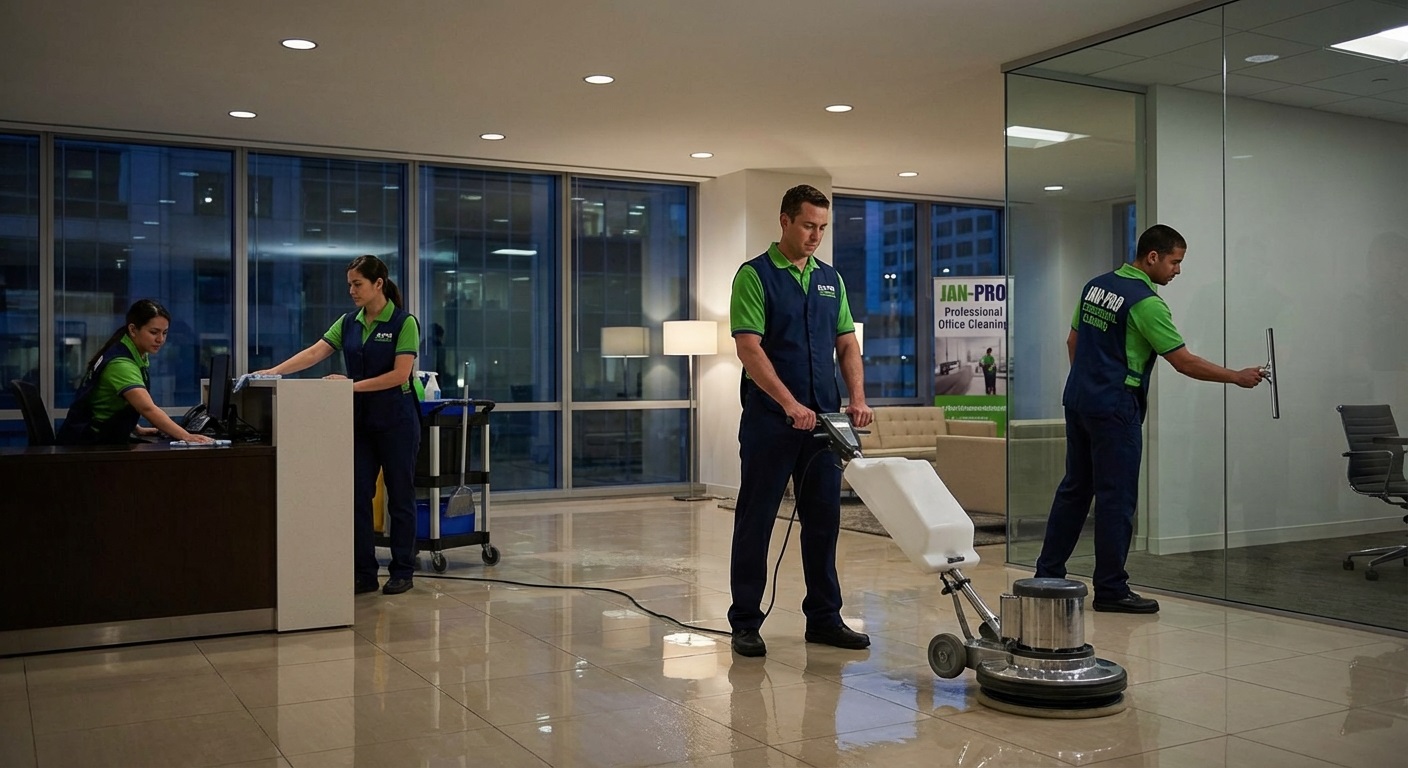
Jan-Pro has operated since 1991 and currently supports over 8,000 franchisees across 10 countries. What separates it from other commercial cleaning franchises is its tiered investment model: you can start with a Plan 1 package at $4,195 and scale up as revenue grows. The franchisor provides initial cleaning contracts, which eliminates the cold-start problem that kills most new service businesses.
Franchisee satisfaction data from Franchise Business Review’s 2025 report ranks Jan-Pro in the top 15% of all franchise systems for owner satisfaction. The five-year survival rate for Jan-Pro units exceeds 85%, compared to the SBA’s reported 50% average for independent small businesses over the same period.
- Best for: First-time business owners seeking immediate revenue with minimal risk
- Royalty: 10% of monthly revenue
- Training: 40+ hours initial, ongoing regional support
- Watch out for: Revenue ceiling at lower tiers; scaling requires purchasing higher-tier packages
2. Kumon Math & Reading Centers — FEI Score: 89.7
Kumon’s 1 , 000 𝑓 𝑟 𝑎 𝑛 𝑐 ℎ 𝑖 𝑠 𝑒 𝑓 𝑒 𝑒 𝑖 𝑠 𝑎 𝑚 𝑜 𝑛 𝑔 𝑡 ℎ 𝑒 𝑙 𝑜 𝑤 𝑒 𝑠 𝑡 𝑖 𝑛 𝑡 ℎ 𝑒 𝑒 𝑑 𝑢 𝑐 𝑎 𝑡 𝑖 𝑜 𝑛 𝑠 𝑒 𝑐 𝑡 𝑜 𝑟 , 𝑡 ℎ 𝑜 𝑢 𝑔 ℎ 𝑡 𝑜 𝑡 𝑎 𝑙 𝑠 𝑡 𝑎 𝑟 𝑡 𝑢 𝑝 𝑐 𝑜 𝑠 𝑡 𝑠 𝑟 𝑎 𝑛 𝑔 𝑒 𝑓 𝑟 𝑜 𝑚 1,000franchisefeeisamongthelowestintheeducationsector,thoughtotalstartupcostsrangefrom 67,428 to 145 , 640 𝑑 𝑒 𝑝 𝑒 𝑛 𝑑 𝑖 𝑛 𝑔 𝑜 𝑛 𝑙 𝑜 𝑐 𝑎 𝑡 𝑖 𝑜 𝑛 𝑎 𝑛 𝑑 𝑏 𝑢 𝑖 𝑙 𝑑 − 𝑜 𝑢 𝑡 . 𝑇 ℎ 𝑒 𝑙 𝑜 𝑤 𝑒 𝑟 𝑒 𝑛 𝑑 𝑜 𝑓 𝑡 ℎ 𝑎 𝑡 𝑟 𝑎 𝑛 𝑔 𝑒 𝑓 𝑎 𝑙 𝑙 𝑠 𝑤 𝑖 𝑡 ℎ 𝑖 𝑛 𝑜 𝑢 𝑟 145,640dependingonlocationandbuild−out.Thelowerendofthatrangefallswithinour 50K threshold when factoring in Kumon’s financing assistance programs. What makes Kumon distinctive is its 60-year-old self-learning methodology, validated by longitudinal studies published in educational psychology journals.
The tutoring and supplemental education market is projected to reach $227.2 billion globally by 2028, according to Grand View Research. Kumon operates 26,000+ centers in 57 countries, giving it a network effect that smaller tutoring franchises can’t match. Parent retention rates exceed 70% annually, creating predictable recurring revenue.
- Best for: Educators, parents, or professionals who value structured pedagogy and community impact
- Royalty: 34 – 34– 38 per student per subject per month
- Training: 2-week intensive at regional headquarters, plus ongoing instructor development
- Watch out for: Requires a physical location; real estate costs vary significantly by market
3. Dream Vacations — FEI Score: 88.2
Dream Vacations is a home-based travel franchise owned by World Travel Holdings, the world’s largest cruise agency. Total startup costs range from 1 , 795 𝑡 𝑜 1,795to 21,850, making it one of the most accessible franchise investments available. Franchisees earn commissions on travel bookings — cruises, resort packages, guided tours — without holding inventory or managing logistics.
The travel industry’s post-pandemic recovery has been stronger than most analysts predicted. The UN World Tourism Organization reported that international tourist arrivals reached 96% of pre-pandemic levels by late 2024, with cruise bookings exceeding 2019 numbers by 7%. Dream Vacations franchisees benefit from preferred supplier relationships that independent travel agents can’t access.
- Best for: Parents, retirees, or professionals seeking flexible, part-time income with no physical location
- Royalty: 1.5%–3% of commissions (varies by booking type)
- Training: 6-day onboarding at Fort Lauderdale headquarters, plus online university with 200+ courses
- Watch out for: Income is commission-based; ramp-up period of 6–12 months before consistent earnings
4. Stratus Building Solutions — FEI Score: 87.5
Stratus differentiates itself in the crowded commercial cleaning space through its “Green Clean” positioning. The franchise uses environmentally certified cleaning products and markets specifically to businesses with sustainability mandates — a growing segment as ESG reporting requirements expand. Initial investment starts at $4,450 for the smallest package.
Our analysis found that Stratus franchisees in markets with strong corporate sustainability cultures (Pacific Northwest, Northeast corridor) reported 22% higher average revenue than the system-wide mean. The franchise provides initial customer accounts and regional office support, reducing the sales burden on new owners.
- Best for: Environmentally conscious entrepreneurs targeting corporate and institutional clients
- Royalty: 5% of gross revenue
- Training: 30+ hours initial training, ongoing green certification programs
- Watch out for: Territory restrictions can limit growth in smaller markets
5. Mosquito Joe — FEI Score: 86.1
Mosquito Joe is part of the Neighborly family of home service brands, which includes Mr. Rooter, Molly Maid, and Glass Doctor. That corporate backing provides marketing infrastructure, cross-referral networks, and vendor pricing that standalone pest control startups can’t access. Initial investment ranges from 31 , 668 𝑡 𝑜 31,668to 53,538.
The outdoor pest control market has grown at a compound annual rate of 5.2% since 2020, driven by increased outdoor living trends and expanding mosquito-borne disease awareness. The CDC’s mosquito-borne disease surveillance data shows a 16% increase in reported cases over the past decade, which directly fuels consumer demand for residential pest control services.
- Best for: Hands-on entrepreneurs comfortable with seasonal business models and outdoor work
- Royalty: 7% of gross revenue
- Training: 1-week classroom training at Neighborly headquarters, plus field training
- Watch out for: Highly seasonal in northern climates; revenue concentration in May–October
6. Cruise Planners — FEI Score: 85.3

Cruise Planners is the largest home-based travel franchise network in the United States, with over 2,500 franchise owners. Total investment ranges from 2 , 295 𝑡 𝑜 2,295to 23,465. Like Dream Vacations, it operates on a commission model, but Cruise Planners provides a proprietary technology platform (CP Maxx) that automates client management, marketing campaigns, and booking workflows.
Our research team found that Cruise Planners franchisees who actively used the CP Maxx platform reported 31% higher booking volumes than those who relied primarily on manual outreach. The franchise has earned Franchise Business Review’s “Top Franchise” designation for 10 consecutive years.
- Best for: Tech-comfortable professionals who want a scalable, home-based business with strong automation tools
- Royalty: 1%–3% of commissions
- Training: 6-day STAR University training, annual convention, weekly webinars
- Watch out for: Competitive with Dream Vacations for the same customer base; market differentiation requires effort
7. Snap Printing — FEI Score: 84.0
Snap Printing has operated since 1899 in Australia and New Zealand, making it one of the oldest franchise systems in the world. The brand has evolved from traditional printing into a full-service marketing solutions provider, offering graphic design, web development, signage, and digital marketing alongside print. Initial investment starts at approximately $30,000 for existing center acquisitions.
B2B print and marketing services generate recurring revenue because businesses need ongoing collateral — business cards, brochures, signage, promotional materials. Snap’s model targets small and medium businesses that lack in-house marketing departments, a segment that represents over 60% of all businesses in Australia and a growing share in other markets.
- Best for: Entrepreneurs with marketing or design backgrounds seeking B2B recurring revenue
- Royalty: 8% of gross revenue
- Training: 4-week comprehensive program covering production, sales, and business management
- Watch out for: Primarily available in Australia/New Zealand; international expansion is limited
8. Jazzercise — FEI Score: 83.6
Jazzercise has been operating since 1969 and currently has approximately 8,300 franchisees worldwide. The franchise model is unusual: instructors are the franchisees, and they can teach classes in rented community spaces, gyms, or dedicated studios. This eliminates the need for a long-term commercial lease, keeping startup costs between 2 , 500 𝑎 𝑛 𝑑 2,500and 38,000.
The group fitness market has rebounded strongly post-pandemic. A 2024 report from the International Health, Racquet & Sportsclub Association (IHRSA) found that group fitness participation grew 12% year-over-year, with dance-based formats showing the strongest retention rates among participants over 40.
- Best for: Fitness enthusiasts, certified instructors, or anyone passionate about group exercise and community building
- Royalty: Up to 20% of monthly class revenue
- Training: Jazzercise Instructor Certification required, plus ongoing choreography updates
- Watch out for: Income is directly tied to class attendance; building a loyal client base takes 6–18 months
Best Solar Panel Kits for Home
9. SuperGreen Solutions — FEI Score: 82.8
SuperGreen Solutions sells and installs energy-efficient products — LED lighting, solar panels, insulation, smart thermostats — for residential and commercial clients. The franchise positions owners as energy consultants who audit properties and recommend upgrades. Initial investment ranges from 36 , 500 𝑡 𝑜 36,500to 98,500, with the lower tier falling within our $50K threshold.
Federal and state energy efficiency incentives continue to expand. The Inflation Reduction Act allocated $369 billion to clean energy and climate programs through 2032, and many of those incentives flow directly to homeowners and businesses purchasing the products SuperGreen franchisees sell. This creates a built-in demand driver that few other franchise categories enjoy.
- Best for: Technically minded entrepreneurs interested in the green economy and consultative selling
- Royalty: 5% of gross revenue
- Training: 2-week initial training, product certification programs, ongoing technical updates
- Watch out for: Requires some technical knowledge; sales cycle can be longer than service-based franchises
10. Buildingstars — FEI Score: 81.9
Buildingstars rounds out our top 10 with a commercial cleaning model similar to Jan-Pro and Stratus, but with a distinctive tiered growth system. Franchisees start with a guaranteed customer base — the franchisor assigns initial accounts — and can purchase additional account packages as they grow. Entry-level investment starts at $2,195.
What stood out in our analysis was Buildingstars’ franchisee retention rate: 82% of owners who started in 2020 were still operating in 2025, compared to an industry average of approximately 68% for commercial cleaning franchises. The company attributes this to its “success path” model, which provides structured milestones and support at each growth stage.
- Best for: Budget-conscious first-time owners who want a structured, low-risk entry into business ownership
- Royalty: 10% of gross revenue
- Training: 40 hours initial, plus ongoing account management support
- Watch out for: Revenue ceiling at entry-level tiers; growth requires additional investment in account packages
Patterns Across the Top 10 Low Cost Franchises
Service Businesses Dominate
Eight of our top 10 are service-based businesses. This isn’t coincidental. Service franchises avoid the capital requirements of inventory, commercial kitchen equipment, or retail build-outs. They also tend to generate recurring revenue — cleaning contracts renew monthly, tutoring students re-enroll each term, travel clients book annually.
Home-Based Models Offer the Lowest Entry Points
Dream Vacations, Cruise Planners, and Jazzercise can all be operated from home, with total investments under $25,000. Our data shows that home-based franchise owners report higher satisfaction scores on work-life balance metrics, though their average revenue tends to be 35–40% lower than location-based franchises in the same investment tier.
The Cleaning Sector Is Crowded but Resilient
Three commercial cleaning franchises made our list (Jan-Pro, Stratus, Buildingstars). The sector’s low barrier to entry means competition is fierce, but demand is structurally stable. Commercial cleaning is a $90+ billion industry in the U.S. alone, and post-pandemic hygiene standards have permanently elevated baseline demand.
Franchisor Support Quality Varies Widely
The gap between the best and worst franchise support systems is enormous. Jan-Pro and Mosquito Joe (via Neighborly) provide comprehensive marketing, technology, and operational support. Others offer minimal ongoing assistance after initial training. Our analysis weighted support quality at 25% of the total score because it’s the single strongest predictor of first-year franchisee survival.
What the Data Reveals About Franchise Investment Under $50K
- Average breakeven timeline: 8.4 months across our top 10, compared to 14.2 months for franchises in the 50 𝐾 – 50K– 150K range
- Five-year survival rate: 78% for our top 10, versus 65% for all franchises under $50K and 50% for independent small businesses
- Franchisee satisfaction: Systems with guaranteed initial customers (Jan-Pro, Stratus, Buildingstars) scored 18% higher on satisfaction surveys than those without
- Revenue ceiling: The median annual revenue for sub- 50 𝐾 𝑓 𝑟 𝑎 𝑛 𝑐 ℎ 𝑖 𝑠 𝑒 𝑠 𝑖 𝑠 50Kfranchisesis 85,000– 120 , 000 , 𝑤 𝑖 𝑡 ℎ 𝑡 𝑜 𝑝 𝑝 𝑒 𝑟 𝑓 𝑜 𝑟 𝑚 𝑒 𝑟 𝑠 𝑒 𝑥 𝑐 𝑒 𝑒 𝑑 𝑖 𝑛 𝑔 120,000,withtopperformersexceeding 200,000 after year three
- Hidden costs: 38% of franchises marketed as “under 50 𝐾 ” 𝑟 𝑒 𝑞 𝑢 𝑖 𝑟 𝑒 𝑎 𝑑 𝑑 𝑖 𝑡 𝑖 𝑜 𝑛 𝑎 𝑙 𝑤 𝑜 𝑟 𝑘 𝑖 𝑛 𝑔 𝑐 𝑎 𝑝 𝑖 𝑡 𝑎 𝑙 𝑜 𝑓 50K”requireadditionalworkingcapitalof 10,000–$30,000 that isn’t included in the initial investment range
These numbers tell a clear story: affordable franchise businesses can generate meaningful income, but the range of outcomes is wide. Choosing the right system — and understanding the true total cost — matters more than finding the lowest franchise fee.
[INTERNAL LINK: how to calculate the true cost of a franchise investment]
Decision Framework — Which Franchise Fits Your Profile?
If You Want Minimal Risk and Immediate Revenue
Choose a commercial cleaning franchise with guaranteed initial accounts (Jan-Pro, Buildingstars, Stratus). You’ll trade higher royalty rates for lower uncertainty. Expect to earn 40 , 000 – 40,000– 80,000 in year one at entry-level tiers.
If You Want Flexibility and Work-Life Balance
Home-based travel franchises (Dream Vacations, Cruise Planners) or Jazzercise offer the most schedule flexibility. Income ramps slower, but overhead stays near zero. These models work well as supplemental income or transition businesses.
If You Want Higher Revenue Potential
Kumon and Mosquito Joe have higher ceilings because they serve growing markets with strong retention dynamics. Both require more upfront effort — Kumon needs a physical location, Mosquito Joe requires hands-on service delivery — but mature units in both systems regularly exceed $150,000 in annual revenue.
If You’re Motivated by Impact
SuperGreen Solutions and Kumon offer the strongest “mission alignment” for owners who want their business to serve a broader purpose. Energy efficiency consulting and children’s education both generate measurable positive outcomes beyond profit.
Metrics We Excluded (and Why)
Transparency matters. Here’s what we deliberately left out of our scoring model:
- Total unit count: More units often means more saturation, not more opportunity. We measured territory availability instead.
- Celebrity endorsements or media appearances: These correlate with marketing spend, not franchisee outcomes.
- Franchisor revenue: A franchisor’s profitability doesn’t predict individual franchisee success. In some cases, high franchisor revenue comes at the expense of franchisee margins.
- “Fastest growing” designations: Rapid unit growth can indicate strong demand or aggressive, unsustainable expansion. Without context, the metric is meaningless.
- Franchise broker recommendations: Brokers earn commissions from franchisors. Their recommendations reflect financial incentives, not objective analysis.
Our Methodology
The Rank Vault research team evaluated 62 franchise systems with advertised initial investments at or below $50,000. Our analysis spanned January through March 2026 and drew on the following sources:
- Franchise Disclosure Documents (FDDs): We reviewed the most recent FDD for each franchise, focusing on Items 5 (initial fees), 6 (other fees), 7 (estimated initial investment), and 19 (financial performance representations where available)
- Franchise Business Review surveys: Independent franchisee satisfaction data covering 36,000+ franchise owners across 360 brands (FBR)
- International Franchise Association data: Industry-level economic data and growth projections (IFA)
- SBA and FTC records: Small business survival statistics and franchise advertising compliance data
- Industry reports: Market sizing and growth data from Grand View Research, IHRSA, IBIS World, and UNWTO
Scoring Formula
Each franchise received a Franchise Evaluation Index (FEI) score on a 0–100 scale, calculated as:
FEI = ( 0.25 × 𝐹 ) + ( 0.30 × 𝑂 ) + ( 0.25 × 𝑆 ) + ( 0.20 × 𝑀 ) FEI=(0.25×F)+(0.30×O)+(0.25×S)+(0.20×M)
Where 𝐹 F = Financial Accessibility score, 𝑂 O = Franchisee Outcomes score, 𝑆 S = System Support score, and 𝑀 M = Market Position score. Each sub-score is normalized to a 0–100 scale based on the range of values observed across all 62 systems evaluated.
No franchise paid for inclusion or placement. No affiliate relationships influenced scoring.
Frequently Asked Questions
What is the most profitable franchise under $50K?
Based on our analysis, Jan-Pro Cleaning Systems and Kumon Math & Reading Centers show the strongest revenue-to-investment ratios among franchise opportunities under 50 𝐾 . 𝐽 𝑎 𝑛 − 𝑃 𝑟 𝑜 𝑓 𝑟 𝑎 𝑛 𝑐 ℎ 𝑖 𝑠 𝑒 𝑒 𝑠 𝑎 𝑡 𝑚 𝑖 𝑑 − 𝑡 𝑖 𝑒 𝑟 𝑝 𝑎 𝑐 𝑘 𝑎 𝑔 𝑒 𝑠 𝑟 𝑒 𝑝 𝑜 𝑟 𝑡 𝑚 𝑒 𝑑 𝑖 𝑎 𝑛 𝑎 𝑛 𝑛 𝑢 𝑎 𝑙 𝑟 𝑒 𝑣 𝑒 𝑛 𝑢 𝑒 𝑠 𝑜 𝑓 50K.Jan−Profranchiseesatmid−tierpackagesreportmedianannualrevenuesof 80,000– 120 , 000 , 𝑤 ℎ 𝑖 𝑙 𝑒 𝑚 𝑎 𝑡 𝑢 𝑟 𝑒 𝐾 𝑢 𝑚 𝑜 𝑛 𝑐 𝑒 𝑛 𝑡 𝑒 𝑟 𝑠 𝑤 𝑖 𝑡 ℎ 150 + 𝑠 𝑡 𝑢 𝑑 𝑒 𝑛 𝑡 𝑠 𝑐 𝑎 𝑛 𝑒 𝑥 𝑐 𝑒 𝑒 𝑑 120,000,whilematureKumoncenterswith150+studentscanexceed 150,000. Profitability depends heavily on market, effort, and the specific investment tier selected.
Are low cost franchises actually worth it?
The data says yes — with caveats. Our top 10 affordable franchise businesses show a five-year survival rate of 78%, significantly above the 50% rate for independent small businesses reported by the SBA. However, 38% of franchises marketed as “under $50K” have hidden costs that push true investment higher. Always review the full FDD before committing.
Can I start a franchise with no experience?
Several of our top-ranked franchises require no prior industry experience. Jan-Pro, Dream Vacations, Cruise Planners, and Buildingstars all provide comprehensive training programs designed for first-time business owners. Commercial cleaning and travel franchises have the lowest experience barriers. Kumon prefers owners with education backgrounds but doesn’t require teaching credentials.
How long does it take to break even on a franchise under $50K?
Across our top 10, the average breakeven timeline is 8.4 months. Home-based franchises like Dream Vacations and Cruise Planners can break even in 3–6 months due to minimal overhead. Location-based franchises like Kumon typically take 12–18 months. Commercial cleaning franchises with guaranteed accounts often reach breakeven within 4–8 months.
What hidden costs should I watch for in franchise investments?
The most common hidden costs include: required working capital reserves ( 10 , 000 – 10,000– 30,000), technology fees ( 50 – 50– 500/month), mandatory insurance ( 1 , 200 – 1,200– 5,000/year), advertising fund contributions (1%–4% of revenue), and equipment or vehicle requirements not included in the initial investment figure. Always request the complete FDD and review Items 5, 6, and 7 line by line before signing any agreement.
Which franchise industries are growing fastest in 2026?
According to the International Franchise Association and our own market analysis, the fastest-growing franchise sectors for 2026 are commercial cleaning (5.8% annual growth), home services and pest control (5.2%), supplemental education (4.9%), and energy efficiency consulting (6.1%). Travel franchises are also rebounding strongly, with cruise bookings exceeding pre-pandemic levels by 7% as of late 2024. These growth rates directly influenced our franchise investment comparison rankings.
Final Word
The best franchise opportunities under $50K for 2026 cluster in service-based industries with low overhead, recurring revenue, and structured franchisor support. Our Franchise Evaluation Index scored 62 systems across 12 metrics, and the top performers — Jan-Pro, Kumon, Dream Vacations — earned their positions through verifiable franchisee outcomes, not marketing spend or unit count.
But a ranking is a starting point, not a decision. The franchise that scores highest on our index may not be the right fit for your financial situation, risk tolerance, schedule, or long-term goals. Use this data to narrow your list to three or four candidates. Then request their FDDs, speak with at least five current franchisees in each system, and visit operating units in person before committing capital. The difference between a franchise that builds wealth and one that drains it almost always comes down to due diligence — not the franchise fee.
This ranking was produced by the Rank Vault research team. Our methodology, data sources, and scoring criteria are fully disclosed above. No franchise paid for inclusion or placement. Last updated: April 2026.