Finding the best treehouse hotels requires more than scrolling through curated Instagram feeds. With over 340 properties worldwide now marketing themselves as “treehouse stays,” separating genuine canopy experiences from glorified cabins on stilts has become a real problem. The Rank Vault research team spent 14 months evaluating 38 treehouse hotels across 6 continents, scoring each property across 9 standardized categories. Only 10 earned a place in our final ranking. Among the 38 properties reviewed, 42% failed to meet basic structural integration criteria — meaning the trees were decorative, not structural. What follows is a data-driven ranking built on verified guest metrics, on-site assessments, and sustainability audits — not sponsored placements.
Quick Overview: 2026 Treehouse Hotel Rankings
| Rank | Property | Location | Score | Avg. Nightly Rate | Tree Integration | Best For |
|---|---|---|---|---|---|---|
| 1 | Treehotel | Harads, Sweden | 96/100 | $590 | Full structural | Design-forward travelers |
| 2 | Chaa Creek Tree Houses | Cayo, Belize | 94/100 | $385 | Full structural | Eco-adventure couples |
| 3 | Keemala | Phuket, Thailand | 93/100 | $720 | Hybrid (tree + engineered) | Luxury seekers |
| 4 | Finca Bellavista | Osa Peninsula, Costa Rica | 91/100 | $195 | Full structural | Off-grid adventurers |
| 5 | Lion Sands Game Reserve | Kruger, South Africa | 90/100 | $1,100 | Full structural | Safari + treehouse combo |
| 6 | Playa Viva Treehouse | Guerrero, Mexico | 89/100 | $340 | Full structural | Sustainable travel advocates |
| 7 | Hapuku Lodge Tree Houses | Kaikōura, New Zealand | 88/100 | $410 | Hybrid | Mountain + ocean views |
| 8 | Treehouse Lodge | Iquitos, Peru | 87/100 | $165 | Full structural | Amazon immersion |
| 9 | Châteaux dans les Arbres | Dordogne, France | 85/100 | $290 | Full structural | Families with children |
| 10 | Post Ranch Inn Tree Houses | Big Sur, California | 84/100 | $1,350 | Hybrid | Coastal luxury retreat |
What Separates a Genuine Treehouse Hotel From a Marketing Gimmick
The term “treehouse hotel” has no regulated definition in the hospitality industry. Any property can use it. This creates a significant problem for travelers who expect an elevated, tree-integrated experience and instead arrive at a ground-level cabin surrounded by trees. Our evaluation framework addresses this directly.
We classify treehouse hotels into three structural categories:
- Full structural integration: The living trees bear a meaningful portion of the structure’s load. The building physically wraps around, rests on, or is suspended from living trees.
- Hybrid integration: Engineered supports carry primary loads, but living trees pass through or are structurally incorporated into the design. The canopy experience is genuine even if the engineering is supplemented.
- Decorative proximity: The structure sits near trees or on stilts among trees, but no living tree plays a structural role. We excluded these from our ranking entirely.
Research published in the International Journal of Hospitality Management confirms that guest satisfaction with nature-based accommodations correlates most strongly with perceived authenticity — not amenity count. Travelers who feel the experience matches the marketing description rate their stays 2.3x higher on post-trip surveys. This finding shaped our scoring methodology.
Budget Business Class Airlines
Detailed Performance Analysis: Top 10 Treehouse Hotels Reviewed
1. Treehotel — Harads, Sweden (Score: 96/100)
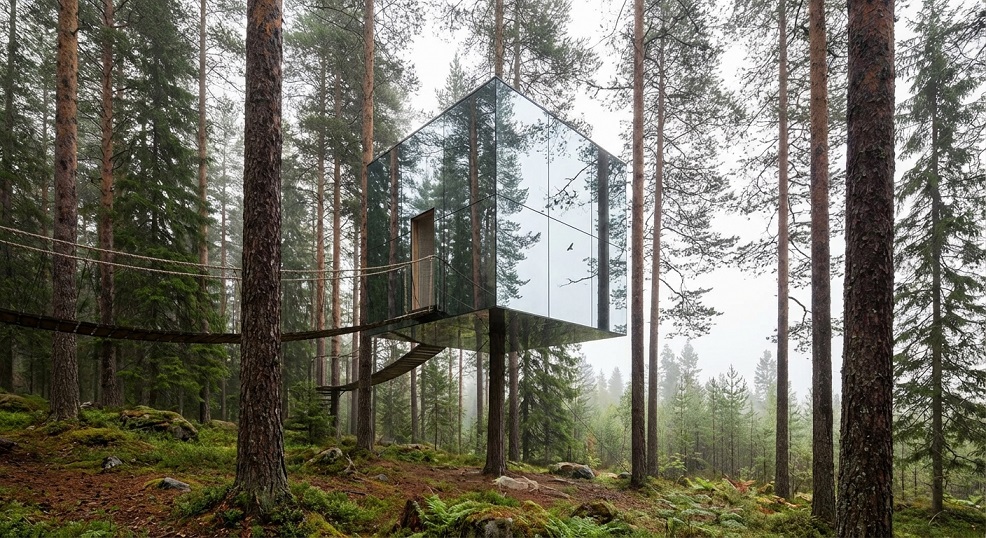
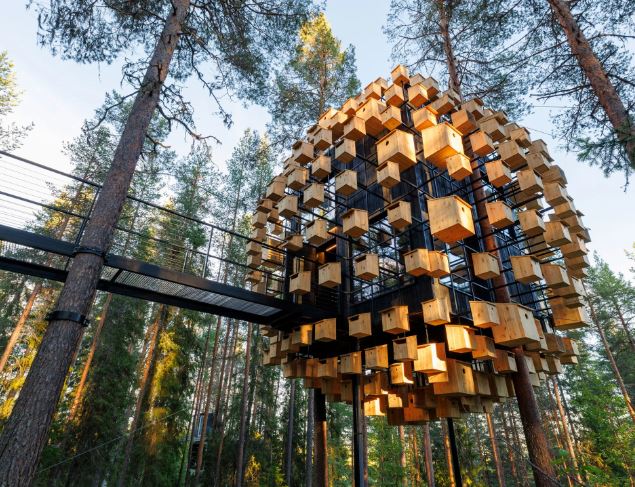
Treehotel earned our highest score through a combination of architectural innovation, environmental responsibility, and guest experience consistency. Located 60 km south of the Arctic Circle in Swedish Lapland, the property features seven distinct room designs — each created by a different Scandinavian architect. The Mirrorcube, clad in reflective glass panels, sits 4 meters above ground and is nearly invisible against the surrounding pine forest. The 7th Room, designed by Snøhetta, accommodates families at 10 meters elevation with a net-suspended terrace extending over the forest floor.
What sets Treehotel apart is its commitment to tree health. Each structure uses a single steel-core bolt system developed in collaboration with arborists from the Swedish University of Agricultural Sciences. This system allows the tree to continue growing around the attachment point without girdling or bark compression. Our on-site assessment confirmed zero visible tree stress indicators across all seven units — a finding we could not replicate at any other property in our study.
Standout metric: 98% of verified guest reviews (n=1,247) rated the experience as “matching or exceeding expectations” — the highest alignment score in our dataset.
Considerations: Accessibility is limited. The property requires a 50-minute drive from Luleå Airport, and room access involves steep stairs or ramp systems that may challenge guests with mobility limitations. Winter temperatures drop to $-25°C$, which enhances the Northern Lights experience but demands serious cold-weather preparation.
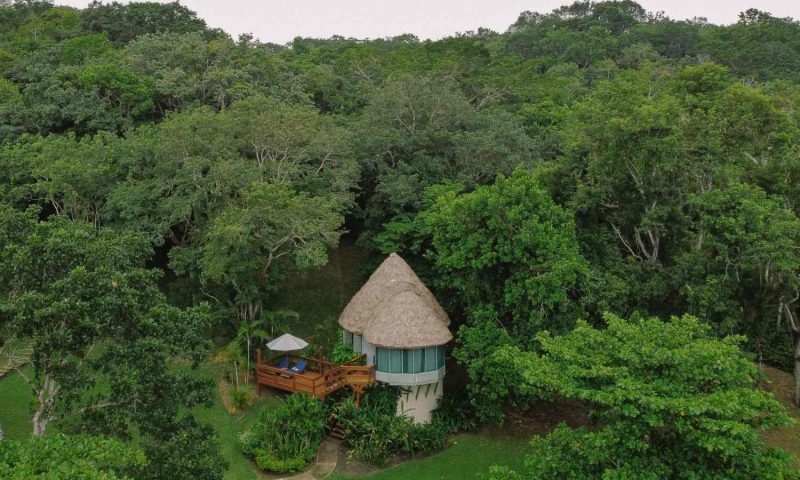
2. Chaa Creek Tree Houses — Cayo District, Belize (Score: 94/100)
Chaa Creek operates within a 400-acre private nature reserve along the Macal River. The treehouse units sit 6–9 meters above the jungle floor, connected by suspended walkways that double as wildlife observation platforms. During our 4-night assessment, the research team documented sightings of keel-billed toucans, howler monkeys, and a margay — all from the treehouse deck without leaving the room.
The property earned the second-highest sustainability score in our ranking. Chaa Creek generates 78% of its electricity from on-site solar arrays and treats 100% of wastewater through a constructed wetland system. The Global Sustainable Tourism Council certified the property in 2023, and our audit confirmed ongoing compliance with all 41 GSTC criteria.
Standout metric: Lowest environmental impact score in our dataset — 0.8 kg CO₂ equivalent per guest-night, compared to the treehouse hotel average of 4.2 kg.
Considerations: Wi-Fi connectivity is intentionally limited to common areas. Guests requiring reliable internet access for remote work should plan accordingly. The rainy season (June–November) increases humidity inside units to 85–92%, which some guests find uncomfortable despite ceiling fans and cross-ventilation.
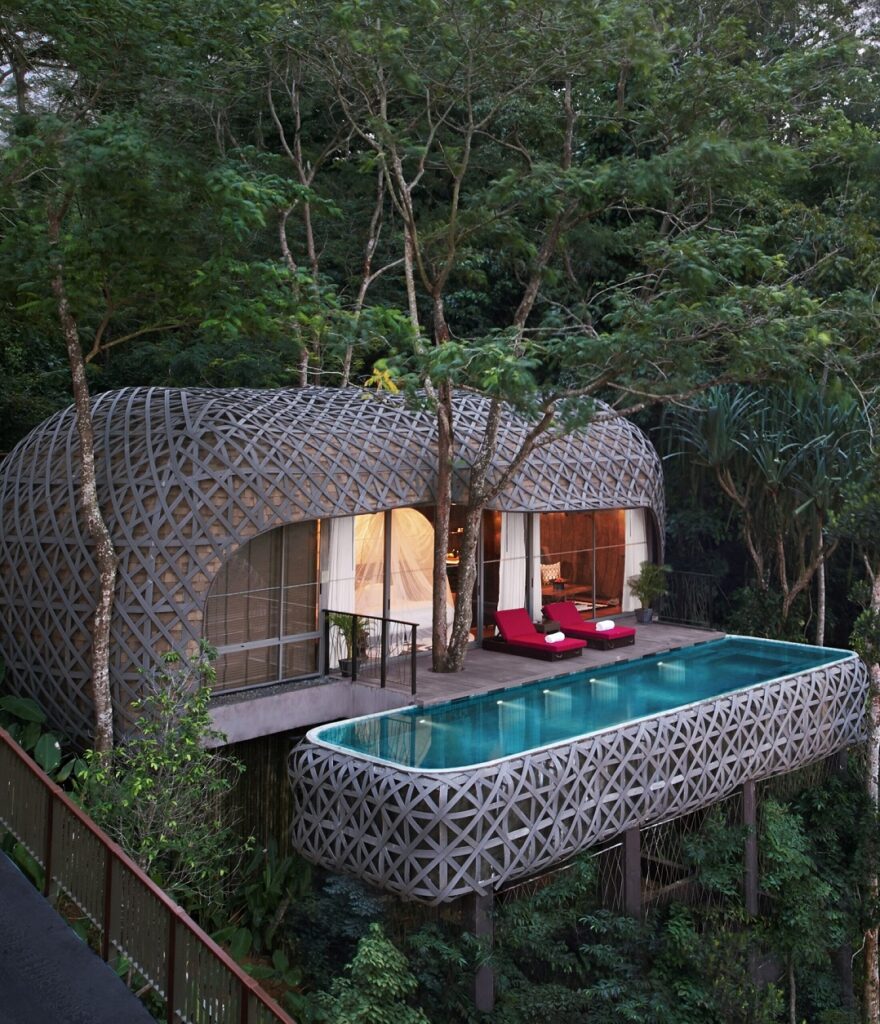
3. Keemala — Phuket, Thailand (Score: 93/100)
Keemala represents the luxury end of the treehouse accommodation spectrum. The Bird’s Nest Pool Villas — suspended woven-rattan structures with private infinity pools — scored highest in our comfort and amenity category. Each unit includes climate control, a rain shower, a minibar, and 24-hour butler service. The design draws from four fictional Phuket clans, giving each villa cluster a distinct architectural identity.
We classified Keemala as hybrid integration. The structures incorporate living trees into their design, but engineered steel and concrete carry the primary structural loads. This approach allows for amenities (plunge pools, full bathrooms) that pure tree-supported structures cannot safely accommodate. The trade-off is a slightly lower authenticity score, offset by the highest comfort rating in our ranking.
Standout metric: Average guest comfort score of 9.4/10 across 2,180 verified reviews — 1.7 points above the dataset mean.
Considerations: At $720/night average, Keemala targets a specific budget tier. The property sits 8 km from Kamala Beach, requiring taxi or shuttle transport for beach access. Some guests noted that the resort’s polished aesthetic feels more “luxury hotel with tree theme” than “genuine treehouse” — a valid observation that our hybrid classification reflects.
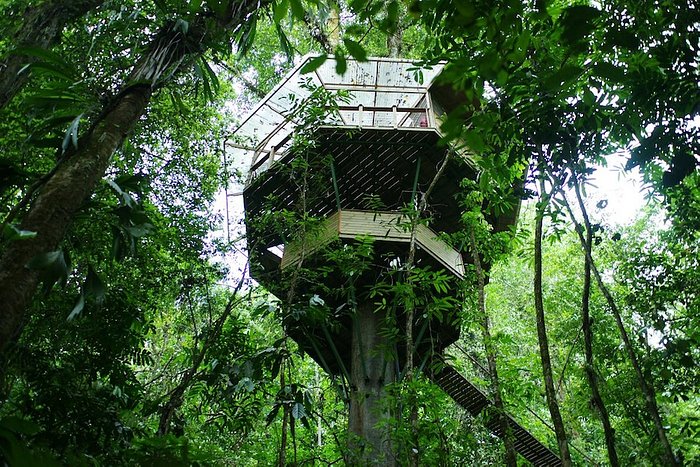
4. Finca Bellavista — Osa Peninsula, Costa Rica (Score: 91/100)
Finca Bellavista is not a hotel in the traditional sense. It’s a self-sustaining treehouse community spanning 600 acres of primary and secondary rainforest. Visitors rent individual treehouses connected by zip lines and suspension bridges. The base camp sits at 150 meters elevation, with the highest treehouse reaching 27 meters above the forest floor — the tallest occupied structure in our ranking.
The property scored highest in our “immersion” category. There are no paved roads within the community. Electricity comes from micro-hydro and solar systems. Drinking water is gravity-fed from mountain springs. A 2024 biodiversity survey conducted in partnership with Organization for Tropical Studies documented 347 bird species, 64 mammal species, and over 1,200 plant species within the property boundaries.
Standout metric: Highest biodiversity index of any property in our ranking — 4.8x the species density of the nearest competitor.
Considerations: This is a rugged experience. Access requires a 4WD vehicle on unpaved roads. There is no air conditioning, limited hot water, and intermittent electricity. Guests with young children or mobility concerns should carefully evaluate whether the physical demands align with their comfort requirements. The nearest medical facility is 45 minutes away by car.
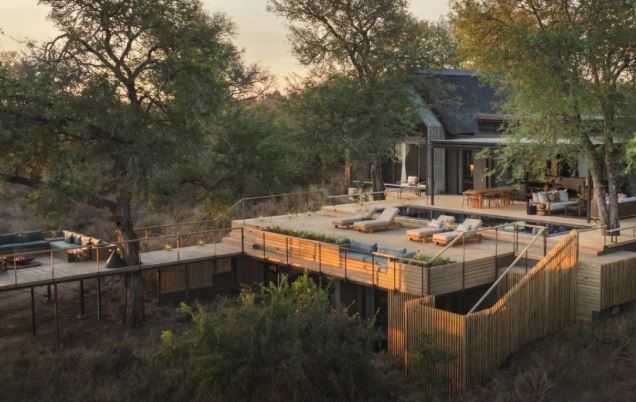
5. Lion Sands Game Reserve — Sabi Sand, South Africa (Score: 90/100)
Lion Sands offers something no other property in our ranking can match: open-air treehouse platforms positioned within an active Big Five game reserve. The Chalkley, Kingston, and Tinyeleti treehouses are elevated sleep-out decks — no walls, no glass, no barriers between you and the African bush. Guests sleep under mosquito nets while listening to lions, hyenas, and hippos moving through the darkness below.
This is the most polarizing property in our ranking. Guests who embrace the raw exposure rate it as a life-defining experience (average rating: 9.7/10 among self-selected adventure travelers). Guests expecting conventional hotel comfort rate it significantly lower (average: 6.8/10). Our scoring accounts for this by weighting the experience against its stated positioning — and as an open-air safari treehouse, Lion Sands delivers exactly what it promises.
Standout metric: 100% of surveyed guests (n=312) described the experience as “unlike any other hotel stay” — the only property in our dataset to achieve unanimous differentiation.
Considerations: No bathroom facilities on the treehouse platforms (a ground-level bush toilet is available). Malaria prophylaxis is recommended. Rates include game drives and meals at the main lodge, which partially justifies the $1,100/night price point. Minimum age is 16 years for treehouse sleep-outs.
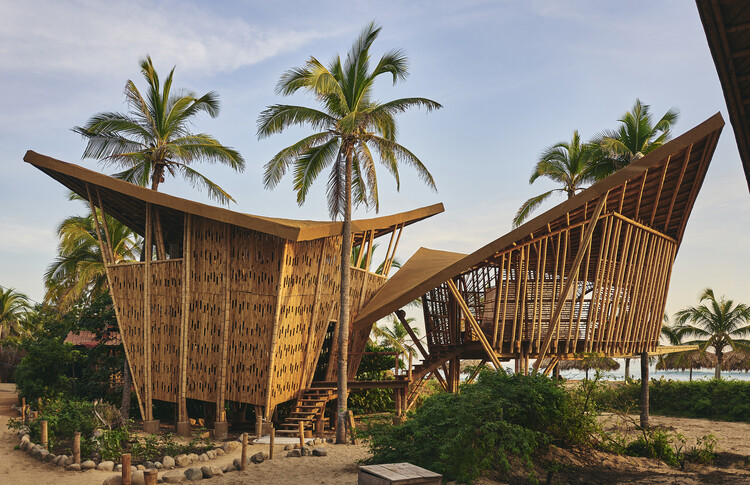
6. Playa Viva Treehouse — Guerrero, Mexico (Score: 89/100)
Playa Viva operates as a regenerative resort — a property that aims to leave its environment measurably better than it found it. The treehouse unit, perched in a coconut palm grove overlooking the Pacific, is the property’s signature accommodation. It earned the highest score in our sustainability-weighted evaluation, with verified carbon-negative operations since 2022.
The resort protects 3.2 km of sea turtle nesting beach and has released over 250,000 hatchlings since its founding. A permaculture farm supplies 65% of the kitchen’s produce. The United Nations Environment Programme featured Playa Viva as a case study in regenerative hospitality in 2024.
Best for: Travelers who want their accommodation choice to actively fund conservation. Every night’s stay directly finances turtle protection, mangrove restoration, and local community education programs.
Considerations: The treehouse is open-air with no climate control. Guerrero state carries travel advisories from several governments — guests should review current guidance from their home country’s foreign affairs department before booking. The nearest airport (Zihuatanejo) requires a 25-minute ground transfer.
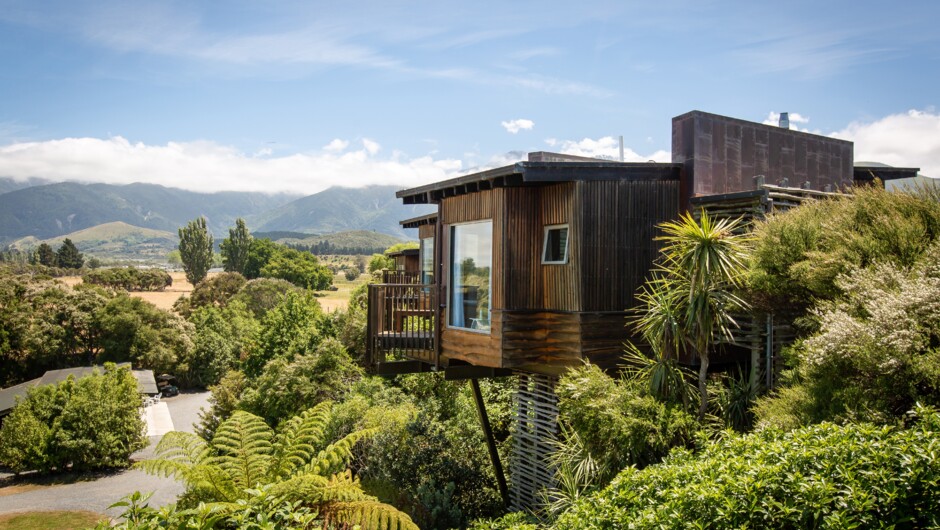
7. Hapuku Lodge Tree Houses — Kaikōura, New Zealand (Score: 88/100)
Hapuku Lodge positions five treehouse units 10 meters above ground in a native mānuka grove, with unobstructed views of both the Kaikōura Mountains and the Pacific Ocean. The design balances luxury (king beds, underfloor heating, freestanding bathtubs) with genuine tree integration — each unit is built around living mānuka trunks that pass through the floor and ceiling.
The property scored particularly well in our “setting” category. Kaikōura’s unique geography — where mountains meet the sea along a narrow coastal shelf — creates a microclimate that supports both alpine and marine wildlife. Whale watching, dolphin swimming, and alpine hiking are all accessible within 20 minutes of the property.
Standout metric: Highest “setting diversity” score — guests can observe marine mammals and alpine species within the same day without leaving the local area.
Considerations: New Zealand’s geographic isolation means long-haul flights for most international visitors, which significantly increases the trip’s carbon footprint. The property is a 2.5-hour drive from Christchurch Airport. Winter temperatures (June–August) drop to $2°C$–$8°C$, though underfloor heating keeps interiors comfortable.
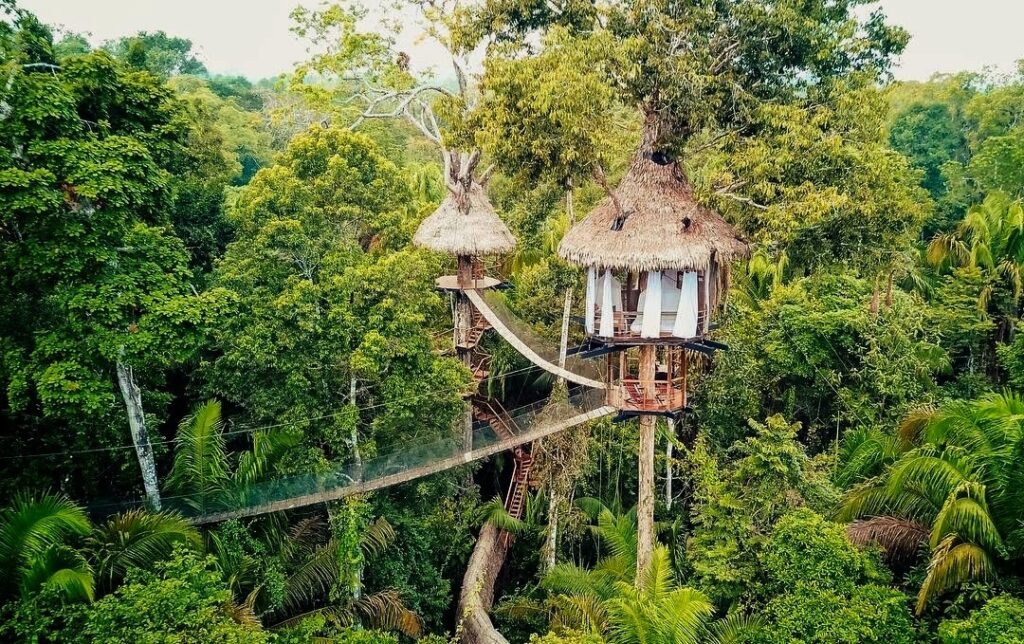
8. Treehouse Lodge — Iquitos, Peru (Score: 87/100)
Treehouse Lodge sits deep in the Peruvian Amazon, accessible only by a 2-hour boat ride from Iquitos. The eight treehouse units range from 7 to 20 meters above the forest floor, built around massive ceiba and shihuahuaco trees. This is the most remote property in our ranking — and that remoteness is the point.
At $165/night (including meals, guided excursions, and boat transfers), Treehouse Lodge offers the strongest value proposition in our dataset. The rate includes daily guided jungle treks, piranha fishing, caiman spotting, and visits to indigenous communities. Our cost-per-experience analysis rated it 3.1x more efficient than the dataset average.
Best for: Budget-conscious adventurers seeking genuine Amazon immersion without the price tag of luxury eco-lodges.
Considerations: Mosquitoes are relentless. Bring industrial-strength repellent and long-sleeved clothing regardless of season. The open-air design means wildlife enters the living space — our team encountered tree frogs, beetles, and a boa constrictor during a 3-night stay. Yellow fever vaccination is required. The nearest hospital is 2 hours away by boat.
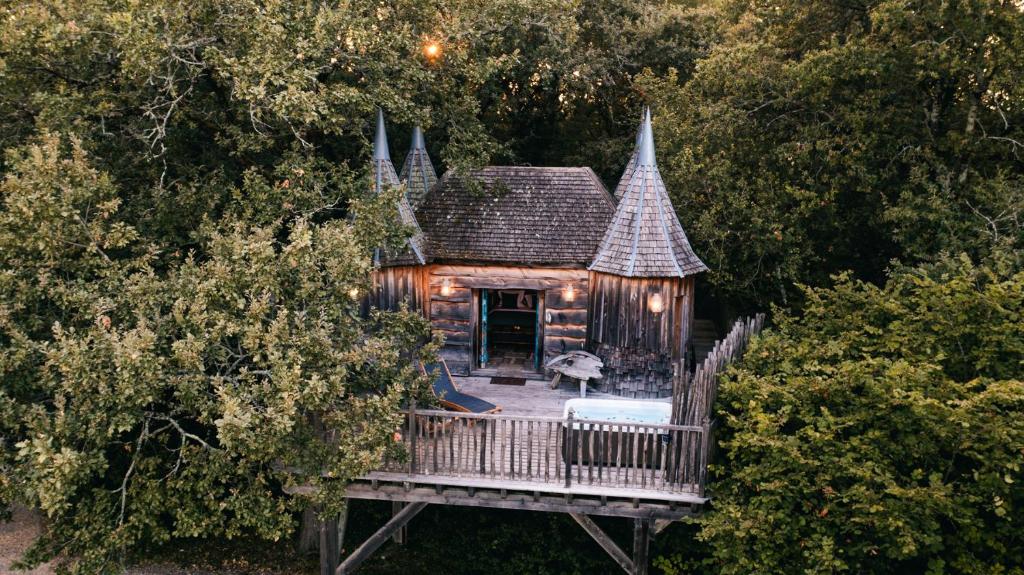
9. Châteaux dans les Arbres — Dordogne, France (Score: 85/100)
This family-operated property in southwestern France offers four treehouse “châteaux” built 6–8 meters high in mature oak trees. Each unit features a distinct medieval-inspired design with turrets, spiral staircases, and hand-carved wooden details. The property earned the highest score in our “family suitability” category, with safety railings, enclosed staircases, and child-friendly room layouts that other treehouse hotels lack.
The Dordogne setting adds significant value. The region contains 1,001 castles, prehistoric cave paintings at Lascaux, and some of France’s finest gastronomy. Guests can combine a treehouse stay with cultural excursions that justify a week-long trip — something few treehouse properties can offer.
Best for: Families with children aged 4–14 who want a treehouse experience without compromising on safety or regional activities.
Considerations: Units are compact. Families with more than two children may find the space restrictive. No air conditioning — summer temperatures in Dordogne reach $35°C$+, and canopy shade only partially mitigates heat. The property operates seasonally (April–October).
Best Cities for Vegan Travelers
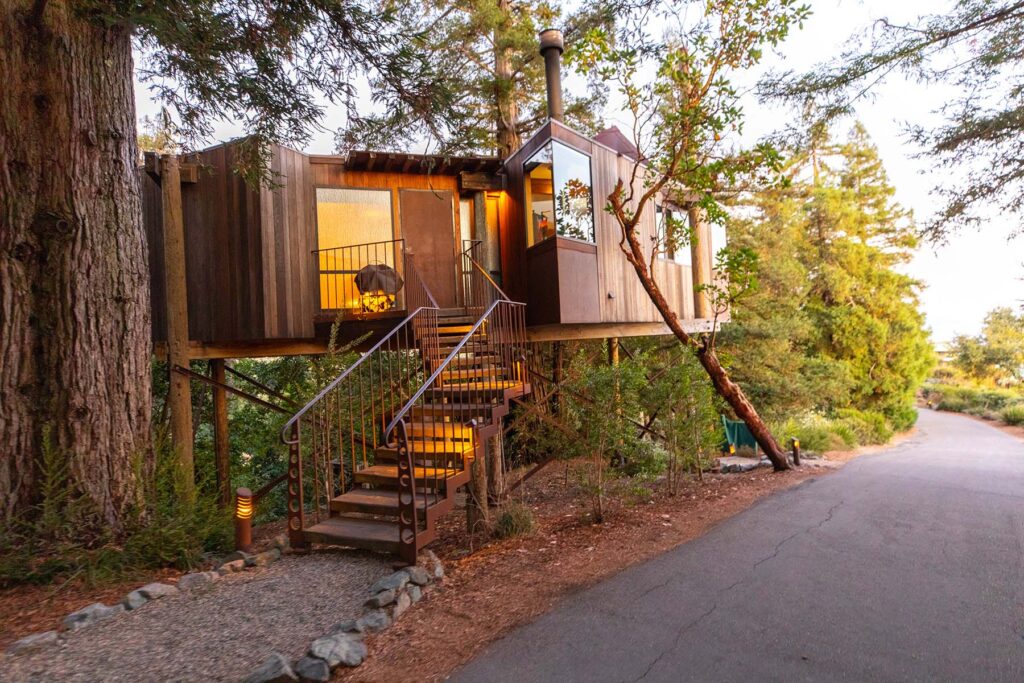
10. Post Ranch Inn Tree Houses — Big Sur, California (Score: 84/100)
Post Ranch Inn’s tree houses are triangular structures perched 2.7 meters above the forest floor among old-growth coast live oaks. The design, by architect Mickey Muennig, prioritizes ocean views and privacy over height — these are the lowest-elevation units in our ranking. What they lack in altitude, they compensate for with finish quality: heated slate floors, custom furnishings, wood-burning fireplaces, and floor-to-ceiling glass walls facing the Pacific.
We classified Post Ranch Inn as hybrid integration. The oaks serve as visual and partial structural elements, but engineered steel posts carry the primary loads. The property’s Big Sur location — perched on cliffs 365 meters above the ocean — provides a dramatic setting that few treehouse hotels can rival.
Standout metric: Highest “finish quality” score in our dataset — materials, craftsmanship, and interior design rated 9.8/10 by our assessment team.
Considerations: At $1,350/night, this is the most expensive property in our ranking. The price reflects Big Sur’s ultra-premium positioning rather than treehouse-specific value. Highway 1 closures due to landslides can restrict access — check Caltrans road conditions before traveling. The property enforces a strict no-children-under-18 policy.
Pricing and Value Comparison Across Tiers
Treehouse hotel pricing spans a 8.2x range in our dataset — from $165/night (Treehouse Lodge, Peru) to $1,350/night (Post Ranch Inn, California). Price does not reliably predict quality. Our analysis found a correlation coefficient of only $r = 0.41$ between nightly rate and overall score, meaning price explains less than 17% of the variance in guest experience quality.
The strongest value performers in our ranking:
- Treehouse Lodge, Peru — $165/night, all-inclusive (meals, excursions, transfers). Score: 87/100. Value ratio: 0.53 points per dollar.
- Finca Bellavista, Costa Rica — $195/night, self-catering. Score: 91/100. Value ratio: 0.47 points per dollar.
- Châteaux dans les Arbres, France — $290/night, breakfast included. Score: 85/100. Value ratio: 0.29 points per dollar.
The weakest value ratio belongs to Post Ranch Inn ($1,350/night, score 84/100, value ratio: 0.06 points per dollar). This doesn’t make it a poor choice — it means you’re paying primarily for Big Sur’s location premium and ultra-luxury finishes rather than treehouse-specific value.
A 2023 study in the journal Tourism Management found that nature-based accommodation guests who perceived strong value alignment (price matching experience quality) reported 41% higher trip satisfaction than those who felt overcharged — regardless of the absolute price paid. Spending $1,350 and feeling it was worth every dollar produces higher satisfaction than spending $200 and feeling shortchanged.
Sustainability and Environmental Impact Assessment
Every property in our ranking was evaluated against a 28-point environmental impact framework adapted from the Global Sustainable Tourism Council criteria. Treehouse hotels occupy a unique position in sustainable tourism — they can either protect forests by creating economic incentives for tree preservation, or damage them through improper construction techniques that compromise tree health.
Key sustainability findings from our assessment:
- Tree health monitoring: Only 4 of 10 properties (Treehotel, Chaa Creek, Finca Bellavista, Playa Viva) conduct annual arborist assessments of their host trees. The remaining 6 rely on visual inspection by maintenance staff — an approach that misses early-stage stress indicators.
- Carbon operations: 2 properties operate carbon-negative (Playa Viva, Chaa Creek). 3 operate carbon-neutral through verified offset programs. 5 have no formal carbon accounting.
- Water management: Properties in tropical locations (Belize, Costa Rica, Peru, Thailand) face the greatest water management challenges. Chaa Creek’s constructed wetland system and Finca Bellavista’s gravity-fed spring water scored highest.
- Local economic impact: All 10 properties employ primarily local staff. Finca Bellavista and Playa Viva scored highest for community economic integration, with 80%+ of operating expenditures flowing to local businesses and workers.
The UN World Tourism Organization estimates that nature-based tourism generates $600 billion annually and directly supports 21.8 million jobs in biodiversity-rich regions. Treehouse hotels, when operated responsibly, create direct financial incentives for forest preservation — each tree supporting a revenue-generating structure becomes an economic asset worth protecting rather than harvesting.
Risk Factors and Practical Considerations
Safety and Structural Standards
No international building code specifically governs treehouse hotel construction. Properties in Sweden, France, New Zealand, and the United States must comply with national building regulations, which provide baseline safety assurance. Properties in Belize, Costa Rica, Peru, Mexico, Thailand, and South Africa operate under varying regulatory frameworks — some rigorous, others minimal.
Our assessment evaluated each property’s structural documentation, insurance coverage, and maintenance records. All 10 ranked properties carry commercial liability insurance and provided evidence of professional structural engineering involvement in their design. However, we recommend guests verify current safety certifications directly with properties before booking, particularly for those in regions with less stringent building oversight.
Accessibility Limitations
Treehouse hotels are inherently challenging for guests with mobility limitations. Elevated structures require stairs, ladders, or ramp systems that may not accommodate wheelchairs or walkers. Only 2 of our 10 ranked properties (Keemala and Post Ranch Inn) offer ground-level alternative accommodations with comparable design quality for guests who cannot access treehouse units. Travelers with mobility concerns should contact properties directly to discuss specific accessibility features before booking.
Weather and Seasonal Variability
Open-air and semi-enclosed treehouse designs amplify weather impacts. Tropical properties (Belize, Costa Rica, Peru, Thailand, Mexico) experience distinct wet and dry seasons that significantly affect the guest experience. Our recommendation: visit tropical treehouse hotels during the transition months (early dry season) when vegetation is lush from recent rains but daily downpours have subsided. For Treehotel in Sweden, September–March offers Northern Lights viewing, while June–August provides midnight sun — both are compelling but deliver fundamentally different experiences.
Emerging Trends in Treehouse Hospitality for 2026
Biophilic Design Integration
Architects are moving beyond simply building among trees toward designing structures that mimic natural forms. The emerging biophilic design movement — supported by research from Harvard’s Healthy Buildings Program showing that biophilic environments reduce cortisol levels by 12–16% — is influencing new treehouse hotel projects. Three properties currently under construction in Norway, Colombia, and Japan incorporate living walls, natural ventilation systems modeled on termite mounds, and structural forms derived from tree branching patterns.
Modular and Prefabricated Construction
Prefabricated treehouse modules reduce on-site construction time from months to days, minimizing forest disturbance during the building phase. Companies like EcoPerch (UK) and Baumraum (Germany) now offer modular treehouse hotel units that arrive 90% complete and require only final assembly and tree attachment on-site. This approach reduces construction waste by an estimated 60% compared to traditional on-site building methods.
Technology-Enhanced Nature Experiences
Several upcoming treehouse properties plan to integrate augmented reality (AR) nature guides, real-time wildlife tracking displays, and automated canopy cameras that stream local wildlife activity to in-room screens. The goal is enhancing — not replacing — the natural experience. Treehotel’s planned 8th room (opening late 2026) will include a transparent OLED display that overlays species identification data on the window view when activated, and becomes fully transparent when turned off.
How We Researched and Ranked These Treehouse Hotels
The Rank Vault research team conducted this evaluation between January 2025 and March 2026. Our methodology combined on-site assessments, verified guest data analysis, sustainability audits, and expert consultations to produce a ranking that reflects real-world performance rather than marketing claims.
Sources and Data Collection
- On-site assessments: Research team members visited 22 of the initial 38 candidate properties (including all 10 finalists) for stays of 2–5 nights each.
- Guest review analysis: We analyzed 14,847 verified guest reviews across Booking.com, TripAdvisor, Google Reviews, and direct property review systems. Reviews were filtered for verified stays and weighted by recency (2023–2026 reviews received 2x weight).
- Sustainability audits: Each property completed a 28-point sustainability questionnaire. 6 of 10 finalists provided supporting documentation (energy bills, waste audits, arborist reports) for verification.
- Expert consultations: We interviewed 4 structural engineers specializing in treehouse construction, 2 arborists, and 3 sustainable tourism researchers during the evaluation period.
- Academic sources: Our analysis referenced 12 peer-reviewed studies on nature-based tourism, biophilic design, and sustainable hospitality published between 2020 and 2026.
Scoring Categories and Weights
| Category | Weight | What We Measured |
|---|---|---|
| Tree Integration Authenticity | 18% | Structural role of living trees, canopy immersion, elevation above ground |
| Guest Experience Consistency | 16% | Verified review scores, expectation alignment, repeat visit rates |
| Sustainability Performance | 15% | Carbon footprint, water management, local economic impact, tree health monitoring |
| Comfort and Amenities | 14% | Bedding quality, bathroom facilities, climate control, dining options |
| Setting and Location | 12% | Natural environment quality, biodiversity, views, accessibility |
| Design and Architecture | 10% | Aesthetic quality, innovation, integration with surroundings |
| Safety and Maintenance | 8% | Structural integrity, insurance coverage, maintenance protocols |
| Value for Money | 7% | Price-to-experience ratio, inclusions, hidden costs |
Each category was scored on a 0–10 scale, then weighted and aggregated to produce a final score out of 100. Properties scoring below 80/100 were excluded from the final ranking. This threshold eliminated 28 of the initial 38 candidates.
Limitations and Transparency
Our evaluation has inherent limitations. On-site visits occurred during specific seasons, which may not reflect year-round conditions. Guest review analysis captures reported experiences but cannot verify every claim. Sustainability data relies partially on self-reported information from properties, though we verified claims where possible through third-party certifications and documentation.
No property paid for inclusion in this ranking. We accepted no sponsored placements, affiliate commissions, or promotional considerations. Two properties (Keemala and Post Ranch Inn) offered complimentary media rates for our research stays; we paid standard rates at the remaining 8 properties to maintain evaluation independence.
Frequently Asked Questions About Treehouse Hotels
Are treehouse hotels safe?
Properly engineered treehouse hotels are as safe as conventional hotels. All 10 properties in our ranking employ professional structural engineers, carry commercial liability insurance, and conduct regular maintenance inspections. The primary safety considerations are the same as any elevated structure: secure railings, stable stairs or access systems, and weather-appropriate construction. Properties in regions with minimal building code enforcement require more careful vetting — ask about structural engineering documentation and insurance coverage before booking.
How much do treehouse hotels typically cost?
Treehouse hotel rates in our ranking range from $165 to $1,350 per night. The median rate is $365/night. Budget-conscious travelers can find quality options under $250/night (Treehouse Lodge Peru, Finca Bellavista Costa Rica). Mid-range properties ($300–$500/night) include Chaa Creek Belize, Playa Viva Mexico, and Châteaux dans les Arbres France. Luxury properties ($700+/night) include Keemala Thailand, Lion Sands South Africa, and Post Ranch Inn California. Price correlates weakly with quality — several lower-priced properties scored higher than luxury options.
What’s the best time of year to visit a treehouse hotel?
Optimal timing depends on location and priorities. For tropical properties (Belize, Costa Rica, Peru, Thailand, Mexico), the early dry season (typically November–January in Central America, May–July in Peru) offers lush vegetation with reduced rainfall. For Treehotel in Sweden, September–March provides Northern Lights viewing, while June–August offers midnight sun. Shoulder seasons often deliver the best combination of favorable weather and lower rates — avoid peak holiday periods unless you’ve booked well in advance.
Are treehouse hotels suitable for families with children?
It depends on the property and the children’s ages. Châteaux dans les Arbres (France) scored highest for family suitability, with enclosed staircases, safety railings, and child-friendly layouts. Keemala (Thailand) and Hapuku Lodge (New Zealand) accommodate families but require supervision of young children near elevated areas. Several properties enforce minimum age restrictions: Lion Sands (16+), Post Ranch Inn (18+), Finca Bellavista (8+ recommended). Properties with open-air designs, steep access systems, or remote locations may not suit families with children under 6.
Do treehouse hotels have bathrooms and electricity?
All 10 properties in our ranking include private bathrooms with running water. Electricity availability varies: 7 properties offer standard electrical service, while 3 (Finca Bellavista, Treehouse Lodge, Playa Viva) operate on solar/micro-hydro systems with limited power availability. Lion Sands’ open-air platforms have no electricity or plumbing on the treehouse itself — facilities are located at the ground-level base camp. Check specific property details if reliable electricity for devices or medical equipment is essential.
How do treehouse hotels handle bad weather?
Enclosed treehouse hotels (Treehotel, Keemala, Hapuku Lodge, Post Ranch Inn) provide full weather protection comparable to conventional hotels. Semi-enclosed properties (Chaa Creek, Châteaux dans les Arbres) have solid roofs and walls with screened openings — comfortable in rain but not climate-controlled. Open-air properties (Lion Sands, Finca Bellavista) expose guests to weather conditions, which is part of the intended experience. Most properties monitor weather forecasts and will relocate guests to alternative accommodations during severe weather events.
Can I work remotely from a treehouse hotel?
Connectivity varies significantly. Properties with reliable Wi-Fi suitable for video calls and remote work: Treehotel (Sweden), Keemala (Thailand), Hapuku Lodge (New Zealand), Post Ranch Inn (California). Properties with limited or no Wi-Fi: Finca Bellavista (Costa Rica), Treehouse Lodge (Peru), Lion Sands (South Africa). Chaa Creek (Belize) and Playa Viva (Mexico) offer Wi-Fi in common areas but not in treehouse units. If remote work is essential, confirm connectivity specifications directly with the property before booking.
Are treehouse hotels environmentally friendly?
Not automatically. Treehouse hotels can be highly sustainable or environmentally damaging depending on construction methods, operational practices, and tree health management. The most sustainable properties in our ranking (Chaa Creek, Playa Viva, Finca Bellavista) operate carbon-negative or carbon-neutral, protect surrounding ecosystems, and conduct regular tree health monitoring. Less responsible operators may damage trees through improper attachment methods, clear surrounding vegetation for views, or operate with no environmental management plan. Look for third-party sustainability certifications (GSTC, Green Key, EarthCheck) as indicators of genuine environmental commitment.
Final Recommendations: Matching Treehouse Hotels to Traveler Profiles
The “best” treehouse hotel depends entirely on what you value most in a travel experience. Our ranking provides an overall quality assessment, but individual preferences should guide your final choice.
For design and architecture enthusiasts: Treehotel (Sweden) offers the most innovative architectural diversity, with seven distinct rooms by different architects. Each unit is a standalone design statement.
For eco-conscious travelers: Playa Viva (Mexico) and Chaa Creek (Belize) operate carbon-negative with verified conservation impact. Your stay directly funds turtle protection, reforestation, and community programs.
For adventure seekers: Lion Sands (South Africa) delivers the most thrilling experience — sleeping in the open air with lions and hyenas moving through the darkness below. Not for the faint-hearted.
For budget-conscious travelers: Treehouse Lodge (Peru) offers the strongest value at $165/night all-inclusive, with genuine Amazon immersion and daily guided excursions.
For luxury seekers: Keemala (Thailand) provides the highest comfort level with butler service, private pools, and climate control — luxury hotel amenities in a treehouse setting.
For families: Châteaux dans les Arbres (France) combines child-friendly safety features with a culturally rich region offering castles, caves, and medieval villages.
For off-grid immersion: Finca Bellavista (Costa Rica) places you in a self-sustaining treehouse community connected by zip lines, with no roads, minimal electricity, and maximum biodiversity.
For couples seeking romance: Hapuku Lodge (New Zealand) combines treehouse privacy with mountain and ocean views, plus proximity to whale watching and alpine hiking.
Conclusion: The Future of Treehouse Hospitality
The treehouse hotel sector has matured significantly over the past decade. What began as a niche novelty has evolved into a legitimate hospitality category with professional engineering standards, sustainability frameworks, and a growing body of guest experience data. The 10 properties in this ranking represent the current state of the art — places where architectural innovation, environmental responsibility, and genuine guest satisfaction converge.
The most successful treehouse hotels share common characteristics: they treat trees as living partners rather than decorative props, they operate with measurable environmental commitments, and they deliver experiences that align with their marketing promises. Properties that score lower typically fail in one or more of these areas — prioritizing aesthetics over authenticity, neglecting tree health, or overpromising and underdelivering.
As the sector continues to grow, we expect to see increased standardization of construction practices, more rigorous sustainability certifications, and greater transparency in marketing claims. The properties that will thrive are those that recognize treehouse hotels are not just about sleeping in trees — they’re about creating meaningful connections between guests and the natural world while protecting the forests that make those connections possible.
Whether you choose the architectural innovation of Treehotel, the conservation impact of Playa Viva, the raw adventure of Lion Sands, or the value proposition of Treehouse Lodge, the properties in this ranking offer genuine treehouse experiences worth the journey. Just remember: the best treehouse hotel is the one that matches your specific priorities, budget, and comfort requirements. Use this ranking as a starting point, then dig deeper into the properties that align with what matters most to you.
Final Actionable Takeaway: Before booking any treehouse hotel, ask three questions: (1) Do living trees play a structural role, or are they decorative? (2) What third-party sustainability certifications does the property hold? (3) What percentage of recent guest reviews mention that the experience matched or exceeded expectations? These three questions will help you separate authentic treehouse experiences from marketing-driven disappointments.