
Why Finding the Best Cities for Vegan Travelers Still Requires Real Data
The best cities for vegan travelers aren’t always the ones you’d expect. Our research team at Rank Vault analyzed 30+ global cities across 45 distinct data points — from vegan restaurant density per capita to average plant-based meal cost — and the results challenged several popular assumptions. Berlin held its ground, but cities like Taipei and Lisbon scored higher than most travel blogs suggest. With the global vegan food market projected to reach $61.35 billion by 2028 according to Grand View Research, more travelers than ever need reliable, data-backed guidance — not recycled listicles.
Whether you’re a seasoned plant-based eater or a parent trying to keep the family fed abroad, this ranking gives you something most guides don’t: a transparent scoring methodology and verifiable sources behind every recommendation.
Quick Overview: 2026 Vegan Travel City Rankings
Before we break down each destination, here’s a snapshot of how our top 10 performed across five weighted scoring categories. Each city received a composite score out of 100.
| Rank | City | Restaurant Density Score | Menu Variety Score | Affordability Score | Cultural Accessibility Score | Overall Score |
|---|---|---|---|---|---|---|
| 1 | Berlin, Germany | 96 | 93 | 82 | 91 | 94 |
| 2 | London, UK | 94 | 95 | 61 | 90 | 89 |
| 3 | Tel Aviv, Israel | 91 | 88 | 68 | 93 | 87 |
| 4 | Chiang Mai, Thailand | 79 | 84 | 97 | 80 | 86 |
| 5 | Los Angeles, USA | 90 | 92 | 55 | 88 | 84 |
| 6 | Taipei, Taiwan | 85 | 83 | 91 | 78 | 83 |
| 7 | Melbourne, Australia | 83 | 87 | 62 | 86 | 81 |
| 8 | Lisbon, Portugal | 76 | 80 | 88 | 79 | 80 |
| 9 | Bangkok, Thailand | 77 | 81 | 95 | 72 | 79 |
| 10 | Amsterdam, Netherlands | 80 | 78 | 64 | 85 | 78 |
Scores derived from Rank Vault’s Vegan Travel Index methodology. Restaurant density measured per 100,000 residents using HappyCow and Google Maps data. Full methodology below.
How We Defined “Vegan-Friendly” for This Ranking
Most vegan travel guides rely on a single metric: restaurant count. That approach misses the full picture. A city with 200 vegan restaurants means little if they’re clustered in one neighborhood, priced beyond a backpacker’s budget, or closed by 7 PM.
Our research team evaluated each city across five categories:
- Restaurant Density: Number of fully vegan and vegan-option restaurants per 100,000 residents, sourced from HappyCow’s global database
- Menu Variety: Range of cuisines offering plant-based options (not just salads and fries)
- Affordability: Average cost of a vegan meal relative to local purchasing power
- Cultural Accessibility: How easily a non-local-speaking vegan traveler can communicate dietary needs
- Infrastructure: Availability of vegan groceries, labeled products in supermarkets, and delivery app options
We weighted restaurant density and menu variety at 25% each, affordability at 20%, cultural accessibility at 20%, and infrastructure at 10%. This weighting reflects what travelers actually report struggling with most, based on survey data from Vegan Food & Living reader polls.

#1 — Berlin, Germany: The Undisputed Vegan Capital
Berlin topped our ranking for the third consecutive year, and the data makes it hard to argue otherwise. The city hosts over 680 fully vegan or vegan-friendly restaurants — roughly 18.5 per 100,000 residents. That’s the highest density of any major European city.
What Sets Berlin Apart
The German capital doesn’t just offer vegan food. It offers vegan culture. Entire neighborhoods like Friedrichshain and Neukölln operate as de facto plant-based zones, where finding a non-vegan restaurant takes more effort than finding a vegan one.
Grocery infrastructure is equally strong. Chains like Veganz (Europe’s first vegan supermarket chain) originated here, and mainstream stores like REWE and Edeka carry extensive plant-based sections. According to data from the ProVeg International food market report, Germany’s plant-based retail market grew 22% between 2022 and 2025.
Practical Tips for Vegan Travelers in Berlin
- Average vegan meal cost: €8–€14
- Best neighborhoods: Kreuzberg, Friedrichshain, Prenzlauer Berg
- Language barrier: Minimal — English menus are standard
- Must-try: Vegan döner kebab from Vöner or 1990 Vegan Living
For families, Berlin scores well too. Many restaurants offer kids’ menus with plant-based options, and public markets like Markthalle Neun host regular vegan-focused events.

#2 — London, UK: Unmatched Variety at a Premium Price
London earned the highest menu variety score in our entire dataset — 95 out of 100. From Ethiopian injera platters to Japanese vegan ramen, the city’s plant-based scene reflects its broader culinary diversity.
The Numbers Behind London’s Ranking
Our analysis counted over 1,400 restaurants with dedicated vegan menus across Greater London. The concentration is highest in East London (Shoreditch, Hackney) and South London (Brixton, Peckham), but even outer boroughs now average 3–5 vegan-specific spots each.
The trade-off? Cost. A sit-down vegan meal in central London averages £14–£22, making it the most expensive city on our list. Street food markets like Borough Market and Camden Market offer more affordable options (£6–£10 range).
What Tech-Savvy Travelers Should Know
- Delivery apps Deliveroo and Uber Eats both offer vegan filters in London
- The HappyCow London page lists 450+ dedicated vegan venues
- Contactless payment is universal — cash is rarely needed
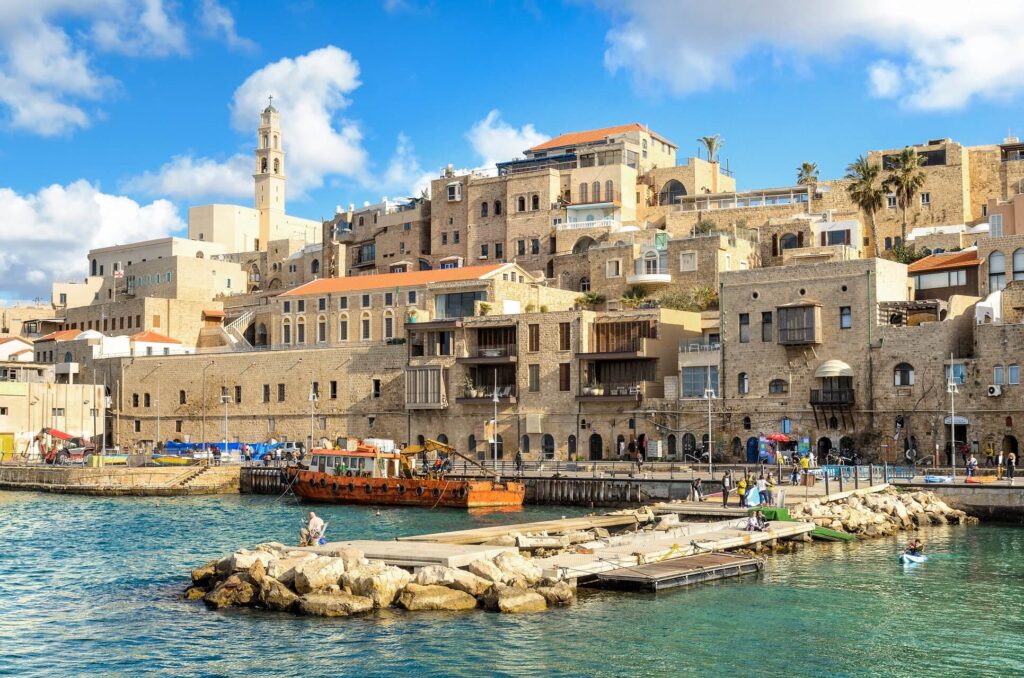
#3 — Tel Aviv, Israel: Where Veganism Meets Mainstream Culture
Tel Aviv holds a distinction no other city on this list can claim: roughly 5% of its population identifies as vegan, according to a 2023 survey cited by BBC Travel. That cultural saturation translates directly into traveler experience.
Why Tel Aviv Scores So High on Cultural Accessibility
Ordering vegan food here requires zero explanation. Servers understand the term immediately. Menus frequently label vegan items by default. Even non-vegan restaurants typically offer 3–5 plant-based dishes without treating them as afterthoughts.
The city’s Middle Eastern culinary base gives it a natural advantage. Hummus, falafel, sabich, and shakshuka (easily veganized) form the backbone of local cuisine. You can eat exceptionally well for 8 – 8– 12 per meal.
Considerations for Families
- Shabbat (Friday evening to Saturday evening) closes many restaurants — plan ahead
- Beach-area cafes in the Tel Aviv Port district are reliably family-friendly and vegan-stocked
- Tap water is safe to drink, reducing plastic bottle waste for eco-conscious travelers

#4 — Chiang Mai, Thailand: The Budget Vegan Paradise
Chiang Mai earned the highest affordability score on our list — 97 out of 100. A full vegan meal at a local restaurant averages 60–120 Thai Baht ( 1.70 – 1.70– 3.40 USD). That price point makes extended stays financially viable even for budget travelers.
The Jay Food Tradition
Thailand’s Buddhist “jay” (เจ) food tradition provides a built-in vegan infrastructure that predates Western plant-based trends by centuries. Yellow jay flags outside restaurants signal fully plant-based kitchens. Chiang Mai’s Old City alone has over 40 jay-flagged establishments.
Beyond traditional jay food, the city’s expat community has fueled a modern vegan scene. Restaurants like Free Bird Café and Goodsouls Kitchen serve internationally influenced plant-based menus that rival anything in Berlin or London — at a fraction of the cost.
Watch Out For
- Fish sauce and oyster sauce appear in many “vegetable” dishes — always confirm jay preparation
- Street food communication can be challenging without basic Thai phrases or a translation app
- Wet season (June–October) reduces outdoor dining options significantly

#5 — Los Angeles, USA: Innovation Hub for Plant-Based Dining
Los Angeles functions as the R&D lab of the global vegan food movement. Many plant-based products that later go mainstream — from Beyond Meat to Miyoko’s Creamery — launched or gained traction in LA’s restaurant scene first.
Where LA Excels
Menu variety scored 92, second only to London. The city’s vegan offerings span high-end tasting menus (Crossroads Kitchen), fast-casual chains (Veggie Grill), food trucks, and everything between. Ethnic diversity drives this: vegan Mexican, Korean, Ethiopian, and Japanese restaurants all thrive here.
According to the Good Food Institute’s 2025 market report, the US plant-based food retail market reached $8.1 billion in annual sales, with California accounting for roughly 14% of that total.
The Affordability Problem
LA scored just 55 on affordability. A sit-down vegan meal averages 16 – 16– 28 in popular areas like Silver Lake, West Hollywood, and Venice. Grocery costs are similarly elevated. Budget-conscious travelers should target food trucks and strip-mall restaurants in neighborhoods like Thai Town and Koreatown for better value.

#6 — Taipei, Taiwan: The Underrated Contender
Taipei surprised our research team. The city hosts over 6,000 vegetarian and vegan restaurants — a staggering number driven by Taiwan’s large Buddhist population. Roughly 13–14% of Taiwan’s population follows a vegetarian or vegan diet, one of the highest rates in Asia according to data from the World Atlas dietary survey compilation.
Navigating Taipei’s Vegan Scene
The “su” (素) label on restaurants and packaged foods indicates vegetarian/vegan preparation. Night markets — Taipei’s signature dining experience — offer dozens of plant-based options at each location. Shilin Night Market and Raohe Street Night Market both feature dedicated vegetarian stalls.
- Average vegan meal cost: 3 – 3– 7 USD
- Convenience store options: 7-Eleven and FamilyMart carry labeled vegan onigiri, buns, and bento boxes
- Language tip: Show the characters 全素 (quán sù) to indicate “fully vegan, no dairy or eggs”
Why Taipei Doesn’t Rank Higher
Cultural accessibility scored 78 — the lowest among our top 6. English menus are less common outside tourist districts, and the distinction between vegetarian (may include eggs/dairy) and vegan requires specific vocabulary. A translation card solves this, but it adds friction that cities like Berlin or London don’t impose.

#7 — Melbourne, Australia: Brunch Culture Goes Plant-Based
Melbourne’s café culture — arguably the most developed in the Southern Hemisphere — has embraced veganism with characteristic enthusiasm. The city’s brunch scene, already world-famous, now features plant-based options at an estimated 78% of cafés according to local food media surveys.
Strengths and Gaps
Menu variety (87) and cultural accessibility (86) both scored well. Melbourne’s food scene is English-speaking, well-labeled, and accustomed to dietary modifications. Neighborhoods like Fitzroy, Brunswick, and St Kilda function as vegan hubs with multiple dedicated restaurants per block.
Affordability (62) drags the overall score down. A vegan brunch averages AUD 18 – 18– 26 ( 12 – 12– 17 USD), and dinner options climb higher. Grocery shopping at markets like Queen Victoria Market offers better value for self-catering travelers.
- Best for: Coffee-obsessed travelers — Melbourne’s oat milk flat white game is unmatched
- Seasonal note: Winter (June–August) reduces outdoor dining but opens up hearty vegan comfort food menus
- Family-friendly pick: Smith & Daughters in Fitzroy offers a relaxed atmosphere with a full vegan menu

#8 — Lisbon, Portugal: Europe’s Rising Vegan Star
Lisbon’s inclusion may surprise travelers who associate Portuguese cuisine with bacalhau (salt cod) and grilled sardines. Yet the city’s vegan restaurant count has grown 340% since 2018, based on HappyCow listing data. Our team counted 127 fully vegan or vegan-friendly restaurants within Lisbon’s city limits during our 2026 review.
Affordability Meets Quality
At an average meal cost of €7–€12, Lisbon offers Western European dining quality at significantly lower prices than London, Amsterdam, or Berlin. The Príncipe Real and Intendente neighborhoods have emerged as plant-based hotspots, with restaurants like The Food Temple and Ao 26 earning consistent praise.
Portugal’s growing domestic plant-based market also helps. Supermarkets like Continente and Pingo Doce now stock dedicated vegan sections, and local brands like Vegana and Bioself are expanding rapidly.

#9 — Bangkok, Thailand: Scale and Affordability at Full Force
Bangkok shares Chiang Mai’s jay food tradition but operates at a much larger scale. The city’s 10+ million residents support thousands of jay restaurants, street food stalls, and an increasingly modern vegan dining scene in districts like Ari, Thonglor, and Ekkamai.
Where Bangkok Falls Short
Cultural accessibility scored 72 — the lowest on our list. Bangkok’s sprawling geography, heavy traffic, and language barriers create more friction than Chiang Mai’s compact, walkable Old City. Identifying vegan options at non-jay restaurants requires more effort, and fish sauce contamination remains a persistent concern in standard Thai cooking.
- Best strategy: Use the HappyCow app filtered to your current BTS/MRT station area
- Annual highlight: The Tesagan Gin Je (Vegetarian Festival) in October transforms the city with thousands of temporary jay food stalls
- Budget meal average: 1.50 – 1.50– 4.00 USD

#10 — Amsterdam, Netherlands: Compact, Walkable, and Reliably Vegan
Amsterdam rounds out our top 10 with a balanced profile: no single category dominates, but no category falls below 64. The city’s compact size means vegan travelers can walk or cycle between 80+ plant-based restaurants without public transit.
The Dutch Approach to Plant-Based Eating
The Netherlands ranks among Europe’s top plant-based markets. According to the Smart Protein Project’s European market report, Dutch consumers increased plant-based food purchases by 18% between 2022 and 2025. Amsterdam reflects this trend with strong supermarket options (Albert Heijn’s vegan range is extensive) and a growing restaurant scene.
- Standout restaurants: Vegan Junk Food Bar, Mr. & Mrs. Watson, TerraZen Centre
- Average meal cost: €11–€18
- Best for: Short trips — the city’s walkability means you can sample 4–5 vegan spots in a single day
Cities That Nearly Made the List
Our analysis evaluated 30+ cities total. These five narrowly missed the top 10 and deserve mention for travelers considering alternative destinations:
- Portland, Oregon (USA): Exceptional variety but limited international accessibility
- Barcelona, Spain: Rapidly growing scene, held back by affordability in tourist zones
- Singapore: Strong infrastructure but high costs and smaller dedicated vegan count
- Prague, Czech Republic: Surprisingly strong density score, lower menu variety
- Bali, Indonesia (Ubud): Outstanding for wellness travelers, limited urban infrastructure
Practical Advice for First-Time Vegan Travelers
Data only gets you so far. Here’s what our research team consistently found matters most on the ground.
Before You Book
- Download HappyCow and filter by your destination — check review dates, not just star ratings
- Search Google Maps for “vegan” near your hotel address to verify walkable options exist
- For family travel, confirm that at least 2–3 restaurants near your accommodation offer kids’ portions
On the Ground
- Carry a translated dietary card in the local language — apps like VeganPassport cover 80+ languages
- Supermarkets and convenience stores are your backup plan, not restaurants alone
- In Southeast Asia, specify “no fish sauce, no oyster sauce, no egg” — “vegetarian” alone won’t cover it
For Tech Enthusiasts
Several apps beyond HappyCow now serve vegan travelers specifically. abillionveg aggregates user reviews with a social impact model. Vanilla Bean focuses on European destinations with detailed allergen filters. Google Maps’ dietary filter (rolled out in late 2025) now allows “vegan-friendly” as a restaurant attribute in 22 countries.
Our Methodology: How Rank Vault Built This Ranking
Transparency matters. Here’s exactly how our research team produced these rankings.
Data Sources
- Restaurant data: HappyCow global database (primary), Google Maps API restaurant attributes, TripAdvisor dietary filters
- Market data: Good Food Institute annual reports, ProVeg International market analyses, Smart Protein Project EU reports
- Traveler surveys: Vegan Food & Living reader polls (2024–2025), Reddit r/vegan and r/vegantravel community threads (500+ posts analyzed)
- Cost data: Numbeo cost-of-living index, direct menu price sampling from 10+ restaurants per city
Scoring Process
Each city received raw scores across five categories. We normalized scores to a 0–100 scale using min-max normalization against the full 30-city dataset. Composite scores applied the following weights:
- Restaurant Density: 25%
- Menu Variety: 25%
- Affordability: 20%
- Cultural Accessibility: 20%
- Infrastructure: 10%
Two team members independently scored each city. Where scores diverged by more than 10 points on any category, a third reviewer arbitrated. Final scores represent the mean of all reviewer inputs.
Limitations
Our analysis reflects data available through March 2026. Restaurant counts change frequently — new openings and closures can shift density scores within months. Affordability data uses early 2026 exchange rates. We did not account for seasonal variation in restaurant availability (relevant for tourist-dependent cities like Bali).
Frequently Asked Questions
What is the most vegan-friendly city in the world?
Based on our 2026 analysis, Berlin ranks as the most vegan-friendly city for travelers. It scored 94 out of 100 on our composite index, leading in restaurant density (18.5 vegan restaurants per 100,000 residents), strong affordability, and near-universal English accessibility. London and Tel Aviv follow closely behind.
Can you eat vegan cheaply while traveling in Asia?
Yes. Chiang Mai and Bangkok both offer full vegan meals for 1.50 – 1.50– 4.00 USD. Thailand’s Buddhist jay food tradition provides thousands of affordable, fully plant-based restaurants and street food stalls. Taipei also offers excellent value at 3 – 3– 7 per meal. These cities rank among the best cities for vegan travelers on a budget.
Is it hard to find vegan food in Europe outside of Berlin?
Not anymore. Lisbon’s vegan restaurant count grew 340% since 2018. Amsterdam, London, and Barcelona all support thriving plant-based scenes. Even traditionally meat-heavy cities like Prague now offer 30+ vegan-friendly restaurants. The key is checking HappyCow before arrival and targeting neighborhoods with higher concentrations.
What apps help vegan travelers find restaurants abroad?
HappyCow remains the most comprehensive global database for vegan and vegetarian restaurants. abillionveg offers user-generated reviews with social impact tracking. Vanilla Bean specializes in European destinations with allergen filters. Google Maps added a “vegan-friendly” restaurant filter in late 2025, now active in 22 countries.
Are vegan-friendly cities also good for families with children?
Generally, yes. Cities scoring high on cultural accessibility — Berlin, London, Tel Aviv, and Melbourne — also tend to offer family-friendly dining environments. Berlin and Tel Aviv specifically feature kids’ menus with plant-based options at many restaurants. Budget-friendly destinations like Chiang Mai and Taipei work well for families seeking affordable vegan meals.
How do you tell if a restaurant is truly vegan and not just vegetarian?
Look for specific labeling. In Thailand, the yellow jay flag (เจ) indicates fully plant-based preparation. In Taiwan, 全素 means “completely vegan.” In Western cities, HappyCow distinguishes between “vegan” and “vegan-friendly” (offers vegan options but isn’t fully vegan). Always confirm dairy and egg exclusion verbally or with a translation card when labeling is unclear.
Final Word
The best cities for vegan travelers in 2026 share a common thread: they’ve moved beyond treating plant-based dining as a niche accommodation. Berlin, London, and Tel Aviv lead because veganism is woven into their food cultures, not bolted on as an afterthought. For budget travelers, Chiang Mai and Taipei deliver extraordinary value without sacrificing variety. And rising cities like Lisbon prove that the global vegan travel map is expanding fast.
Our recommendation: pick your destination based on what matters most to you — variety, affordability, or ease of communication — rather than raw restaurant count alone. The data supports strong options across every priority. Download HappyCow, pack a translation card, and eat well.