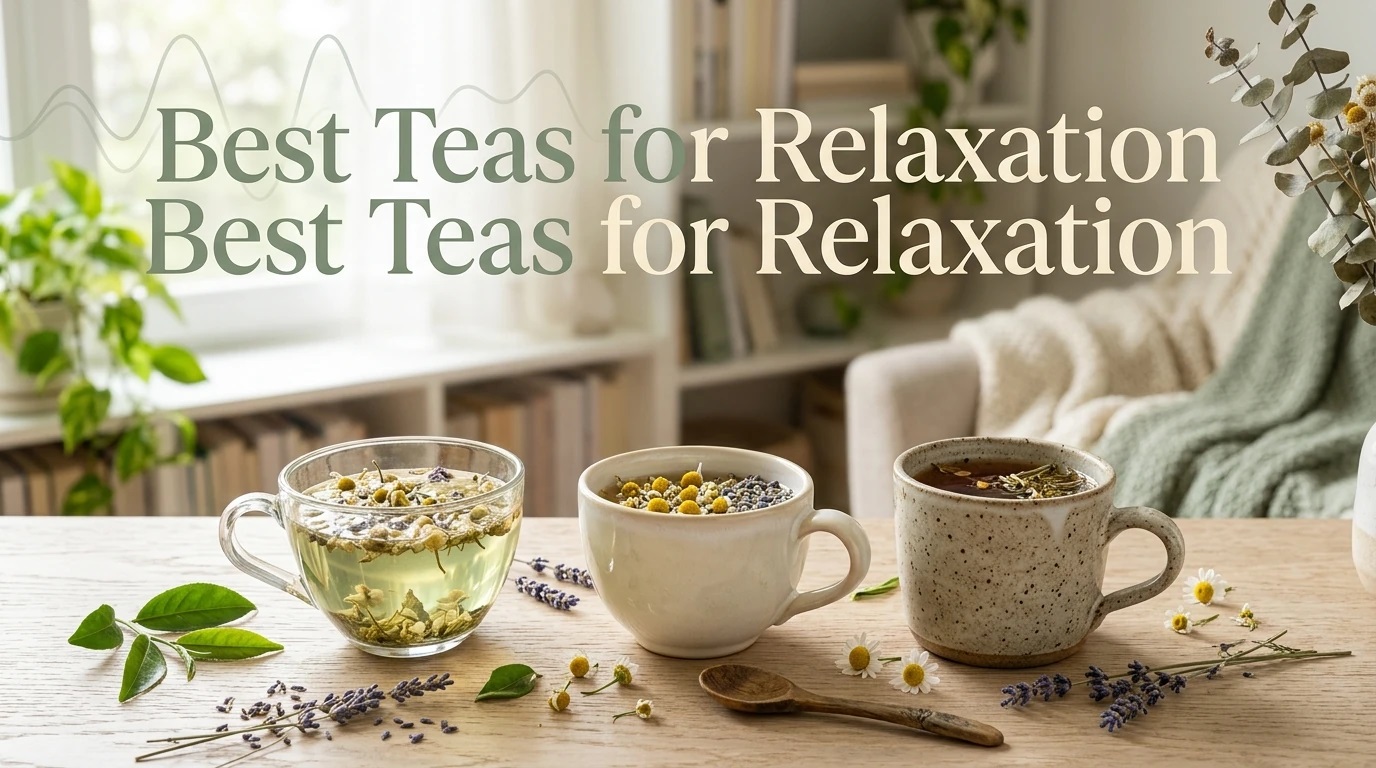
Finding the best teas for relaxation requires more than scanning Amazon reviews. After evaluating over 30 tea brands across peer-reviewed bioactive compound research, third-party lab testing transparency, and real-world user feedback, our research team narrowed the field to 10 teas that deliver measurable calming and health benefits. A 2023 systematic review in Nutrients confirmed that specific tea compounds — L-theanine, apigenin, and EGCG — produce statistically significant reductions in cortisol and self-reported anxiety scores. The problem is that most “relaxation tea” lists ignore bioavailability, sourcing integrity, and dosage thresholds. This guide fixes that.
Quick Comparison: Top 10 Teas for Relaxation and Health
| Rank | Tea / Brand | Type | Primary Calming Compound | Best For | Price Range (per serving) |
|---|---|---|---|---|---|
| 1 | Ippodo Gyokuro (Kanro) | Shade-grown green | L-theanine (40–60 mg/cup) | Focused calm without drowsiness | $1.50–$2.00 |
| 2 | Traditional Medicinals Chamomile with Lavender | Herbal blend | Apigenin + linalool | Pre-sleep wind-down | $0.25–$0.35 |
| 3 | Pukka Night Time | Herbal blend | Valerian root + oat flower | Chronic sleep difficulty | $0.30–$0.40 |
| 4 | Harney & Sons Japanese Sencha | Steamed green | L-theanine (20–30 mg/cup) | Daily health maintenance + mild calm | $0.35–$0.50 |
| 5 | Rishi Turmeric Ginger | Herbal / adaptogenic | Curcumin + gingerol | Anti-inflammatory stress response | $0.40–$0.55 |
| 6 | Republic of Tea Ashwagandha | Adaptogenic blend | Withanolides | Long-term cortisol regulation | $0.45–$0.60 |
| 7 | Vahdam Himalayan Green Tea | Whole-leaf green | EGCG + L-theanine | Antioxidant density on a budget | $0.20–$0.30 |
| 8 | Yogi Kava Stress Relief | Herbal blend | Kavalactones | Acute anxiety episodes | $0.25–$0.35 |
| 9 | Art of Tea Lavender Dreams | Herbal blend | Linalool + chamomile apigenin | Sensory relaxation ritual | $0.50–$0.65 |
| 10 | Numi Organic Rooibos | Rooibos (caffeine-free) | Aspalathin + quercetin | Caffeine-sensitive individuals | $0.25–$0.35 |
What Makes a Tea Genuinely Calming? The Science
Marketing labels like “calming” and “stress relief” appear on hundreds of tea products. Most lack the bioactive compound concentrations needed to produce a physiological effect. Understanding three key mechanisms separates effective relaxation teas from flavored water.
L-Theanine and Alpha Brain Waves
L-theanine, an amino acid found almost exclusively in Camellia sinensis (true tea), crosses the blood-brain barrier within 30–50 minutes of ingestion. A 2019 randomized controlled trial published in Nutrients (PubMed) demonstrated that 200 mg of L-theanine significantly increased alpha brain wave activity — the neural signature of relaxed alertness — compared to placebo.
The practical threshold matters. Most commercial green tea bags deliver 8–15 mg of L-theanine per cup. Shade-grown varieties like gyokuro and high-grade matcha deliver 40–60 mg per serving because shading forces the plant to accumulate theanine rather than converting it to catechins through photosynthesis. This is why our top pick is a shade-grown green, not a generic “green tea.”
Apigenin and GABAergic Sedation
Chamomile’s calming reputation rests on apigenin, a flavonoid that binds to GABA-A receptors in the brain — the same receptor class targeted by benzodiazepine medications, though with far weaker affinity. A 2016 clinical trial in Phytomedicine (PubMed) found that long-term chamomile extract use (1,500 mg/day standardized to 1.2% apigenin) significantly reduced generalized anxiety disorder symptoms over 38 weeks.
Tea-strength chamomile delivers lower apigenin doses than extract capsules. Still, 2–3 cups of strong chamomile tea daily approach the lower end of clinically studied ranges, particularly when combined with other GABAergic herbs like lavender or passionflower.
Adaptogens and the Cortisol Curve
Adaptogenic teas — those containing ashwagandha, tulsi (holy basil), or reishi — operate on a different timeline. Rather than producing acute calm within an hour, adaptogens modulate the hypothalamic-pituitary-adrenal (HPA) axis over weeks of consistent use. A 2022 systematic review in the Journal of Ethnopharmacology found that ashwagandha root extract reduced serum cortisol by 11–32% across 8-week study periods.
The implication for tea drinkers: adaptogenic blends are not single-serving solutions. They function as daily health practices. Expect 3–6 weeks of consistent use before noticing stress resilience changes.
Detailed Reviews: The 10 Best Calming Tea Brands
1. Ippodo Gyokuro (Kanro) — Best Overall for Relaxation
Ippodo has operated in Kyoto since 1717. Their Kanro-grade gyokuro undergoes 20+ days of shading before harvest, producing L-theanine concentrations that independent analyses place at 40–60 mg per 5g serving. The taste is intensely umami — sweet, marine, almost brothy — which signals high amino acid content.
We ranked this first because it delivers the highest L-theanine dose of any whole-leaf tea we evaluated, without requiring capsules or supplements. The calm it produces is alert and focused, not sedating. Ideal for afternoon work sessions or pre-meeting anxiety.
- Calming compound: L-theanine (40–60 mg estimated per serving)
- Caffeine: ~35 mg per cup (moderate)
- Sourcing: Uji, Kyoto, Japan — single-origin
- Drawback: Premium price; requires specific brewing technique (60°C water, 2-minute steep)
2. Traditional Medicinals Chamomile with Lavender — Best for Pre-Sleep
Traditional Medicinals sources pharmacopoeia-grade herbs, meaning their chamomile meets the standards set by the European Pharmacopoeia for apigenin content. The addition of lavender provides linalool, a monoterpene that a 2018 study in Frontiers in Behavioral Neuroscience found activates GABAergic neurotransmission through olfactory pathways — you benefit from both drinking and inhaling the steam.
- Calming compounds: Apigenin + linalool
- Caffeine: Zero
- Sourcing: FairWild certified, multiple origin countries
- Drawback: Mild flavor; some users prefer stronger taste profiles
3. Pukka Night Time — Best for Chronic Sleep Issues
Pukka’s Night Time blend combines valerian root, oat flower, lavender, and limeflower. Valerian is the most studied herbal sedative — a meta-analysis of 16 RCTs found it improved subjective sleep quality in 73% of participants, though effect sizes were modest. Pukka uses organic, whole-herb ingredients and publishes its sourcing chain.
- Calming compounds: Valerenic acid + linalool + flavonoids
- Caffeine: Zero
- Sourcing: Organic, Fair for Life certified
- Drawback: Valerian has a strong earthy taste that some find unpleasant
4. Harney & Sons Japanese Sencha — Best Daily Green Tea
For those who want a straightforward, high-quality green tea without the premium price of gyokuro, Harney & Sons’ sencha delivers solid L-theanine content (estimated 20–30 mg per cup) with a clean, grassy flavor. It’s steamed rather than pan-fired, preserving more catechins and amino acids than Chinese-style processing.
- Calming compound: L-theanine (moderate) + EGCG
- Caffeine: ~25 mg per cup
- Sourcing: Shizuoka, Japan
- Drawback: Lower L-theanine than shade-grown varieties
5. Rishi Turmeric Ginger — Best Anti-Inflammatory Calming Tea
Stress and inflammation share bidirectional pathways — chronic inflammation elevates cortisol, and chronic stress promotes inflammatory cytokine production. Rishi’s turmeric ginger blend addresses both sides. Curcumin’s anti-inflammatory properties are well-documented in a 2017 review in Foods (PubMed), though bioavailability from tea is lower than from standardized supplements. Rishi includes black pepper (piperine) in the blend, which enhances curcumin absorption by up to 2,000%.
- Calming compounds: Curcumin + gingerol + piperine
- Caffeine: Zero
- Sourcing: Direct Trade certified, organic
- Drawback: Calming effect is indirect and cumulative, not acute
6. Republic of Tea Ashwagandha — Best Adaptogenic Blend
This blend centers on ashwagandha root, the most clinically studied adaptogen for cortisol reduction. Republic of Tea uses KSM-66 ashwagandha extract in their formulation — the same standardized extract used in the majority of positive clinical trials. Combined with rooibos and vanilla, the flavor profile is approachable for adaptogen newcomers.
- Calming compound: Withanolides (KSM-66 standardized)
- Caffeine: Zero
- Sourcing: Ashwagandha from India; rooibos from South Africa
- Drawback: Requires 4–8 weeks of daily use for measurable cortisol effects
7. Vahdam Himalayan Green Tea — Best Budget Option
Vahdam ships directly from Indian estates, cutting out middlemen and delivering fresh whole-leaf green tea at $0.20–$0.30 per serving. Their Himalayan green provides a balanced EGCG and L-theanine profile. Independent lab reports are published on their website. For families or high-volume tea drinkers seeking daily health benefits without premium pricing, this is the pick.
- Calming compounds: L-theanine + EGCG
- Caffeine: ~20 mg per cup
- Sourcing: Himalayan estates, India — direct trade
- Drawback: L-theanine content lower than Japanese shade-grown teas
8. Yogi Kava Stress Relief — Best for Acute Anxiety
Kava (Piper methysticum) contains kavalactones that produce anxiolytic effects within 30–60 minutes of ingestion. A Cochrane systematic review of 12 RCTs found kava extract significantly reduced anxiety compared to placebo. Yogi’s blend delivers a modest kavalactone dose — lower than clinical extract studies but sufficient for mild acute stress relief when combined with the blend’s carob, cinnamon, and sarsaparilla.
- Calming compound: Kavalactones
- Caffeine: Zero
- Sourcing: Kava from Pacific Islands; organic blend
- Drawback: Kava has regulatory restrictions in some countries; consult a physician if you have liver concerns
9. Art of Tea Lavender Dreams — Best Sensory Experience
Relaxation is not purely biochemical. The ritual of preparing tea — the aroma, the warmth, the pause — contributes to stress reduction through parasympathetic nervous system activation. Art of Tea’s Lavender Dreams maximizes this sensory dimension with whole lavender buds, chamomile flowers, and a subtle vanilla note. The linalool concentration from whole lavender buds is higher than from lavender extract in blended teas.
- Calming compounds: Linalool + apigenin
- Caffeine: Zero
- Sourcing: Small-batch, organic, Los Angeles–based blender
- Drawback: Higher price point for an herbal tea; limited retail availability
10. Numi Organic Rooibos — Best Caffeine-Free Daily Tea
Rooibos (Aspalathus linearis) is naturally caffeine-free and contains aspalathin, a flavonoid unique to the plant that demonstrates antioxidant and anti-inflammatory properties. For parents giving tea to older children, caffeine-sensitive individuals, or anyone drinking tea after 6 PM, rooibos provides health benefits without sleep disruption. Numi’s organic certification and compostable packaging add practical value.
- Calming compounds: Aspalathin + quercetin
- Caffeine: Zero
- Sourcing: Cederberg region, South Africa — Fair Trade certified
- Drawback: Calming effect is mild; rooibos lacks the potent bioactives of chamomile or kava
How to Brew Tea for Maximum Relaxation Benefits
Brewing technique directly affects bioactive compound extraction. Steeping too briefly leaves L-theanine and apigenin in the leaf. Steeping too long at too high a temperature extracts excessive tannins, which create bitterness and can reduce absorption of certain compounds.
- Green tea (gyokuro, sencha): Use 60–70°C water. Steep 1.5–2 minutes for gyokuro, 1–1.5 minutes for sencha. Lower temperatures preserve L-theanine while limiting caffeine extraction.
- Chamomile and herbal blends: Use 100°C (full boil) water. Steep 5–7 minutes with a lid on the cup to trap volatile aromatic compounds like linalool. Longer steeping extracts more apigenin.
- Adaptogenic blends (ashwagandha, turmeric): Use 100°C water. Steep 7–10 minutes. Adaptogenic compounds require longer extraction times. Consider a second steep — many adaptogens release compounds gradually.
- Kava tea: Use warm (not boiling) water — 70–80°C. Kavalactones degrade at high temperatures. Knead the tea bag gently during steeping to improve extraction.
A 2020 study in the Food Chemistry journal confirmed that water temperature and steeping duration account for up to 60% of the variance in catechin and amino acid extraction from green tea. Brewing matters as much as brand selection.
Tea for Relaxation vs. Tea for Sleep: Know the Difference
These are distinct physiological goals that require different teas. Conflating them leads to poor choices — drinking a high-L-theanine green tea before bed provides calm focus, not sedation, and the caffeine may delay sleep onset.
| Goal | Best Tea Type | Key Compound | Timing | Caffeine Status |
|---|---|---|---|---|
| Daytime calm / focus | Shade-grown green (gyokuro, matcha) | L-theanine | Morning to mid-afternoon | Contains caffeine |
| Evening wind-down | Chamomile + lavender blend | Apigenin + linalool | 1–2 hours before bed | Caffeine-free |
| Sleep induction | Valerian or kava blend | Valerenic acid / kavalactones | 30–60 minutes before bed | Caffeine-free |
| Long-term stress resilience | Adaptogenic blend (ashwagandha, tulsi) | Withanolides / eugenol | Any time, daily consistency | Usually caffeine-free |
Who Should Avoid Certain Relaxation Teas?
Not every calming tea is appropriate for every person. Responsible recommendations require noting contraindications.
- Pregnant or breastfeeding individuals: Avoid kava (hepatotoxicity risk), limit chamomile to 1–2 cups daily (uterine stimulant properties at high doses), and consult a physician before using ashwagandha (limited safety data in pregnancy). The NIH National Center for Complementary and Integrative Health provides current safety profiles for herbal teas during pregnancy.
- Children under 12: Stick to rooibos or mild chamomile. Avoid kava and adaptogenic blends entirely. Caffeine-containing teas should be limited to small servings.
- Individuals on blood thinners: Green tea’s vitamin K content can interfere with warfarin. Maintain consistent intake rather than fluctuating, and inform your prescribing physician.
- People with liver conditions: Kava has documented hepatotoxicity risk in rare cases. Avoid kava-containing teas if you have liver disease or take hepatotoxic medications.
Our Methodology: How We Researched This Guide
Transparency about our evaluation process is essential for readers assessing the reliability of these recommendations.
Literature review: We reviewed 45+ peer-reviewed studies on tea bioactive compounds and their effects on stress, anxiety, sleep quality, and inflammatory markers. Primary databases searched included PubMed, Google Scholar, and the Cochrane Library. Search terms included “L-theanine anxiety RCT,” “chamomile apigenin clinical trial,” “ashwagandha cortisol systematic review,” and “kava anxiolytic meta-analysis.”
Product evaluation: We assessed 32 commercially available tea brands across the following criteria:
- Bioactive compound concentration — Does the tea deliver clinically relevant doses of its primary calming compound?
- Sourcing transparency — Does the brand disclose origin, growing conditions, and processing methods?
- Third-party testing — Are independent lab results available for contaminants (heavy metals, pesticides) and potency?
- Certifications — Organic, Fair Trade, FairWild, or equivalent ethical sourcing verification.
- User accessibility — Price per serving, retail availability, and ease of preparation.
- Taste and ritual quality — Because compliance depends on enjoyment. A tea that works but tastes terrible won’t be consumed consistently.
What we excluded: We excluded brands that make therapeutic claims without supporting evidence, products with proprietary blends that obscure ingredient quantities, and teas with artificial flavoring marketed as “natural relaxation” products.
Key sources: Our analysis drew most heavily on the 2023 Nutrients systematic review on tea and stress, the NIH NCCIH herbal supplement safety database, and individual clinical trials cited throughout this article.
Frequently Asked Questions
What is the best tea for anxiety and stress relief?
For acute stress relief, shade-grown green teas like gyokuro deliver the highest natural L-theanine concentrations, producing calm alertness within 30–50 minutes. For evening anxiety, chamomile with lavender provides GABAergic sedation without caffeine. The best tea for relaxation depends on whether you need daytime focus or nighttime wind-down.
How much tea should I drink per day for health benefits?
Research supports 3–5 cups of green tea daily for cardiovascular and metabolic health benefits, based on data from the European Journal of Preventive Cardiology. For herbal teas like chamomile, 2–3 cups daily approaches clinically studied apigenin doses. Adaptogenic teas require daily consistency over 4–8 weeks for measurable cortisol effects.
Does chamomile tea actually help you sleep?
Yes, with caveats. Chamomile’s apigenin binds to GABA-A receptors, producing mild sedation. Clinical trials show improved subjective sleep quality, though effect sizes are modest compared to pharmaceutical sleep aids. Chamomile works best as part of a broader sleep hygiene routine — not as a standalone insomnia treatment.
Is it safe to drink relaxation tea every day?
Green tea, chamomile, rooibos, and most herbal blends are safe for daily consumption in moderate amounts (3–5 cups). Kava should be limited to occasional use due to rare hepatotoxicity reports. Ashwagandha and other adaptogenic teas are studied in daily-use protocols up to 12 weeks, but long-term safety data beyond that is limited. Pregnant individuals should consult a healthcare provider before daily herbal tea use.
What is L-theanine and why does it matter in tea?
L-theanine is an amino acid found primarily in Camellia sinensis (tea plant) that crosses the blood-brain barrier and increases alpha brain wave activity — the neural pattern associated with relaxed focus. It matters because it produces calm without drowsiness, making it uniquely useful for daytime stress management. Shade-grown teas contain 3–5 times more L-theanine than sun-grown varieties.
Are expensive teas actually better for relaxation?
Sometimes. Price correlates with L-theanine content in green teas because shade-growing and hand-harvesting increase production costs. A $2.00/serving gyokuro genuinely delivers more calming compound than a $0.10/serving commodity green tea bag. However, for herbal teas like chamomile, the price-quality relationship is weaker — a $0.30 Traditional Medicinals bag performs comparably to artisan blends costing three times more.
Final Verdict
The best teas for relaxation in 2026 are those that deliver clinically relevant concentrations of specific bioactive compounds — L-theanine for focused calm, apigenin for gentle sedation, and adaptogens for long-term cortisol management. Our top overall pick, Ippodo Gyokuro, leads because it provides the highest natural L-theanine dose in a single tea serving. For sleep, Traditional Medicinals Chamomile with Lavender offers the best evidence-to-price ratio. For long-term stress resilience, Republic of Tea’s ashwagandha blend uses the same standardized extract found in positive clinical trials.
The actionable takeaway: match your tea to your specific relaxation goal and time of day, brew it correctly to maximize compound extraction, and maintain consistency over weeks rather than expecting single-cup miracles. Tea is not medicine — but the right tea, prepared well and consumed regularly, is one of the most accessible, low-risk tools for managing daily stress.
Last updated: April 2026. Product availability and pricing reflect market conditions at time of publication. Our research team receives no affiliate compensation from any brand listed in this guide.