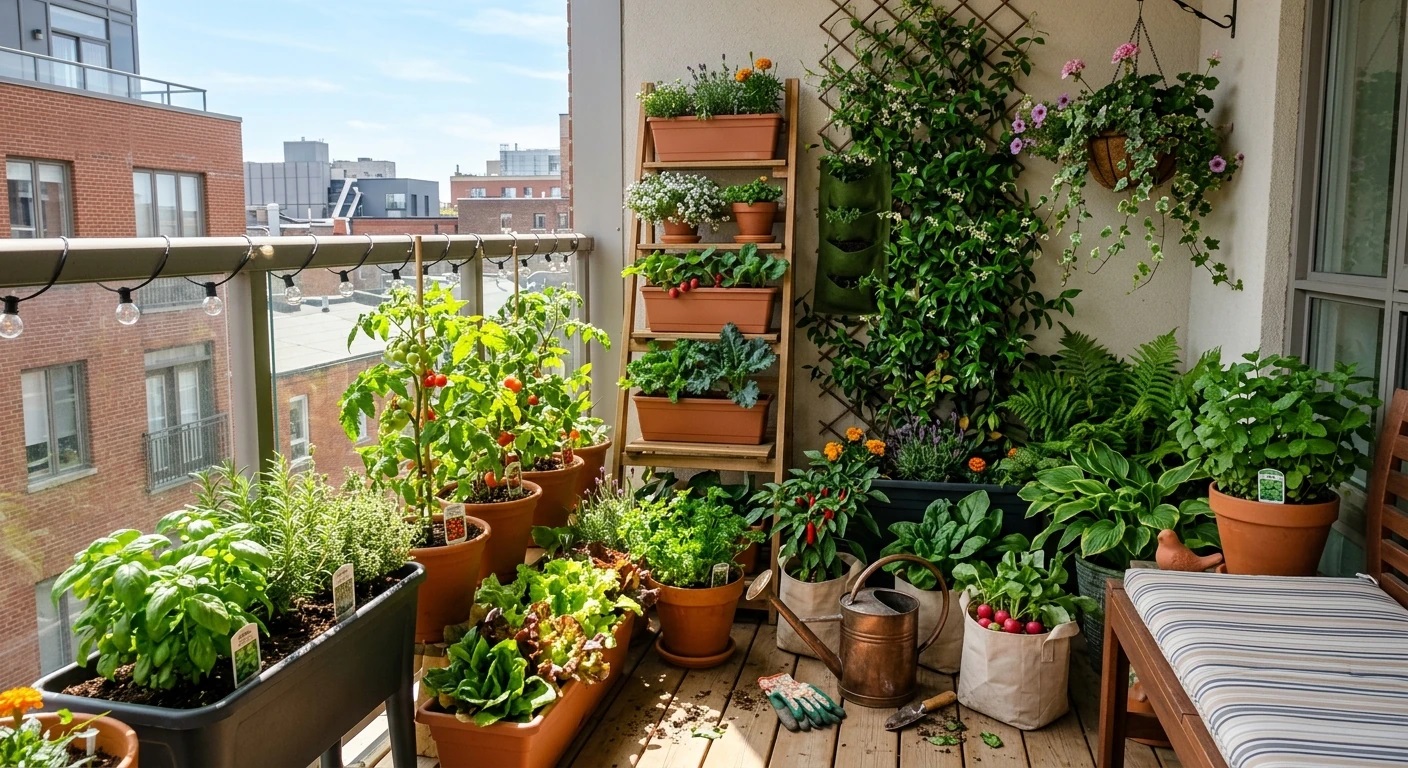
You don’t need a backyard to grow your own herbs, vegetables, or flowers. A small apartment balcony — even one that’s just a few square meters — can become a productive, beautiful garden with the right approach. Balcony gardening has surged in popularity as more people look for ways to reconnect with nature, eat fresher food, and make the most of limited urban space.
This guide covers everything a complete beginner needs to know: choosing the right containers, understanding sunlight and wind exposure, selecting plants that thrive in small spaces, setting up efficient watering systems, and avoiding the most common mistakes that derail new balcony gardeners. Whether you have a sun-drenched south-facing ledge or a shaded north-facing nook, there’s a garden waiting to happen.
Quick Overview
| Step | Task | Key Consideration | Time Needed |
|---|---|---|---|
| 1 | Assess your balcony | Sunlight, wind, weight limits | 1 hour |
| 2 | Choose containers | Drainage, size, material | 1–2 hours |
| 3 | Select the right soil | Potting mix, not garden soil | 30 minutes |
| 4 | Pick beginner-friendly plants | Herbs, leafy greens, tomatoes | 1 hour |
| 5 | Plan your layout | Vertical space, sun positioning | 1 hour |
| 6 | Set up watering | Self-watering pots or schedule | 30 minutes |
| 7 | Understand feeding | Liquid fertilizer every 2 weeks | 15 minutes |
| 8 | Manage pests naturally | Neem oil, companion planting | As needed |
| 9 | Handle seasonal changes | Frost protection, summer shade | Seasonal |
| 10 | Expand and experiment | New varieties, vertical gardens | Ongoing |
1. Assess Your Balcony Before You Plant Anything
The single most important step happens before you buy a single pot. Spend a full day observing your balcony. Track how sunlight moves across the space — note which areas get direct sun, partial shade, or full shade, and for how many hours. Most fruiting plants like tomatoes and peppers need at least 6 hours of direct sunlight. Herbs like basil and cilantro do well with 4–6 hours. Leafy greens like lettuce and spinach can thrive with as little as 3 hours.
Wind exposure matters more than most beginners realize. High-floor balconies often experience strong gusts that can dry out soil rapidly, topple tall plants, and damage delicate leaves. If your balcony is windy, plan for heavier pots, wind-resistant plants, and possibly a simple windbreak. Finally, check your building’s weight restrictions — wet soil is heavy, and multiple large containers add up quickly. A standard 12-inch pot with wet soil weighs approximately 10–15 kg.
Key takeaway: Proper assessment prevents wasted money on plants that won’t survive your specific conditions
Worth noting: Take photos at different times of day to create a sunlight map of your space
Balcony gardening guide from the Royal Horticultural Society
2. Choose the Right Containers
Container choice directly impacts plant health. The non-negotiable requirement is drainage holes — without them, roots sit in water and rot. Beyond that, size matters more than aesthetics. A common beginner mistake is choosing pots that are too small. Most herbs need at least a 15 cm (6-inch) pot, tomatoes need 30–45 cm (12–18 inches), and leafy greens do well in long rectangular planters at least 15 cm deep.
Material affects watering frequency. Terracotta is beautiful and breathable but dries out fast — you’ll water more often. Plastic retains moisture longer and is lighter, making it practical for balconies with weight limits. Fabric grow bags are excellent for root vegetables and offer natural air pruning that promotes healthy root systems. Self-watering containers are ideal for beginners or anyone who travels frequently, as they maintain consistent moisture through a built-in reservoir.
Key takeaway: Proper containers reduce maintenance and improve plant survival rates dramatically
Worth noting: Elevate pots on saucers or pot feet to prevent water damage to your balcony floor
Container selection guide from Gardener’s Supply Company
3. Select the Right Soil — Not Garden Soil
This is where many beginners go wrong. Regular garden soil is too dense for containers — it compacts, drains poorly, and suffocates roots. You need a quality potting mix specifically designed for container gardening. Good potting mix is lightweight, well-draining, and contains a blend of peat moss or coco coir, perlite or vermiculite, and composted bark.
For most balcony plants, an all-purpose potting mix works well. If you’re growing vegetables, look for mixes enriched with compost or worm castings for added nutrients. Succulents and herbs that prefer drier conditions benefit from a mix with extra perlite for faster drainage. Avoid the cheapest bags — they often contain fillers that break down quickly and compact within weeks. Investing in quality soil is the single best thing you can do for your plants’ long-term health.
Key takeaway: Quality potting mix is the foundation of every successful container garden
Worth noting: Refresh or replace potting mix annually, as it loses structure and nutrients over time
Container soil guide from University of Minnesota Extension
4. Pick Beginner-Friendly Plants That Actually Thrive in Pots
Start with plants that are forgiving, productive, and well-suited to container life. Herbs are the ideal starting point — basil, mint, rosemary, thyme, and parsley all grow happily in pots and give you something useful for the kitchen within weeks. Mint is especially resilient but should always be grown in its own container, as it spreads aggressively and will overtake shared planters.
For vegetables, cherry tomatoes are the most rewarding beginner crop. They produce abundantly in a large pot with a support stake, and few things beat the taste of a sun-warmed tomato from your own balcony. Lettuce, spinach, and radishes grow quickly and tolerate partial shade. Chili peppers are compact, productive, and surprisingly ornamental. Avoid starting with plants that need deep root space (carrots, potatoes) or extensive horizontal room (squash, melons) until you’ve gained experience.
Key takeaway: Starting with proven container plants builds confidence and delivers quick results
Worth noting: Buy seedlings rather than seeds for your first season — it’s faster and more forgiving
Beginner container plant guide from Burpee
5. Plan Your Layout — Think Vertical
Small balconies demand creative use of space, and the biggest opportunity most beginners miss is vertical growing. Wall-mounted planters, hanging baskets, tiered shelving, and trellises can triple your growing area without taking up additional floor space. Climbing plants like beans, peas, and small cucumbers thrive on a simple trellis leaned against a wall.
Position your tallest plants and structures where they won’t shade smaller plants. Place sun-loving plants (tomatoes, peppers, basil) in the sunniest spots and shade-tolerant plants (lettuce, mint, parsley) in areas that get less direct light. Leave enough space between containers for air circulation — crowded plants are more susceptible to fungal diseases. A simple sketch of your balcony with sun direction marked will help you optimize placement before you start moving heavy pots around.
Key takeaway: Vertical gardening maximizes yield per square meter on small balconies
Worth noting: Ensure wall-mounted planters are securely fastened and won’t drip onto neighbors below
Vertical gardening ideas from The Spruce
6. Set Up a Watering System That Works for Your Life
Inconsistent watering kills more container plants than any pest or disease. Containers dry out much faster than ground soil — on hot, windy balconies, small pots can dry out completely in a single day. The simplest approach is to check soil moisture daily by pushing your finger 2–3 cm into the soil. If it’s dry at that depth, water thoroughly until it drains from the bottom.
For a more hands-off approach, self-watering containers with built-in reservoirs are excellent. Drip irrigation kits designed for balconies are available for under $30 and can be connected to a timer for fully automated watering. Mulching the top of your containers with a 2–3 cm layer of straw, bark chips, or pebbles dramatically reduces evaporation. Water in the early morning when possible — evening watering can promote fungal growth, and midday watering loses more to evaporation.
Key takeaway: Consistent watering is the single biggest factor in container garden success
Worth noting: Overwatering is just as dangerous as underwatering — always check before you pour
Container watering guide from Gardener’s Supply Company
7. Feed Your Plants — Container Soil Runs Out of Nutrients Fast
Unlike ground gardens where roots can reach deep into nutrient-rich earth, container plants are entirely dependent on what’s in their pot. Most potting mixes contain enough nutrients for 4–6 weeks, after which your plants will start showing signs of deficiency — yellowing leaves, slow growth, and poor fruiting. Regular feeding is essential.
A balanced liquid fertilizer applied every two weeks during the growing season is the simplest approach. Look for an all-purpose formula with an NPK ratio around 10-10-10 or a vegetable-specific blend. Organic options like fish emulsion or seaweed extract work well but can be smelly on a balcony — consider odorless organic alternatives. Slow-release granular fertilizer mixed into the soil at planting time provides a steady baseline of nutrients and reduces the frequency of liquid feeding.
Key takeaway: Regular feeding transforms mediocre container gardens into productive ones
Worth noting: More fertilizer is not better — follow package instructions to avoid burning roots
Container feeding guide from the Royal Horticultural Society
8. Manage Pests Without Chemicals
Balcony gardens are not immune to pests. Aphids, whiteflies, spider mites, and fungus gnats are the most common visitors. The good news is that balcony-scale pest management is straightforward and rarely requires harsh chemicals. A strong spray of water knocks aphids off most plants. Neem oil diluted in water is effective against a broad range of soft-bodied insects and is safe for edible plants when used as directed.
Companion planting helps naturally — marigolds repel aphids and whiteflies, basil planted near tomatoes deters certain pests, and lavender attracts beneficial pollinators while repelling unwanted insects. Sticky yellow traps catch flying pests like whiteflies and fungus gnats effectively. Inspect your plants regularly, especially the undersides of leaves where pests tend to hide. Catching an infestation early is always easier than dealing with an established one.
Key takeaway: Natural pest management keeps your balcony garden safe and chemical-free
Worth noting: Isolate any new plant for a week before placing it near your existing garden to prevent introducing pests
Natural pest control guide from The Old Farmer’s Almanac
9. Handle Seasonal Changes Gracefully
Balcony plants are more exposed to temperature extremes than ground-level gardens. In summer, concrete and metal railings radiate heat that can push soil temperatures dangerously high. Move pots away from heat-absorbing surfaces, use light-colored containers that reflect heat, and consider shade cloth during the hottest weeks. Grouping pots together creates a microclimate that retains humidity and moderates temperature swings.
In winter, frost is the primary threat. Most herbs and vegetables won’t survive freezing temperatures, but perennials like rosemary, thyme, and certain ornamentals can overwinter with protection. Move pots against the building wall where residual heat provides insulation. Wrap containers in bubble wrap or burlap to protect roots from freezing. For tender plants, bring them indoors near a bright window until spring returns. Understanding your local frost dates helps you plan planting and harvesting windows accurately.
Key takeaway: Seasonal awareness extends your growing season and protects your investment
Worth noting: A simple min/max thermometer on your balcony reveals temperature patterns you might not expect
Overwintering container plants guide from Gardening Know How
10. Expand and Experiment Once You’ve Got the Basics
Once your first season is under your belt, the real fun begins. Try growing strawberries in hanging baskets, dwarf citrus trees in large pots, or microgreens in shallow trays for year-round harvesting. Experiment with succession planting — sowing new lettuce seeds every two weeks ensures a continuous harvest rather than a single glut. Vertical pocket planters and stackable tower gardens can dramatically increase your growing capacity.
Keep a simple garden journal noting what you planted, when, and how it performed. This record becomes invaluable over time, helping you repeat successes and avoid repeating failures. Join online communities like Reddit’s r/UrbanGardening or local gardening groups to exchange tips, seeds, and encouragement. Balcony gardening is as much about the process as the harvest — every season teaches you something new.
Key takeaway: Experience is your best teacher — each season builds on the last
Worth noting: Seed swaps and local plant sales are great ways to try new varieties without spending much
Small space gardening expansion ideas from The Spruce
How We Built This Guide
This guide draws on established horticultural research, extension service publications, and practical experience from urban gardening communities. Plant recommendations are based on widely documented container performance across multiple climate zones. Watering and feeding schedules follow guidelines from the Royal Horticultural Society and University of Minnesota Extension. Community insights from r/containergardening and r/UrbanGardening informed the practical tips and common mistake warnings throughout.
Frequently Asked Questions
How much does it cost to start a balcony garden?
A basic setup with 4–6 containers, potting mix, a few herb seedlings, and a watering can costs between $40–$80. Self-watering containers and drip irrigation add to the initial cost but save time and reduce plant loss. Seeds are cheaper than seedlings but require more patience and care. You can reduce costs further by repurposing food-safe containers like large yogurt tubs or wooden crates lined with landscape fabric.
Can I garden on a north-facing balcony with limited sun?
Yes, but your plant selection matters. Leafy greens like lettuce, spinach, arugula, and kale need only 3–4 hours of light and tolerate shade well. Herbs like mint, parsley, chives, and cilantro also perform in partial shade. You won’t be able to grow sun-hungry plants like tomatoes or peppers successfully, but a productive shade garden is absolutely achievable.
How often should I water my balcony garden?
It depends on container size, material, weather, and plant type, but most balcony containers need watering once daily in summer and every 2–3 days in cooler months. The finger test is the most reliable method — push your finger 2–3 cm into the soil, and water if it feels dry. Small terracotta pots in direct sun may need watering twice daily during heat waves.
What if my apartment building doesn’t allow balcony modifications?
Freestanding containers, railing planters that hook over without drilling, and portable shelving units require no permanent modifications. Avoid anything that requires screws or bolts in walls or railings. Weighted pot bases keep containers stable without fastening. Always check your lease or building rules before starting, and ensure water runoff doesn’t affect neighbors below.
Can I grow vegetables on a balcony year-round?
In mild climates, yes. In regions with cold winters, you can extend the season with cold-hardy crops like kale, spinach, and certain herbs, plus use frost protection methods. Indoor windowsill gardening with microgreens, sprouts, and herbs bridges the gap during the coldest months. Succession planting and seasonal crop rotation keep your balcony productive for as much of the year as possible.
Final Verdict
Starting a balcony garden is one of the most rewarding things you can do in a small apartment. It doesn’t require a big budget, extensive knowledge, or a green thumb — just a willingness to observe, experiment, and learn as you go. Begin with a proper assessment of your space, invest in quality soil and appropriately sized containers, start with forgiving plants like herbs and cherry tomatoes, and water consistently. Everything else builds from there. Your balcony is more capable than you think — give it a chance to prove it.