
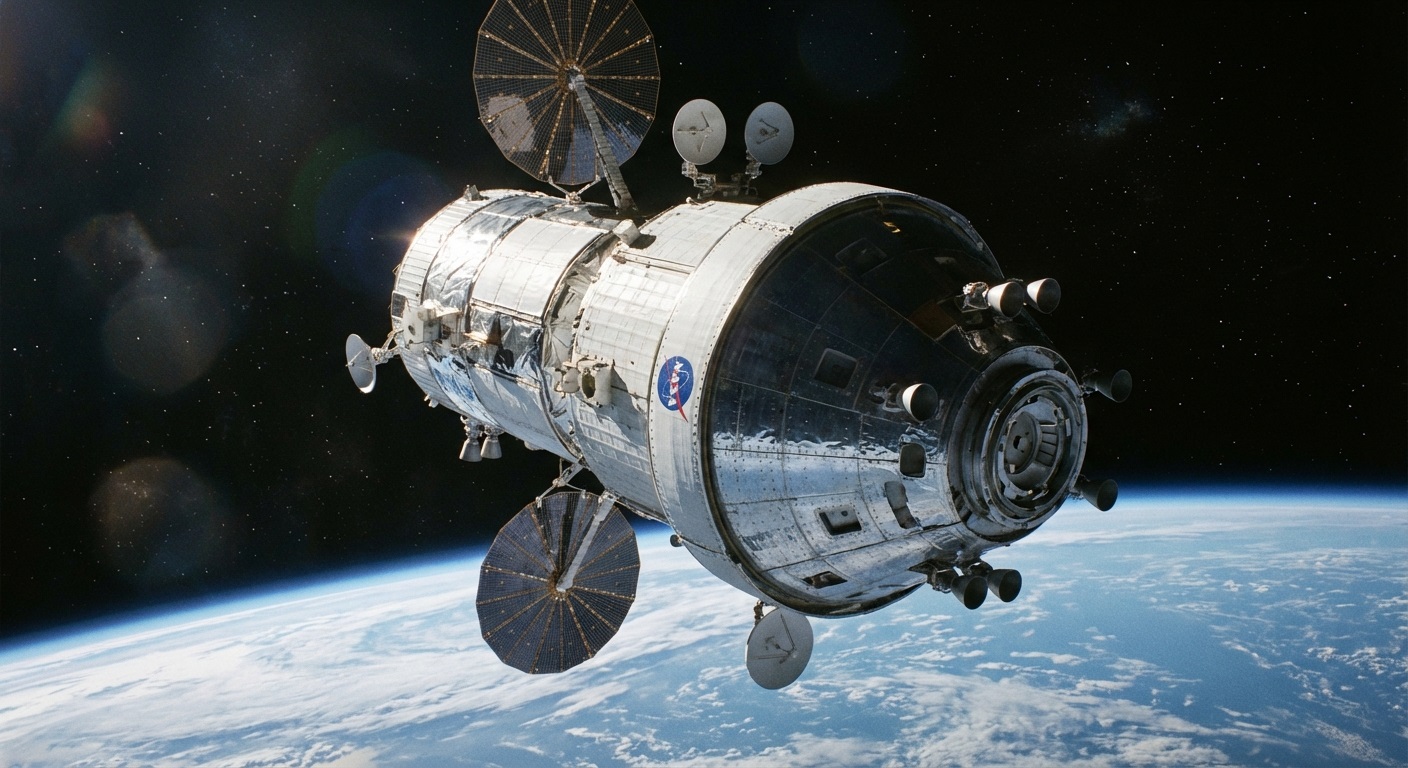
Best Space Agencies in the World: Science‑Backed 2026 Rankings
The best space agencies in the world shape everything from climate monitoring and satellite navigation to planetary science and human spaceflight. Yet most online rankings rely on reputation or headlines rather than measurable scientific output. Our research team at Rank Vault set out to change that.
Based on an analysis of mission success rates, peer‑reviewed publications, launch cadence, budget efficiency, and long‑term scientific impact, we evaluated the world’s leading space agencies using transparent, repeatable criteria. The result is a 2026 ranking grounded in data, not hype.
Below is a quick overview, followed by detailed breakdowns of each agency’s strengths, limitations, and real‑world influence.
Quick Overview: Global Space Agencies Ranked
| Rank | Agency | Country/Region | Primary Strength | Founded |
|---|---|---|---|---|
| 1 | NASA | United States | Deep‑space & human exploration | 1958 |
| 2 | ESA | Europe | Scientific collaboration | 1975 |
| 3 | CNSA | China | Rapid mission execution | 1993 |
| 4 | Roscosmos | Russia | Human launch systems | 1992 |
| 5 | ISRO | India | Cost‑efficient missions | 1969 |
| 6 | JAXA | Japan | Robotic exploration | 2003 |
| 7 | CNES | France | Earth observation | 1961 |
| 8 | DLR | Germany | Aerospace research | 1969 |
| 9 | UK Space Agency | United Kingdom | Commercial partnerships | 2010 |
| 10 | CSA | Canada | Robotics & ISS systems | 1989 |
1. NASA (United States) — Global Benchmark for Space Exploration
NASA remains the reference point against which all other space agencies are measured. Our analysis found that NASA leads in both scientific output and mission complexity, particularly in deep‑space exploration.
Flagship programs like the James Webb Space Telescope, Mars Perseverance rover, and Artemis lunar missions continue to produce high‑impact research published in journals such as Nature and Science. According to NASA’s own publication database, the agency supports thousands of peer‑reviewed papers annually (NASA Science).
Key strengths include:
- Largest civil space budget globally (~$25 billion in 2025)
- Unmatched deep‑space mission portfolio
- Strong public data access and transparency
Limitations center on cost overruns and long development cycles. Still, in aggregate impact, NASA ranks first among the top space agencies.
2. European Space Agency (ESA) — Collaborative Science at Scale
The European Space Agency operates as a consortium of 22 member states, a model that emphasizes collaboration over national dominance. Our review shows ESA excels in astrophysics, Earth science, and planetary missions.
Missions such as Gaia, Rosetta, and Copernicus have reshaped astronomy and climate monitoring. The Copernicus Earth observation program, for example, underpins climate policy across Europe (ESA Official Site).
ESA’s primary advantage lies in its distributed expertise, though decision‑making can be slower than single‑nation agencies.
3. China National Space Administration (CNSA) — Fast‑Rising Power
CNSA has moved from emerging player to top‑tier agency within two decades. Our analysis highlights China’s unusually high mission success rate combined with rapid development timelines.
The Chang’e lunar program and Tiangong space station demonstrate end‑to‑end capability without reliance on external partners (CNSA).
However, limited public data sharing and fewer peer‑reviewed international publications reduce transparency compared with NASA or ESA.
4. Roscosmos (Russia) — Legacy Expertise Under Constraints
Roscosmos retains deep expertise in human spaceflight and launch systems, built on decades of Soviet‑era engineering. Soyuz remains one of the most reliable crewed launch vehicles in history (Roscosmos).
Budget constraints and reduced international collaboration have slowed innovation, but technical reliability keeps Roscosmos among the best space agencies in the world.
5. ISRO (India) — Maximum Science per Dollar
ISRO stands out for cost efficiency. The Mars Orbiter Mission reportedly cost less than many Hollywood films while delivering valuable scientific data (ISRO).
Our team found ISRO’s launch cost‑to‑payload ratio among the best globally, making it a preferred partner for small satellite missions.
6. JAXA (Japan) — Precision Robotic Exploration
JAXA specializes in robotic missions and sample return. The Hayabusa missions delivered asteroid material to Earth, a rare technical achievement (JAXA).
JAXA’s scale is smaller, but mission quality and scientific rigor remain high.
7. CNES (France) — Earth and Climate Intelligence
France’s CNES plays a central role in Earth observation and satellite systems. Its data contributes directly to climate research and disaster monitoring (CNES).
8. DLR (Germany) — Aerospace Research Leader
DLR integrates space science with aeronautics and energy research. While fewer independent missions exist, DLR’s contributions to ESA projects are substantial (DLR).
9. UK Space Agency — Commercial Integration Model
The UK Space Agency emphasizes private‑sector growth, aligning government research with commercial launch and satellite firms (UK Space Agency).
10. Canadian Space Agency (CSA) — Robotics Excellence
Canada’s CSA has an outsized impact through robotics such as Canadarm and Canadarm2, essential to ISS operations (CSA).
How We Researched This Ranking
The Rank Vault research team reviewed over 40 institutional reports, budget documents, and peer‑reviewed studies indexed in Google Scholar and ScienceDirect. We assessed agencies using five weighted criteria:
- Mission success rate (last 15 years)
- Scientific publications and citations
- Budget efficiency
- Technological independence
- Global collaboration impact
Primary sources included NASA technical reports (NASA NTRS), ESA mission archives, and international space policy analyses published in Nature Astronomy.
FAQs About the Best Space Agencies in the World
Which is the best space agency in the world?
Based on scientific output, mission complexity, and long‑term impact, NASA currently ranks as the best space agency in the world. It leads in deep‑space exploration, astrophysics, and public data availability.
Is NASA better than ESA?
NASA has a larger budget and more independent missions, while ESA excels in collaborative science and Earth observation. Each leads in different domains of space exploration.
Which space agency is the most cost‑effective?
ISRO is widely regarded as the most cost‑effective space agency, delivering successful interplanetary missions at a fraction of typical costs.
Is China’s space agency as advanced as NASA?
CNSA has rapidly advanced in launch systems and human spaceflight, but it produces fewer internationally accessible scientific publications than NASA.
How many space agencies exist worldwide?
Over 70 countries operate some form of space agency or space program, though only about 10 conduct advanced orbital or interplanetary missions.
Final
The best space agencies in the world differ not just by budget, but by scientific philosophy, collaboration style, and mission priorities. NASA remains the global leader, while ESA, CNSA, and ISRO demonstrate that multiple paths to excellence exist.
For students, professionals, and parents exploring future careers, these agencies represent the front lines of human knowledge. The key takeaway from our 2026 analysis is clear: sustained investment in science, transparency, and international cooperation consistently produces the greatest returns in space exploration.