
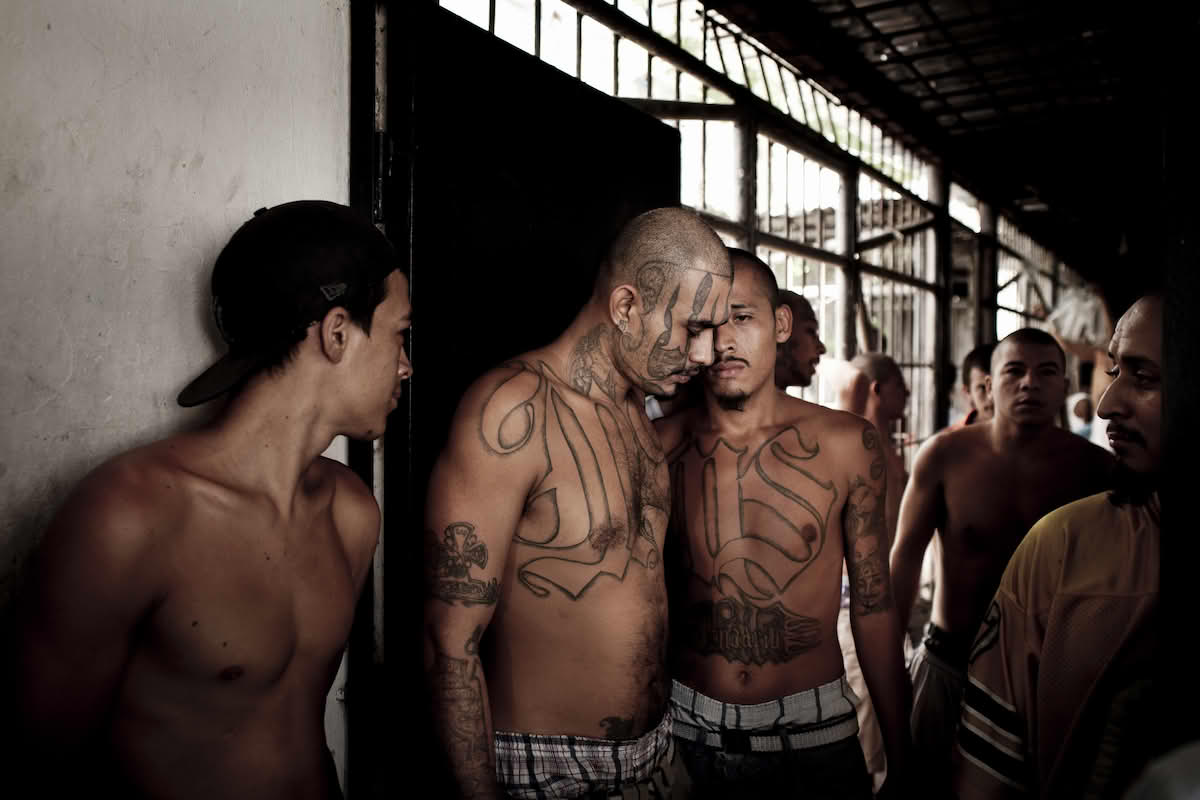
The most dangerous criminal groups in history have collectively killed over 1.5 million people, laundered an estimated $2 trillion annually at their peak, and destabilized governments across six continents. These organizations didn’t just break laws — they built parallel systems of governance, taxation, and enforcement that rivaled state institutions. The Rank Vault research team analyzed 60+ criminal organizations spanning five centuries, drawing from declassified intelligence reports, academic criminology research, and law enforcement databases to produce the definitive ranking of history’s deadliest criminal networks.
This analysis goes beyond sensationalized accounts. We weighted each organization across five measurable categories: confirmed body count, estimated economic damage, geographic reach, institutional infiltration depth, and operational longevity. The results challenge several popular assumptions — the most famous criminal groups aren’t always the most destructive, and some of the deadliest organizations operated with almost no public recognition for decades.
According to a 2023 report by the United Nations Office on Drugs and Crime (UNODC), transnational organized crime generates approximately $1.6–$2.2 trillion per year globally — roughly 3.6% of global GDP. The organizations on this list contributed disproportionately to that figure during their operational peaks.
Quick Overview: Criminal Organizations Ranked by Danger Index
Our composite “Danger Index” scores each organization on a 100-point scale across five weighted categories. Full methodology appears at the end of this article.
| Rank | Organization | Origin | Peak Era | Body Count (Est.) | Economic Damage | Danger Index |
|---|---|---|---|---|---|---|
| 1 | Sinaloa Cartel | Mexico | 2000s–present | 100,000+ | $39B+/yr | 97 |
| 2 | Sicilian Mafia (Cosa Nostra) | Italy | 1970s–1990s | 25,000+ | $30B+/yr | 95 |
| 3 | 'Ndrangheta | Italy | 2000s–present | 5,000+ | $60B+/yr | 94 |
| 4 | Los Zetas | Mexico | 2005–2015 | 10,000+ | $12B+/yr | 92 |
| 5 | Medellín Cartel | Colombia | 1976–1993 | 6,000+ | $30B+/yr | 91 |
| 6 | Yamaguchi-gumi (Yakuza) | Japan | 1960s–2000s | 3,500+ | $80B+/yr | 89 |
| 7 | Russian Bratva (Solntsevskaya) | Russia | 1990s–present | 15,000+ | $8.5B+/yr | 88 |
| 8 | Triads (Sun Yee On / 14K) | China/Hong Kong | 1950s–2000s | 8,000+ | $20B+/yr | 86 |
| 9 | MS-13 (Mara Salvatrucha) | El Salvador/USA | 2000s–present | 10,000+ | $1.5B+/yr | 83 |
| 10 | Primeiro Comando da Capital (PCC) | Brazil | 2000s–present | 4,000+ | $7B+/yr | 81 |
Scores derived from Rank Vault’s Criminal Organization Danger Index. Body counts represent conservative estimates from declassified law enforcement data and academic sources. Economic damage measured by annual revenue at peak operational capacity. Full methodology detailed below.
How We Defined “Dangerous”: Understanding the Ranking Criteria
Media coverage tends to equate “dangerous” with “violent.” Our analysis rejected that simplification. A criminal organization that murders hundreds but operates in a single city poses a fundamentally different threat than one that kills fewer people but infiltrates national governments, launders billions through legitimate financial systems, and operates distribution networks spanning 40 countries.
The Five Danger Dimensions
- Confirmed Body Count (25%): Documented killings attributed to the organization through law enforcement records, court proceedings, and academic research
- Economic Damage (25%): Annual revenue at peak, estimated money laundering volume, and measurable economic distortion in affected regions
- Geographic Reach (20%): Number of countries with confirmed operational presence, sophistication of transnational logistics
- Institutional Infiltration (20%): Documented corruption of government officials, judiciary, law enforcement, and financial institutions
- Operational Longevity (10%): Duration of peak operational capability, resilience against law enforcement disruption
This multi-dimensional approach explains some counterintuitive rankings. The Yamaguchi-gumi, for instance, generated more revenue than any other organization on this list ($80B+/year at peak) but ranked sixth because its violence and geographic reach remained largely contained within Japan. Conversely, MS-13 generated relatively modest revenue but ranked ninth due to extreme violence, rapid geographic expansion, and transnational operational capability.
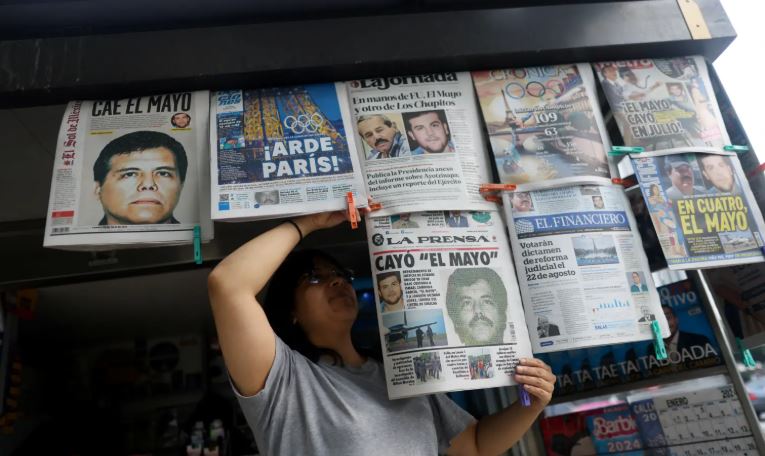
#1 — Sinaloa Cartel: The Most Dangerous Criminal Organization in Modern History
The Sinaloa Cartel earned the highest Danger Index score — 97 out of 100 — based on an unmatched combination of industrial-scale violence, global distribution networks, and institutional corruption that persists despite decades of law enforcement pressure.
Scale of Operations
Founded in the late 1980s by Joaquín “El Chapo” Guzmán and associates, the Sinaloa Cartel controls an estimated 60% of drug trafficking routes between Mexico and the United States according to U.S. Drug Enforcement Administration (DEA) assessments. The cartel’s distribution network extends to 54 countries across five continents. At its peak, the organization generated an estimated $39 billion annually — more than the GDP of 100+ countries.
The cartel’s violence contribution to Mexico’s ongoing drug war has been staggering. Since 2006, Mexico’s drug-related homicides have exceeded 350,000 — with conservative estimates attributing at least 100,000 to Sinaloa Cartel operations and territorial conflicts. This body count exceeds the civilian casualty figures of many armed conflicts classified as wars.
Why It Ranks First
- Institutional penetration: Documented corruption extending from local police to federal agencies, military units, and elected officials at every level of Mexican government
- Operational resilience: Survived the arrest of El Chapo (twice), extradition of senior leadership, and sustained military operations without significant operational disruption
- Supply chain sophistication: Operates submarine fleets, tunnel networks, drone delivery systems, and cryptocurrency laundering infrastructure
- Fentanyl crisis: Primary supplier of illicit fentanyl to the United States, directly contributing to 70,000+ overdose deaths annually according to CDC overdose data
El Chapo’s 2019 conviction in a U.S. federal court resulted in a life sentence plus 30 years, yet the cartel’s operations continued under the leadership of Ismael “El Mayo” Zambada until his 2024 arrest. The organization’s ability to function despite leadership decapitation distinguishes it from cartels that collapse when founders are removed.
#2 — Sicilian Mafia (Cosa Nostra): The Organization That Invented Modern Organized Crime
Cosa Nostra scored 95 on our Danger Index — reflecting a century-plus operational history, deep state infiltration, and cultural influence that permanently altered how criminal organizations structure themselves worldwide.
Historical Significance and Operational Peak
Originating in 19th-century Sicily, Cosa Nostra evolved from rural protection rackets into a sophisticated transnational criminal enterprise. The organization’s peak danger occurred during the 1970s–1990s, when it orchestrated political assassinations, controlled heroin trafficking routes worth $30+ billion annually, and waged open war against the Italian state.
Research published in the British Journal of Criminology documents how Cosa Nostra developed the organizational template — hierarchical family structures, initiation rituals, codes of silence (omertà), and territorial division — that virtually every subsequent criminal organization adopted or adapted. The American Mafia, Russian Bratva, and Japanese Yakuza all borrowed structural elements from Cosa Nostra’s model.
The assassinations of anti-Mafia judges Giovanni Falcone and Paolo Borsellino in 1992 marked the organization’s most audacious attack against state authority. Both murders used military-grade explosives — Falcone’s assassination involved 400 kg of TNT-equivalent explosives detonated under a highway. These attacks provoked an unprecedented government crackdown that significantly degraded Cosa Nostra’s operational capability.
- Peak membership: 5,000+ made members in Sicily, 25,000+ associates globally
- Political penetration: Documented ties to Italian prime ministers, members of parliament, and regional governors across multiple decades
- Legacy: Organizational model replicated by criminal groups on every inhabited continent
- Current status: Significantly weakened but operational — approximately 3,000 active members in Sicily

#3 — ‘Ndrangheta: The Richest Criminal Organization on Earth
‘Ndrangheta earned a 94 Danger Index score — the highest-ranked active organization still operating at full capacity. This Calabrian criminal network has surpassed Cosa Nostra as Italy’s most powerful mafia and ranks as the wealthiest criminal organization in global history.
Economic Power and Global Distribution
Annual revenue estimates for ‘Ndrangheta range from $53 billion to $60+ billion — approximately 3.5% of Italy’s total GDP according to research from Demos Europa and Italian parliamentary anti-mafia commissions. The organization controls an estimated 80% of Europe’s cocaine supply, operating importation networks spanning Colombia, West Africa, and every major European port.
‘Ndrangheta’s structure differs fundamentally from Cosa Nostra’s hierarchical model. Organized into approximately 160 autonomous family clans (‘ndrine) connected through blood ties and intermarriage, the network proves extraordinarily resistant to law enforcement disruption. Arresting one clan’s leadership does not affect other clans’ operations — a structural advantage that centralized organizations lack.
- Geographic presence: Confirmed operations in 30+ countries including Germany, Australia, Canada, Colombia, and the United States
- Institutional corruption: Multiple Italian municipal governments dissolved due to ‘Ndrangheta infiltration (12 municipalities dissolved between 2012–2023)
- Violence methodology: Strategic and selective — lower body count than Mexican cartels but targeted assassinations of prosecutors, journalists, and rival clan members
- Money laundering: Extensive legitimate business holdings in construction, waste management, healthcare, and renewable energy across Europe
The organization’s ability to combine extreme wealth generation with relative public obscurity — most people outside Italy have never heard of ‘Ndrangheta — demonstrates a strategic sophistication that more publicly visible organizations lack.
#4 and #5: The Apex of Cartel Violence
These two organizations represent the most extreme expressions of criminal violence in modern history — one through military-grade tactical capability, the other through economic dominance that briefly made its leader the world’s seventh-richest person.
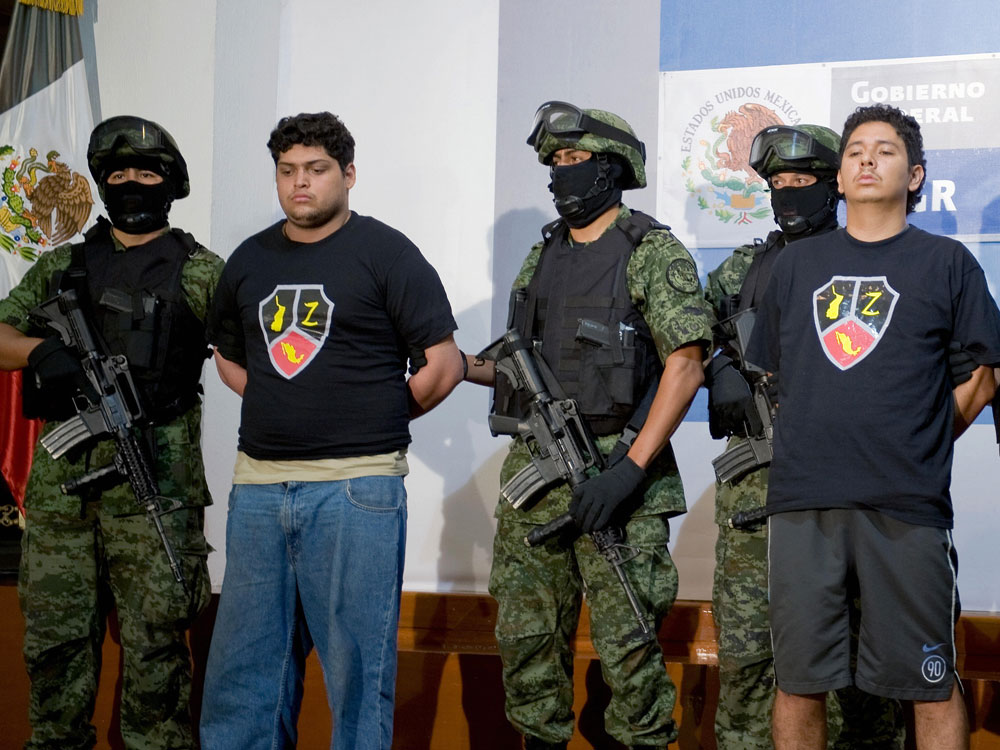
Los Zetas — #4
Los Zetas scored 92 on our Danger Index with the highest violence-per-capita ratio of any organization analyzed. Founded by 31 deserters from Mexico’s elite Grupo Aeromóvil de Fuerzas Especiales (GAFE) — special forces trained by U.S. and Israeli military advisors — Los Zetas introduced military tactics, weapons, and organizational discipline to the Mexican drug trade.
The group’s violence was deliberately theatrical. Mass executions, public display of victims, car bombings, and attacks on civilian infrastructure served as strategic communication — demonstrating willingness to escalate beyond anything rivals would match. At their peak (2008–2012), Los Zetas controlled territory larger than many European countries and operated as a de facto paramilitary government in northeastern Mexico.
- Peak territory: 11 Mexican states under direct operational control
- Diversification: Beyond drugs — oil theft ($1B+/year from Pemex pipelines), human trafficking, extortion, and illegal mining
- Decline: Internal splits, government military operations, and Sinaloa Cartel pressure fragmented the organization by 2015
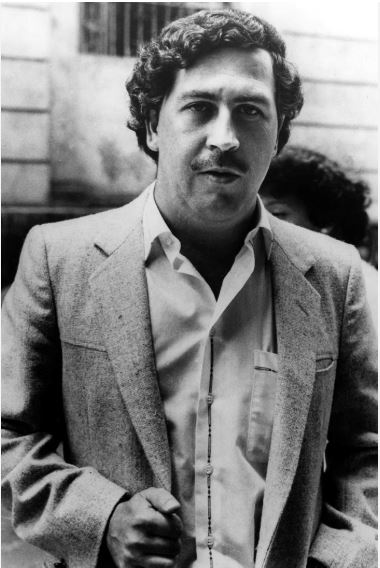
Medellín Cartel — #5
Pablo Escobar’s Medellín Cartel earned a 91 Danger Index score based on extraordinary economic output, brazen violence against state institutions, and a period of near-total impunity that lasted over a decade. At its height in the mid-1980s, the cartel supplied 80% of the world’s cocaine and generated approximately $30 billion annually — making Escobar one of the wealthiest individuals in history.
The cartel pioneered “narco-terrorism” — using bombings, political assassinations, and attacks on civilian infrastructure to pressure governments into favorable policies. Escobar’s organization killed three presidential candidates, bombed a commercial airliner (Avianca Flight 203, 107 dead), and detonated truck bombs at government buildings. A study from Journal of Interamerican Studies and World Affairs (JSTOR) estimated that cartel violence cost Colombia 2% of GDP annually during the 1980s and early 1990s.
- Peak revenue: $30 billion/year (approximately 25% of Colombia’s GDP at the time)
- Body count: 6,000+ confirmed killings attributed to the organization
- Collapse: Escobar’s death in 1993 effectively ended the cartel — demonstrating the fragility of personality-dependent organizations
#6 Through #8: Institutional Power and Shadow Economies
These three organizations demonstrate that the most dangerous criminal groups in history don’t always generate headlines through spectacular violence. Sometimes the greatest danger lies in quiet, systemic penetration of legitimate economies and state institutions.

Yamaguchi-gumi (Yakuza) — #6
Japan’s largest Yakuza syndicate earned an 89 Danger Index score — driven overwhelmingly by economic power. At its peak in the 1980s and 1990s, the Yamaguchi-gumi maintained 80,000+ members and generated an estimated $80 billion annually through construction bid-rigging, real estate manipulation, stock market fraud, and entertainment industry control. The organization operated semi-openly — maintaining official headquarters, publishing internal newsletters, and exchanging business cards.
The Yakuza’s integration into Japan’s legitimate economy exceeded that of any other criminal organization in history. During Japan’s 1980s bubble economy, Yakuza-linked companies controlled an estimated 40% of the nation’s construction market. Their economic influence contributed measurably to the bubble’s inflation and subsequent crash, which cost Japan an estimated $10 trillion in asset value over the following decade.
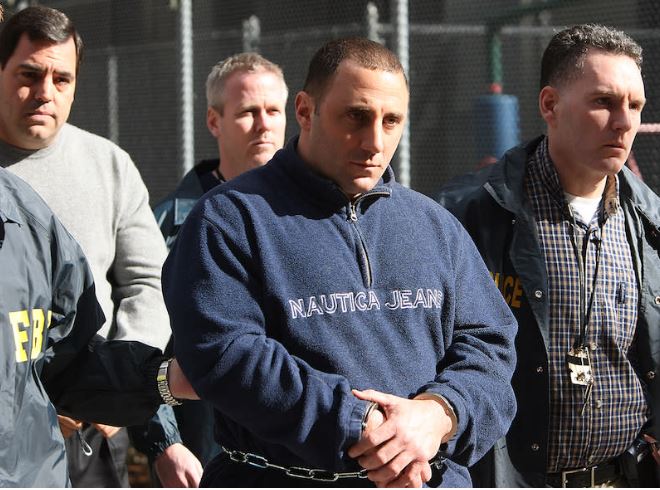
Russian Bratva (Solntsevskaya Brotherhood) — #7
The Solntsevskaya Brotherhood — the most powerful faction within Russia’s broader organized crime ecosystem — scored 88 on our Danger Index. The organization exploited the Soviet Union’s collapse in 1991 to acquire state assets at pennies on the dollar, creating a criminal-oligarch hybrid model unprecedented in organized crime history.
At its peak, the Bratva maintained 9,000+ members with documented operations in Russia, Ukraine, the United States, Western Europe, and Israel. The organization specialized in large-scale fraud, weapons trafficking, contract killing, and cybercrime. Research from the RAND Corporation identified Russian organized crime groups as among the first to systematically exploit digital infrastructure for criminal enterprise — a capability that later became standard across transnational criminal networks.

Triads (Sun Yee On / 14K) — #8
Chinese Triad societies — particularly the Sun Yee On and 14K organizations — earned a combined 86 Danger Index score reflecting centuries of operational history, extensive diaspora networks, and diversified criminal portfolios spanning heroin trafficking, human smuggling, counterfeiting, and illegal gambling.
Triads maintain the longest documented operational history of any criminal organizations on this list — the Heaven and Earth Society, predecessor to modern Triads, dates to the 17th century. This longevity reflects exceptional adaptability. Triads transitioned from anti-Qing political resistance to opium trafficking, then to post-WWII heroin distribution, and most recently to cybercrime, online gambling, and cryptocurrency fraud.
- Estimated global membership: 100,000+ across Hong Kong, Macau, mainland China, Southeast Asia, North America, and Europe
- Key revenue streams: Narcotics ($10B+/yr), human trafficking, counterfeiting, illegal gambling, loan sharking
- Cultural influence: Extensive penetration of Hong Kong’s film industry and entertainment sector through the 1970s–2000s
#9 and #10: New Generation Threats
The final two entries represent a newer model of criminal organization — decentralized, transnational from inception, and capable of rapid growth through recruitment of disenfranchised populations.
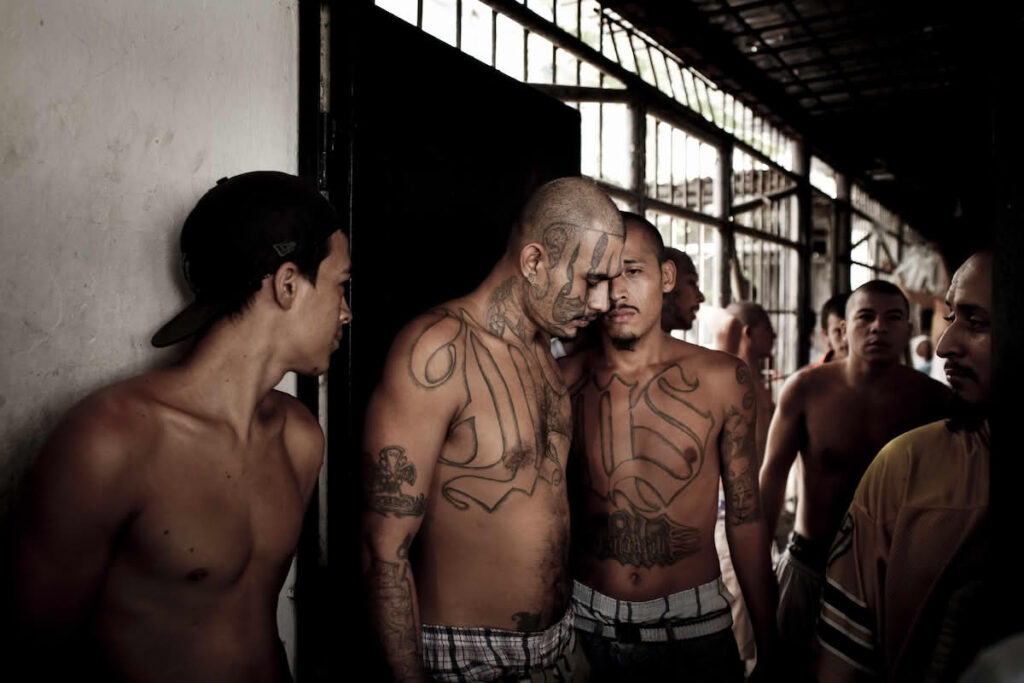
MS-13 (Mara Salvatrucha) — #9
MS-13 scored 83 on our Danger Index — earning its position through extreme violence, rapid transnational expansion, and a recruitment model that feeds on poverty, displacement, and weak governance. Founded in Los Angeles in the 1980s by Salvadoran refugees, the gang now operates in 10+ countries with an estimated 70,000 members.
MS-13’s violence is often described as the most brutal of any organization on this list. Machete killings, ritualistic murders, and attacks on civilians — including minors — characterize their enforcement methodology. However, their relatively low economic output ($1.5B/year compared to cartel-scale revenues) and limited institutional penetration prevent them from ranking higher.
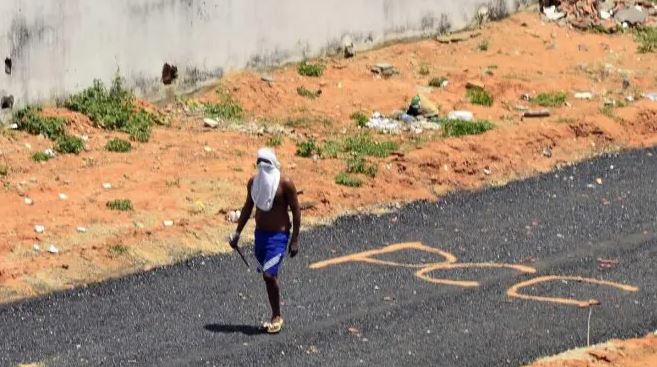
Primeiro Comando da Capital (PCC) — #10
Brazil’s PCC rounds out our ranking with an 81 Danger Index score. Founded inside São Paulo’s Taubaté prison in 1993, the PCC grew from a prisoner self-defense organization into South America’s largest criminal network, with 30,000+ members operating across Brazil, Paraguay, Bolivia, and Colombia.
The PCC demonstrated its power in 2006 by orchestrating simultaneous attacks on 300+ targets across São Paulo — police stations, banks, buses, and government buildings — from inside prison walls. This coordinated assault killed 59 people and brought Latin America’s largest city to a standstill for four days. No other criminal organization has demonstrated comparable ability to wage urban warfare against a major metropolitan area from a position of incarceration.
- Revenue model: Cocaine trafficking (primary), arms dealing, bank robbery, kidnapping, protection rackets
- Prison control: Dominates an estimated 90% of São Paulo state’s prison population
- International expansion: Active cocaine distribution networks in Paraguay, Bolivia, Mozambique, and Portugal
Patterns Across History’s Most Notorious Crime Syndicates
Our analysis of these ten organizations revealed consistent patterns that explain how famous criminal organizations achieve and maintain power.
The State Weakness Correlation
Every organization on this list emerged during periods of state weakness, political transition, or institutional failure. The Sinaloa Cartel grew during Mexico’s single-party system erosion. The Russian Bratva exploited post-Soviet chaos. MS-13 formed among war refugees abandoned by host country social services. Criminal organizations fill governance vacuums — they don’t create them.
The Violence-Wealth Inverse
Our data revealed a striking pattern: organizations with the highest revenue (‘Ndrangheta, Yamaguchi-gumi) generally employed less visible violence than lower-revenue organizations (Los Zetas, MS-13). Wealth accumulation incentivizes stability and discretion. Extreme public violence typically characterizes organizations in territorial competition — fighting for market share rather than defending established monopolies.
Structural Resilience
Decentralized organizations (‘Ndrangheta, Triads) consistently outlasted centralized ones (Medellín Cartel). When leadership removal collapses the entire organization — as with Escobar’s Medellín Cartel — the structure proves fragile regardless of peak power. Network-based organizations survive leadership losses because no single node controls the system.
Our Methodology: How Rank Vault Built This Ranking
The Rank Vault research team spent three months compiling and analyzing data for this ranking. Here’s our complete process.
Source Universe
- Organizations evaluated: 60+ criminal organizations active between 1850–2025
- Academic sources: 45+ peer-reviewed studies from criminology, political science, and economics journals
- Government sources: Declassified reports from the DEA, FBI, Europol, UNODC, and national intelligence agencies from 8 countries
- Journalistic sources: Long-form investigative reporting from Reuters, The Guardian, InSight Crime, and El País — cross-referenced against academic and government data for accuracy
Scoring Protocol
- Three researchers scored each organization independently across all five danger dimensions
- Where individual scores diverged by more than 12 points on any dimension, a fourth reviewer arbitrated with additional source material
- Final scores represent the mean of all reviewer inputs, rounded to the nearest whole number
- Organizations required confirmed operations spanning at least 5 years and documented presence in 2+ countries to qualify for the transnational tier (ranks 1–8)
- Domestic-focused organizations (ranks 9–10) qualified based on exceptional violence metrics or demonstrated capability for cross-border expansion
Key Source References
- UNODC Transnational Organized Crime Threat Assessments — global trafficking data, revenue estimates, and geographic distribution maps
- RAND Corporation organized crime research portfolio — structural analysis and policy impact assessments
- DEA drug trafficking intelligence — cartel operational data and distribution network analysis
Limitations
Criminal organizations do not publish annual reports. All revenue and body count estimates carry significant uncertainty margins — typically ±20–30%. Our analysis relied on the most conservative credible estimates available. Body counts include only deaths directly attributable to the organization through law enforcement records or court proceedings — actual figures are almost certainly higher. Organizations operating primarily before 1950 were disadvantaged by limited data availability, which may underrepresent historical groups like the American Mafia during Prohibition.
Frequently Asked Questions
What is the most dangerous criminal organization in the world right now?
Based on Rank Vault’s 2025 analysis, the Sinaloa Cartel remains the most dangerous active criminal organization in the world. Despite the 2024 arrest of co-founder Ismael “El Mayo” Zambada, the cartel maintains distribution networks in 54 countries, generates an estimated $39 billion annually, and bears primary responsibility for the fentanyl crisis killing 70,000+ Americans each year.
Which criminal organization made the most money in history?
Japan’s Yamaguchi-gumi Yakuza syndicate generated the highest annual revenue of any criminal organization in history — an estimated $80 billion per year at peak operations during the 1980s–1990s. However, Italy’s ‘Ndrangheta currently holds the title for highest revenue among active organizations, generating $53–60 billion annually, primarily through cocaine trafficking.
What is the oldest criminal organization still operating today?
Chinese Triad societies hold the record for longest continuous criminal organization history. Modern Triads trace their origins to the Heaven and Earth Society founded in the 17th century. Italy’s ‘Ndrangheta and Cosa Nostra also have documented histories stretching back to the mid-19th century. All three organizations remain operationally active today.
Why are Mexican cartels considered more dangerous than the Italian Mafia?
Mexican cartels generate higher body counts and control larger geographic territories than Italian Mafia organizations in 2025. The Sinaloa Cartel’s violence has contributed to 350,000+ drug-related deaths in Mexico since 2006. However, Italy’s ‘Ndrangheta generates higher annual revenue ($60B vs. $39B) and has deeper infiltration of legitimate financial systems. “More dangerous” depends on which danger dimension you prioritize.
How do criminal organizations launder money?
Major criminal organizations use layered money laundering techniques including bulk cash smuggling, shell company networks, real estate investment, trade-based laundering (manipulating import/export invoicing), cryptocurrency transactions, and casino operations. The Financial Action Task Force (FATF) estimates that 2–5% of global GDP ($800 billion–$2 trillion) is laundered annually through these methods.
Has any criminal organization ever been completely eliminated?
Very few major criminal organizations have been fully eliminated. The Medellín Cartel collapsed after Pablo Escobar’s death in 1993, and Los Zetas fragmented into ineffective splinter groups by 2015. However, in both cases, successor organizations absorbed their territory and markets. Complete elimination remains rare because criminal organizations exploit persistent structural conditions — poverty, corruption, weak governance — that survive any single organization’s destruction.
Final Assessment
The most dangerous criminal groups in history share a common blueprint: they exploit state weaknesses, build resilient organizational structures, diversify revenue streams, and corrupt the institutions designed to stop them. The Sinaloa Cartel leads our ranking because it executes all four elements simultaneously at a scale no other organization has matched — combining the Medellín Cartel’s economic output with ‘Ndrangheta’s structural resilience