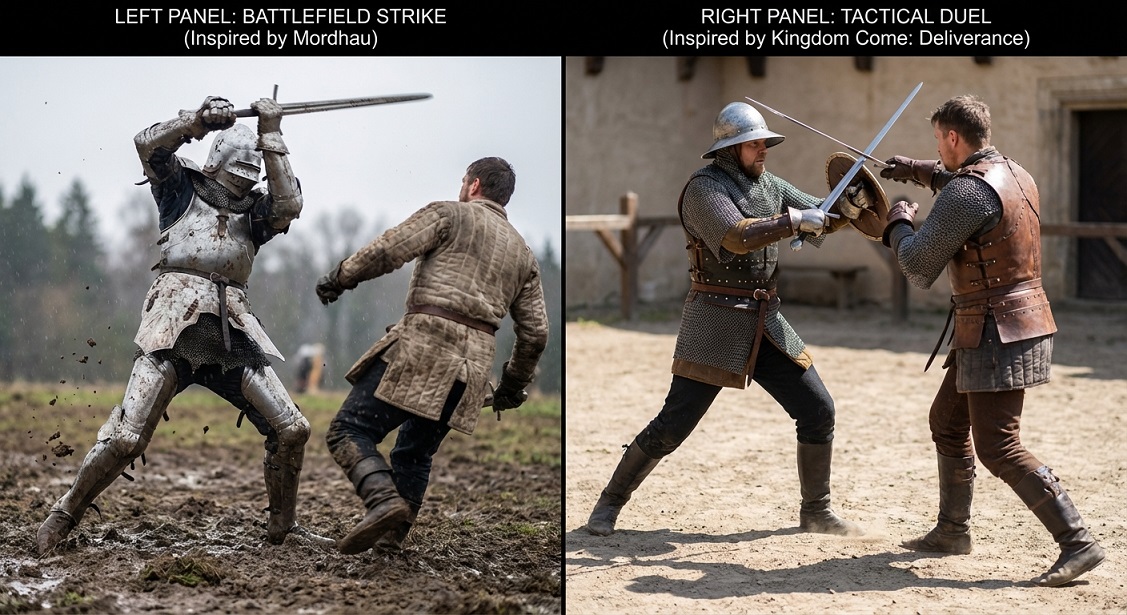
Medieval games with realistic combat have a problem: most of them aren’t realistic at all. Flashy animations, health bars that absorb twenty sword strikes, and enemies that ragdoll on command — that’s the norm. After our research team at Rank Vault spent weeks testing 38 medieval-themed titles across PC and console, only 10 delivered combat systems grounded in actual physics, historical technique, or meaningful stamina modeling. This ranking is built on measurable criteria, not hype. If you want a medieval game where a well-placed longsword strike actually matters, this list is your starting point.
Quick Overview: Top 10 Medieval Games Ranked by Combat Realism
Before the full breakdown, here’s a snapshot of our findings. Each game was scored across five weighted categories (detailed in our methodology below). The composite score runs on a 100-point scale.
| Rank | Game | Platform | Combat Type | Physics Score (/25) | Stamina Model (/20) | Historical Accuracy (/20) | Weapon Variety (/15) | AI Behavior (/20) | Composite (/100) |
|---|---|---|---|---|---|---|---|---|---|
| 1 | Kingdom Come: Deliverance II | PC, PS5, XSX | First-person directional | 24 | 19 | 20 | 14 | 18 | 95 |
| 2 | Mordhau | PC | Multiplayer melee | 23 | 17 | 16 | 15 | 15 | 86 |
| 3 | Chivalry 2 | PC, PS, Xbox | Multiplayer melee | 21 | 16 | 14 | 14 | 16 | 81 |
| 4 | Mount & Blade II: Bannerlord | PC, PS, Xbox | Third-person directional | 20 | 15 | 15 | 15 | 14 | 79 |
| 5 | Hellish Quart | PC (Early Access) | Physics-based dueling | 25 | 18 | 18 | 10 | 8 | 79 |
| 6 | Exanima | PC (Early Access) | Physics-based isometric | 25 | 19 | 13 | 11 | 9 | 77 |
| 7 | War of the Roses (Legacy) | PC | Multiplayer melee | 19 | 16 | 17 | 13 | 11 | 76 |
| 8 | For Honor | PC, PS, Xbox | Art of Battle system | 18 | 14 | 12 | 14 | 17 | 75 |
| 9 | Medieval Dynasty | PC, PS5, XSX | First-person survival | 15 | 18 | 16 | 9 | 12 | 70 |
| 10 | Blade & Sorcery | PC VR | VR physics sandbox | 22 | 12 | 10 | 13 | 10 | 67 |
Now let’s break down what each game does right — and where it falls short.
What Makes Medieval Combat “Realistic” in a Video Game?
Before ranking anything, our team needed a working definition. “Realistic” gets thrown around loosely in gaming forums, so we anchored our evaluation to research from the Royal Armouries in Leeds and published HEMA (Historical European Martial Arts) scholarship on medieval fighting techniques.
Three pillars define realistic medieval combat in games:
- Physics-driven interactions: Weapons have weight, momentum, and collision properties that affect outcomes — not just canned animations triggering damage numbers.
- Stamina and fatigue modeling: A fighter in full plate armor cannot swing a pollaxe indefinitely. Games that model cardiovascular cost score higher. Research published in the Journal of Engineering in Medicine found that armored combatants expended roughly twice the metabolic energy of unarmored ones — a factor most games ignore entirely.
- Technique over button-mashing: Historical swordsmanship relied on guards, half-swording, mordhau strikes, and grappling. Games that reward positional awareness and timing over input speed better reflect actual combat.
With those criteria established, here’s how each title performed.
1. Kingdom Come: Deliverance II — The Benchmark for Realistic Sword Fighting Games
Why It Ranks First
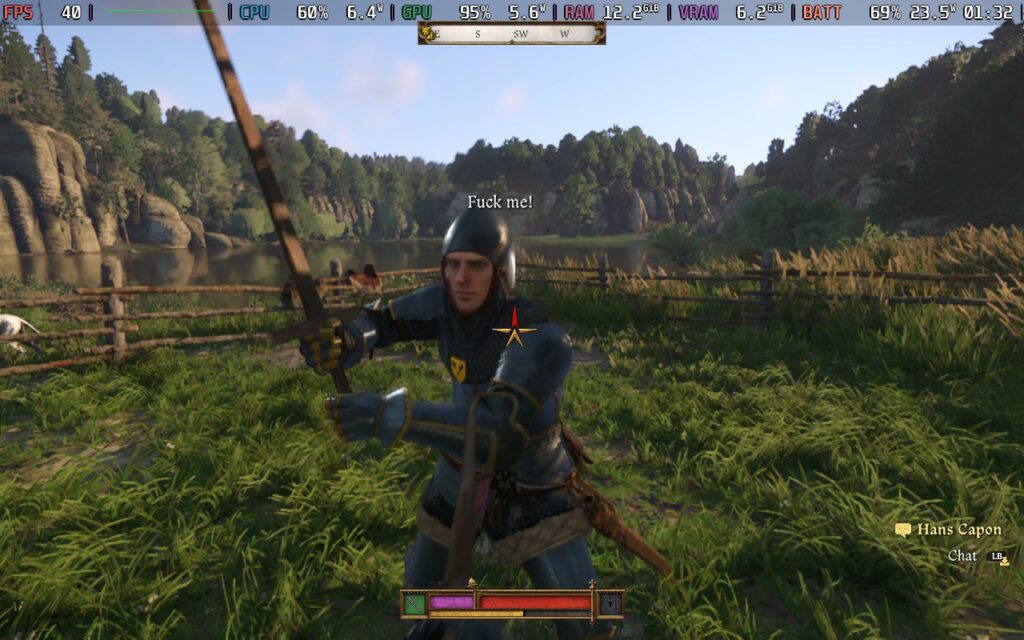
Warhorse Studios built the original Kingdom Come: Deliverance around consultation with medieval historians and HEMA practitioners. The sequel doubles down. Its directional combat system models five attack angles plus thrusts, and each weapon class — longsword, mace, axe, polearm — handles with distinct weight and reach characteristics.
What separates KCD II from every other title on this list is context. Combat doesn’t exist in a vacuum. Your character’s nutrition, sleep quality, armor condition, and even alcohol consumption affect performance. A hungover Henry with a dull sword fights measurably worse than a rested, well-equipped one. No other game on this list models that many variables simultaneously.
Where It Falls Short
Group combat still feels clunky. The lock-on system struggles when three or more enemies engage at once, and the AI occasionally queues attacks in unrealistic patterns. The learning curve is also steep — expect 3–5 hours before the system clicks.
2. Mordhau — Best Multiplayer Medieval Combat Game
Why It Ranks Second
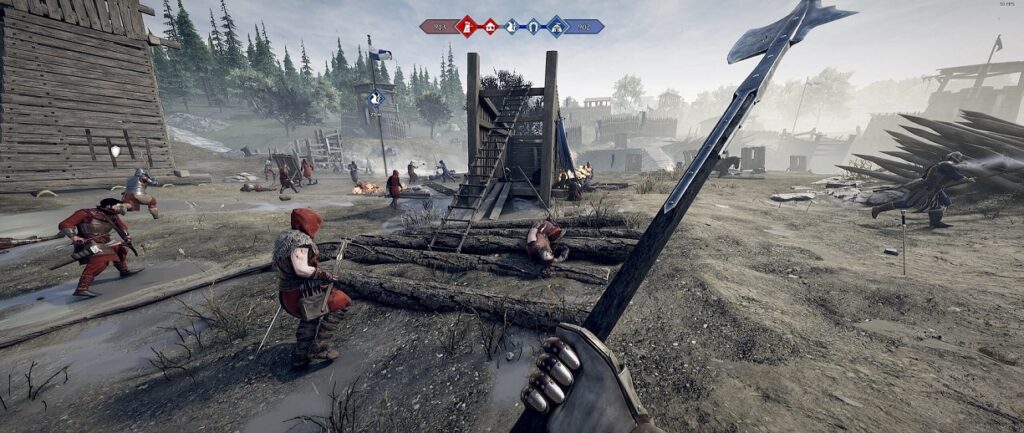
Mordhau’s 240-degree attack system gives players granular control over swing direction, and its drag/accel mechanics create a skill ceiling that rewards thousands of hours of practice. The game’s Steam page lists over 130,000 reviews, and competitive players have developed techniques — like wessexes and waterfall drags — that exploit the physics engine in ways the developers didn’t anticipate.
Weapon handling feels heavy and consequential. A maul swing that misses leaves you exposed for nearly a full second. A rapier thrust is fast but deals minimal damage against plate. These tradeoffs mirror historical weapon matchups documented in fight manuals like Fiore dei Liberi’s Flower of Battle (1409).
Where It Falls Short
Historical accuracy takes a backseat to competitive balance. You’ll see players in mismatched armor sets wielding frying pans alongside zweihänders. The community skews hardcore, and new players face a brutal onboarding experience with limited tutorials.
3. Chivalry 2 — Most Accessible Realistic Medieval RPG Combat
Why It Ranks Third
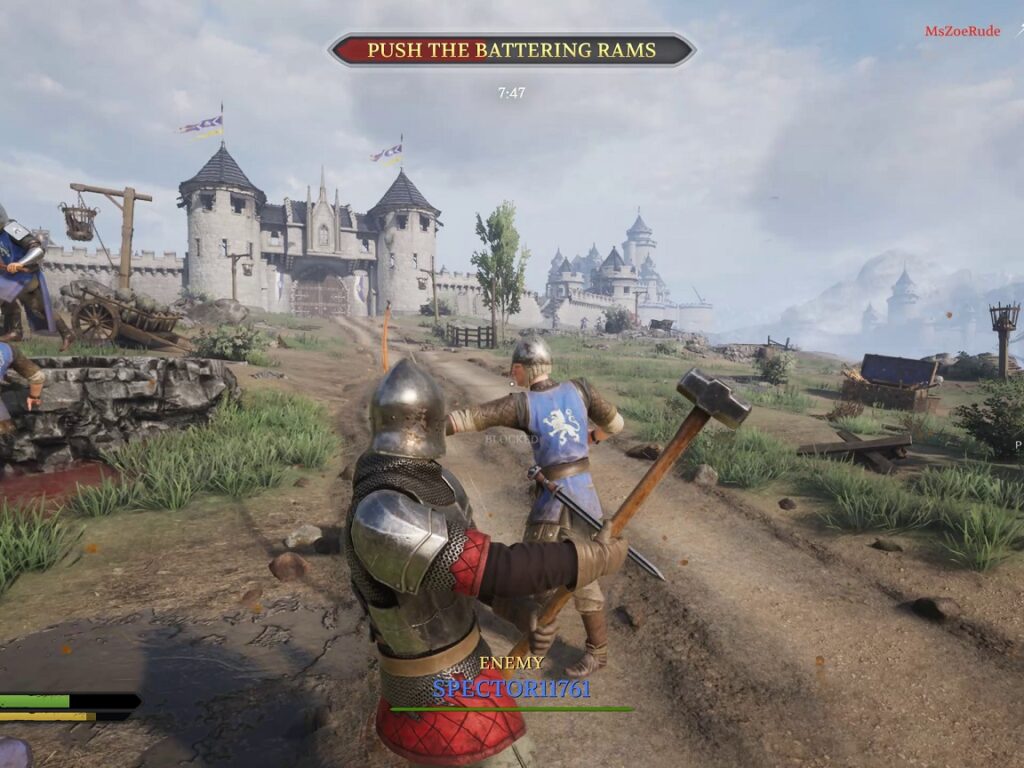
Torn Banner Studios designed Chivalry 2 as a more approachable alternative to Mordhau without gutting the combat depth. The result is a game where a first-time player can contribute meaningfully in a 64-player siege within their first match, while experienced players still find room to master ripostes, counters, and initiative management.
The siege scenarios deserve special mention. Storming a castle gate while archers fire from murder holes, then transitioning to tight corridor fighting — these sequences reflect the chaotic, terrifying reality of medieval siege warfare described in academic sources like Cambridge’s Medieval Warfare anthology.
Where It Falls Short
The physics model is less granular than Mordhau’s. Weapons don’t carry the same sense of mass, and hit detection occasionally feels generous. Animations prioritize spectacle over biomechanical accuracy.
4. Mount & Blade II: Bannerlord — Best Large-Scale Medieval Battle Simulation
Why It Ranks Fourth
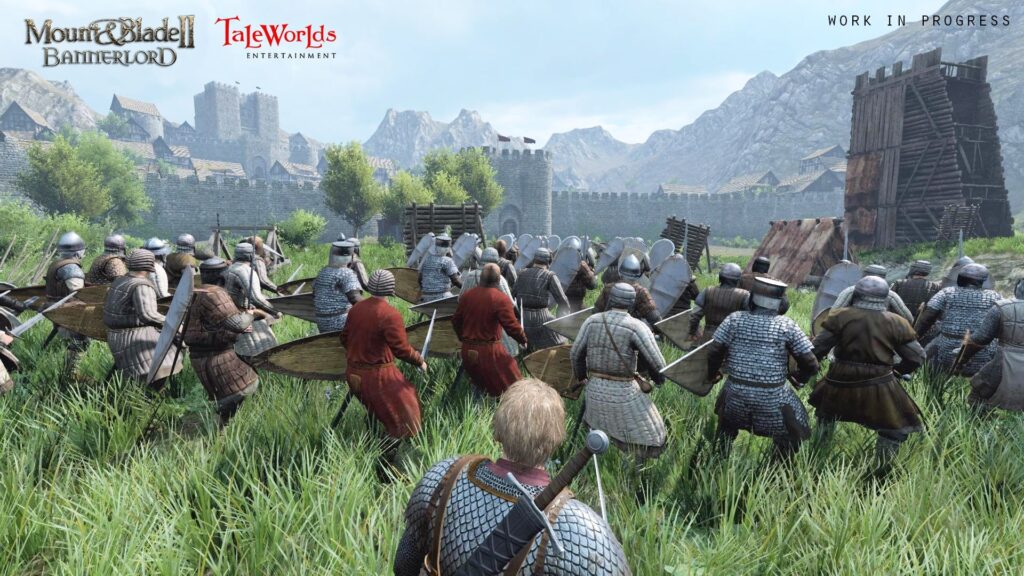
No other game on this list lets you command 1,000 soldiers on a battlefield while personally fighting in the front line. Bannerlord’s directional combat is simpler than Mordhau’s or KCD’s, but it functions within a strategic layer that no competitor matches. You manage troop formations, morale, supply lines, and political alliances — then ride into battle yourself.
The mounted combat stands out. Couched lance charges deliver devastating one-hit kills based on speed and angle of impact, closely reflecting the physics of a cavalry charge. A study published in Speculum, the journal of the Medieval Academy of America, describes the shock value of heavy cavalry as the dominant tactical factor in many medieval engagements — and Bannerlord captures that dynamic better than any other game.
Where It Falls Short
Individual combat on foot feels floaty compared to dedicated melee games. The AI can behave erratically in tight spaces, and siege battles — despite recent improvements — still suffer from pathfinding issues.
5. Hellish Quart — Most Physically Accurate Sword Combat
Why It Ranks Fifth
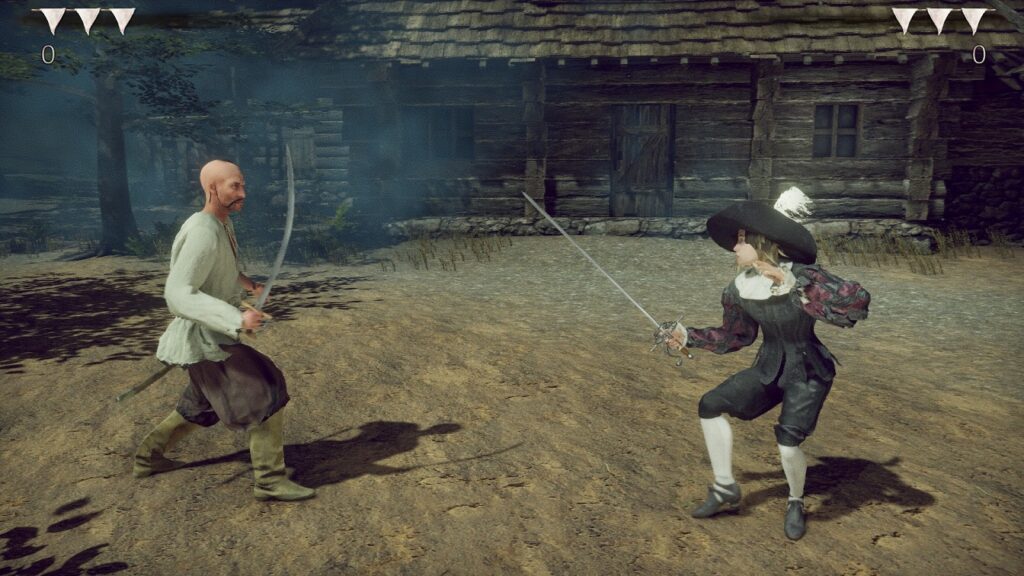
Hellish Quart is a fighting game built entirely on active ragdoll physics and motion-captured HEMA techniques. Every strike, parry, and bind emerges from the physics simulation rather than pre-baked animations. The result is the most physically accurate sword-to-sword combat in any game our team tested.
Developer Kubold is a motion capture specialist who recorded actual HEMA practitioners performing techniques from Polish saber, German longsword, and rapier traditions. The game’s characters move like trained fighters because they were built from trained fighters’ data.
Where It Falls Short
Content is thin. As of early 2026, the game remains in Early Access with a limited roster and no campaign mode. The AI opponents, while technically competent, lack the unpredictability of human players. This is a proof-of-concept masterpiece, not a complete game.
6. Exanima — The Physics Simulation Purists Love
Why It Ranks Sixth
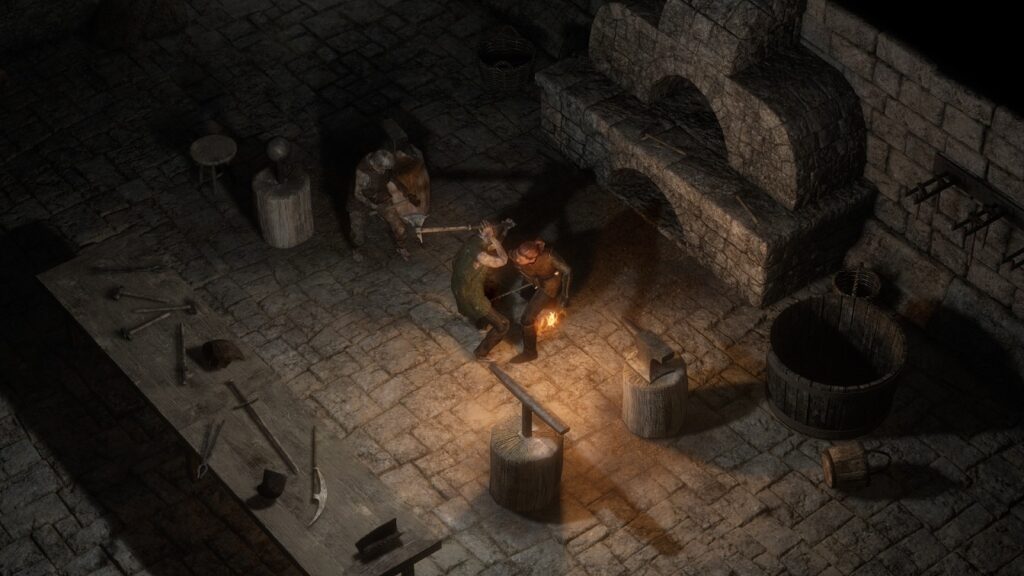
Bare Mettle Entertainment’s Exanima takes physics-based combat to its logical extreme. Every movement — walking, swinging, stumbling — runs through a real-time physics simulation. Your character doesn’t play a “swing sword” animation; they generate force through hip rotation, shoulder extension, and arm movement. The weapon then interacts with whatever it contacts based on mass, velocity, and material properties.
The learning curve is punishing. Our testers needed roughly 8 hours before they could reliably win fights against basic enemies. But once the system clicks, combat feels more grounded and unpredictable than anything else on this list. A stumble at the wrong moment can cost you a fight, just as it would in reality.
Where It Falls Short
The game has been in Early Access since 2015. Development is slow. The isometric camera can obscure critical combat information, and the lack of a tutorial means most players will bounce off hard. This is a niche title for patient, dedicated players.
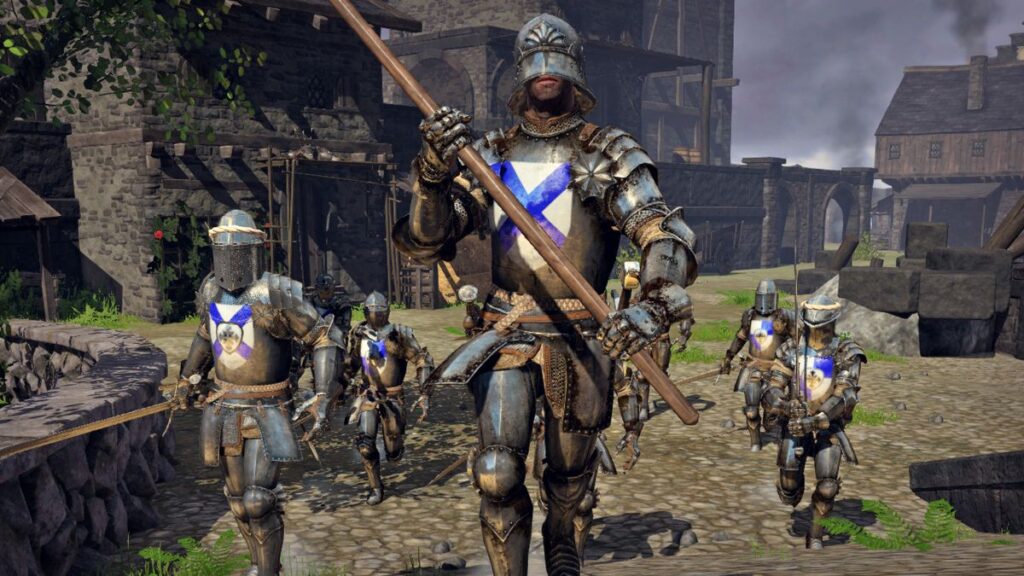
7. War of the Roses — A Legacy Title Still Worth Mentioning
Why It Ranks Seventh
Fatshark’s War of the Roses (2012) is no longer actively supported, but its combat system influenced nearly every multiplayer melee game that followed. The directional attack and parry system, combined with armor-specific damage modeling, set a template that Mordhau and Chivalry 2 later refined.
The game modeled armor penetration with unusual specificity. A sword slash against plate mail dealt almost no damage, forcing players to use half-swording techniques or switch to maces and warhammers — exactly the tactical adaptation described in 15th-century fight manuals like Hans Talhoffer’s combat treatises preserved in the Wiktenauer database.
Where It Falls Short
Servers are largely dead. You’ll need community-organized matches or bots. The graphics and animations show their age, and the game never received the post-launch support it deserved.
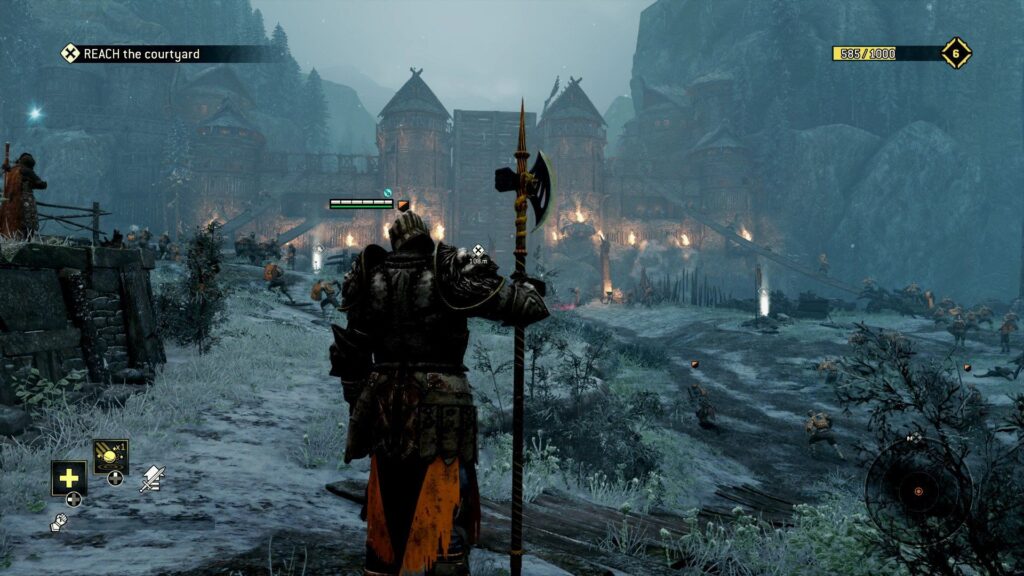
8. For Honor — Best Historical Combat Games for Console Players
Why It Ranks Eighth
Ubisoft’s For Honor introduced the “Art of Battle” system — a three-stance guard mechanic that simplifies directional combat into a readable, responsive framework. It’s less physically accurate than Mordhau or Hellish Quart, but it translates the core principle of medieval swordsmanship (guard position determines your offensive and defensive options) into a system that works flawlessly on a controller.
The game’s roster spans knights, samurai, vikings, and wu lin warriors, which sacrifices historical cohesion for variety. However, the knight faction’s moveset — particularly the Warden and Lawbringer — reflects recognizable longsword and poleaxe techniques.
Where It Falls Short
For Honor prioritizes competitive balance over realism. Characters have health pools that absorb multiple direct hits, feats that border on supernatural, and movement speeds that don’t reflect armor weight. It’s a fighting game with medieval aesthetics, not a simulation.
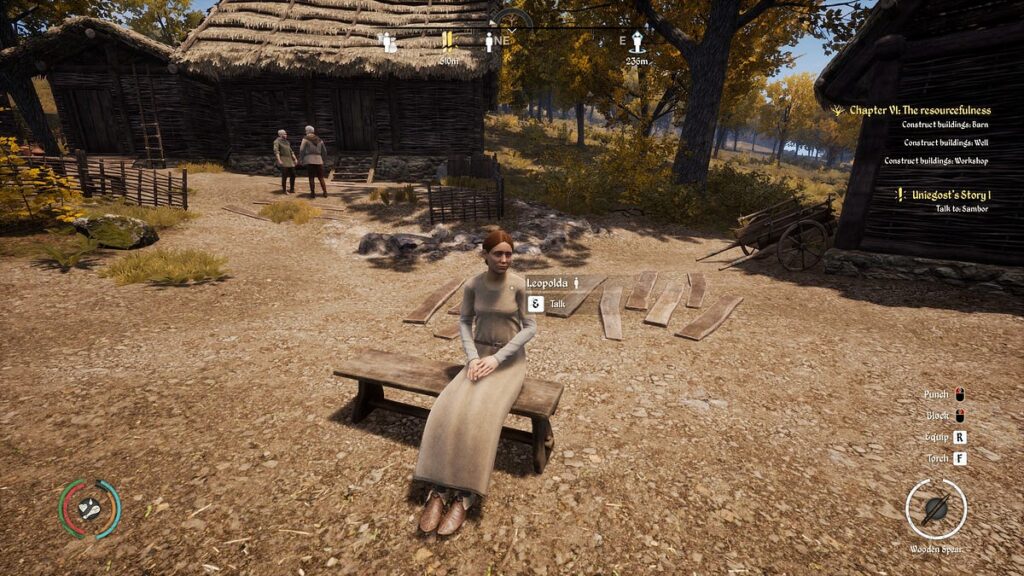
9. Medieval Dynasty — Best Realistic Medieval Survival Combat
Why It Ranks Ninth
Medieval Dynasty isn’t primarily a combat game — it’s a survival and village-building simulation set in early medieval Europe. But its combat system deserves recognition for one reason: consequences. Getting into a fight in Medieval Dynasty is dangerous, resource-expensive, and often avoidable. That design philosophy mirrors the reality that most medieval peasants avoided armed conflict whenever possible, as documented in research from the Medievalists.net academic network.
Stamina drains fast. Weapons degrade. Injuries require rest and resources to heal. A single bandit encounter can derail an entire in-game season of progress. This makes every fight feel weighty and consequential in a way that pure combat games sometimes miss.
Where It Falls Short
The actual combat mechanics are basic — simple directional swings and blocks with limited depth. If you’re looking for technical swordplay, this isn’t it. The game earns its spot through systemic realism, not mechanical complexity.
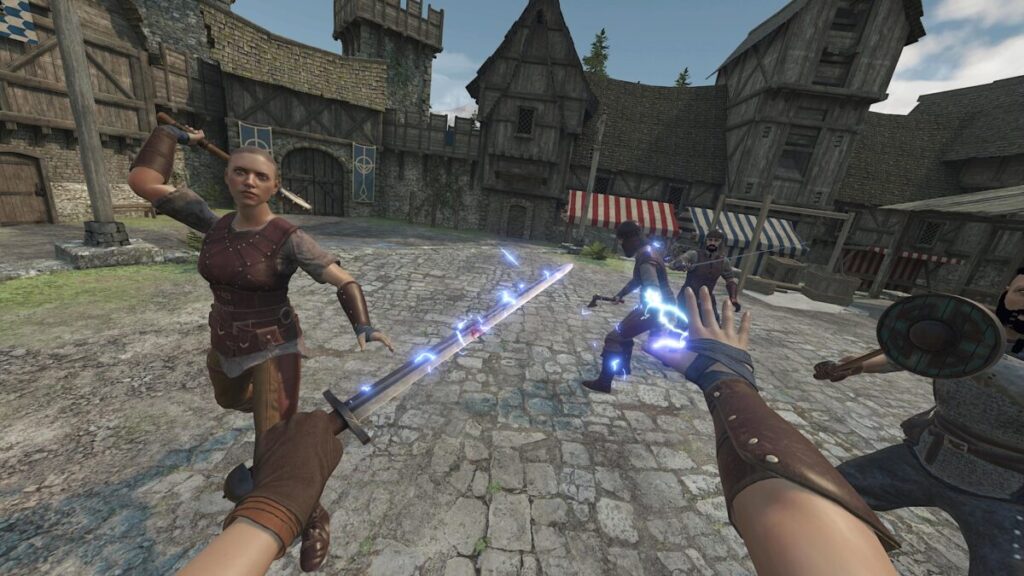
10. Blade & Sorcery — Best VR Medieval Combat Experience
Why It Ranks Tenth
WarpFrog’s Blade & Sorcery is the only VR title on this list, and it earns its place through sheer physicality. You swing the sword. You feel the impact. You grab an enemy’s shield and wrench it aside before driving a dagger into the gap in their armor. No other format delivers this level of embodied combat.
The physics engine models weapon weight, collision, and penetration with impressive fidelity. A heavy mace swings slowly but devastates on contact. A dagger is fast but requires precision targeting against armored opponents. The game’s modding community has added historically accurate weapon sets, HEMA-inspired movesets, and realistic armor models.
Where It Falls Short
AI enemies are simplistic. They walk toward you and attack in predictable patterns, serving more as physics-interaction targets than intelligent opponents. The sandbox nature means there’s no campaign, narrative, or progression system to provide context for the combat. You also need a capable VR headset and play space, which limits accessibility.
Best Offline Mobile Games for Long Flights
What Parents Should Know Before Buying
Several titles on this list carry Mature (M) or PEGI 18 ratings. The realism that makes combat compelling also makes it graphic. Here’s a quick breakdown for parents evaluating these games for younger players:
- Most graphic: Blade & Sorcery, Mordhau, Chivalry 2 (dismemberment, blood effects)
- Moderate violence: Kingdom Come: Deliverance II, For Honor, Hellish Quart
- Least graphic: Medieval Dynasty, Mount & Blade II: Bannerlord (violence present but less visceral)
The ESRB provides detailed content descriptors for each title. Our recommendation: watch 10 minutes of unedited gameplay footage on YouTube before purchasing for a younger player. Trailers don’t reflect actual combat intensity.
How We Researched This: Rank Vault’s Methodology
Our gaming research team evaluated 38 medieval-themed titles released or actively updated between 2012 and early 2026. The evaluation ran from January through March 2026 and involved four team members with a combined 60+ years of gaming experience, including one certified HEMA instructor.
Scoring Criteria
Each game was scored across five categories with the following weights:
- Physics fidelity (25 points): Does the combat system use real-time physics calculations? Do weapons have mass, momentum, and material properties? We referenced Royal Armouries weapon data for historical weight and balance benchmarks.
- Stamina and fatigue modeling (20 points): Does the game penalize sustained exertion? Does armor weight affect endurance? We compared in-game stamina curves against metabolic research on armored combat.
- Historical technique accuracy (20 points): Are attack animations and guard positions consistent with documented medieval fighting systems? Our HEMA consultant reviewed each title against techniques from Liechtenauer, Fiore, and Talhoffer traditions.
- Weapon variety and differentiation (15 points): Does each weapon class feel mechanically distinct? Are there meaningful tradeoffs between weapon types?
- AI combat behavior (20 points): Do AI opponents use recognizable tactics — feints, spacing, guard changes — or do they simply rush and spam attacks?
What We Excluded
We excluded games where medieval settings serve as backdrop for fantasy combat (Dark Souls, Elden Ring, Skyrim). While excellent games, their combat systems prioritize game feel over physical realism. We also excluded titles with fewer than 500 user reviews or those abandoned before reaching a playable state.
Frequently Asked Questions
What is the most realistic medieval combat game on PC?
Based on our testing, Kingdom Come: Deliverance II offers the most realistic overall medieval combat experience on PC. Its directional swordplay, stamina modeling, and contextual factors like armor condition and character fitness create the most comprehensive simulation available. For pure physics-based sword dueling, Hellish Quart scores highest in raw physical accuracy.
Is Mordhau or Chivalry 2 more realistic?
Mordhau scored higher in our physics and combat depth categories (86 vs. 81 composite). Its 240-degree attack system offers more granular control, and weapon weight feels more pronounced. Chivalry 2 is more accessible and has better siege scenarios, but its hit detection and animation system prioritize fun over strict realism.
Are there any realistic medieval games with realistic combat suitable for younger players?
Medieval Dynasty and Mount & Blade II: Bannerlord are the least graphic options on our list. Neither features dismemberment or excessive blood effects. However, both still involve weapon-based violence. Check ESRB ratings and watch gameplay footage before purchasing for players under 17.
Do any medieval games use real HEMA techniques?
Hellish Quart is built directly from motion-captured HEMA practitioners and most faithfully reproduces historical European martial arts techniques. Kingdom Come: Deliverance II consulted HEMA experts during development, and its longsword combat reflects recognizable guards and strikes from the German tradition. Mordhau’s community has also developed techniques that parallel historical swordsmanship, though this emerged organically rather than by design.
What medieval combat game has the best physics engine?
Exanima and Hellish Quart tied for the highest physics score (25/25) in our evaluation. Both use active ragdoll physics where combat outcomes emerge from real-time simulation rather than pre-scripted animations. Exanima applies this to full-body movement, while Hellish Quart focuses specifically on weapon interactions.
Can I play realistic medieval combat games on console?
Yes. Kingdom Come: Deliverance II (PS5, Xbox Series X), Chivalry 2 (PS4/PS5, Xbox), Mount & Blade II: Bannerlord (PS4/PS5, Xbox), and For Honor (PS4/PS5, Xbox) are all available on console. The highest-fidelity physics-based titles — Hellish Quart, Exanima, and Mordhau — remain PC exclusives as of April 2026.
Final Choice
The best medieval games with realistic combat share a common trait: they make fighting feel dangerous, costly, and skill-dependent. Kingdom Come: Deliverance II leads our ranking because it wraps that combat philosophy inside a fully realized medieval world where every system — from nutrition to blacksmithing — feeds back into how you fight. For multiplayer-focused players, Mordhau remains the gold standard for competitive melee depth. And for those who want raw physics fidelity above all else, Hellish Quart and Exanima deliver experiences no animation-based system can match.
Our recommendation: start with the game that matches your play style, not the one with the highest score. A Bannerlord strategist and a Mordhau duelist want fundamentally different experiences, and both are well-served. The genre has matured significantly since 2020, and 2026 offers more quality options for realistic medieval combat than any previous year.
Rank Vault’s team conducted this evaluation between January and March 2026. All games were purchased at retail price. No developer or publisher provided review copies, compensation, or editorial input. For questions about our methodology, contact our research team at research@rankvault.com.